


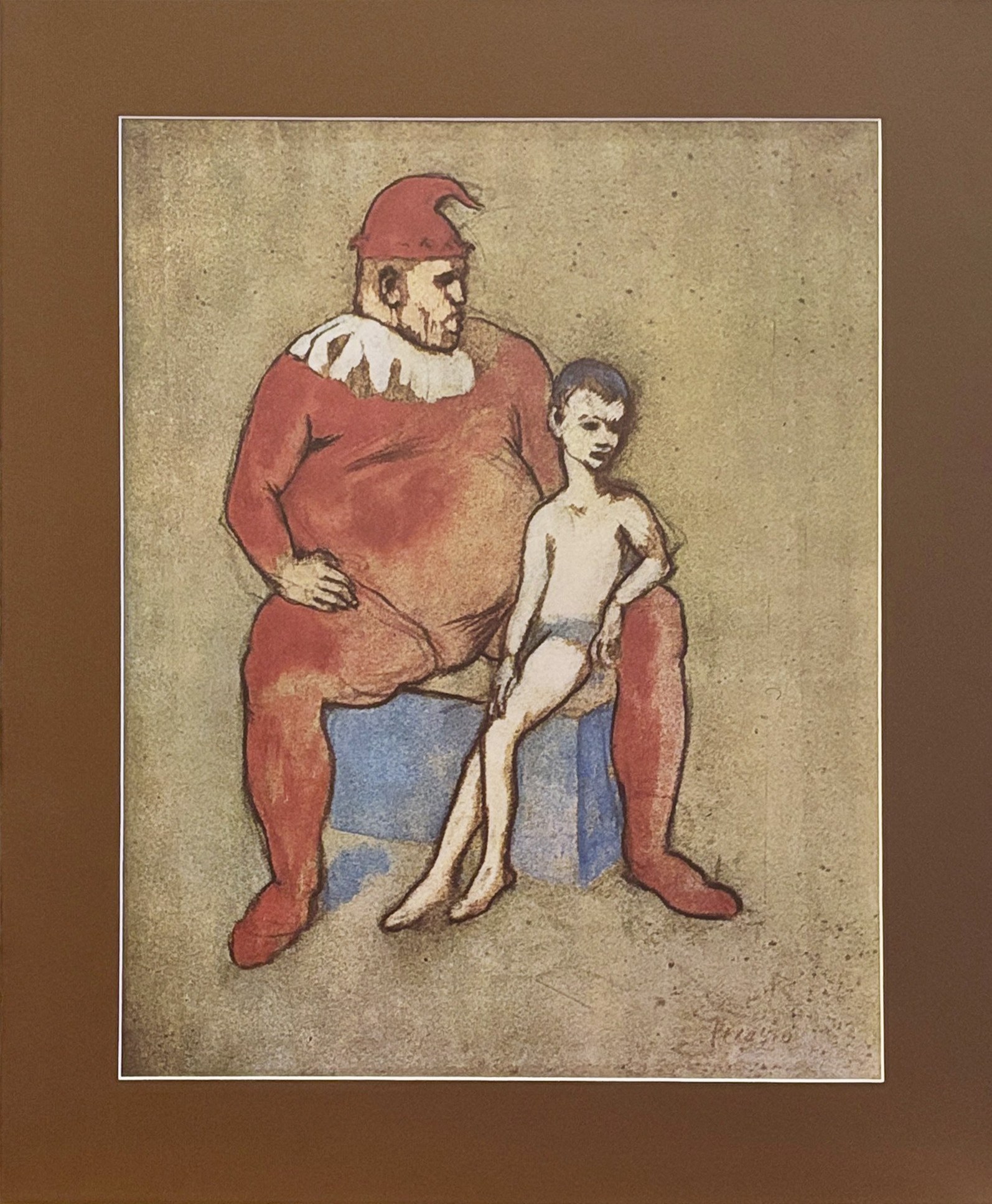
Artist-printed lithograph, 300g paper, 43 x 34 cm, mounted in a 54 x 45 cm passe-partout.
Published by Centro Diffusione Cultura Milano.
Stamp on the reverse: Succ. Pablo Picasso Coll. Marina Picasso
Paper specially produced for this edition by Cartiera Sterzi; print run of 1,000 copies; the lithographic plates were destroyed to prevent unauthorized prints.
The painting on which this Picasso lithograph is based was created in 1905 during the so-called “Rose Period,” when the artist moved away from melancholic blues toward warmer colors and themes related to the circus and Parisian bohemia. It depicts “Little Louis,” a boy who used to hang around Picasso’s studio in Montmartre. Although the boy is holding a pipe (a symbol of adulthood), the wreath of roses on his head gives him an almost angelic, ethereal appearance. It is a combination of austerity and delicacy.
In 2004, the original was sold for over $104 million, making it the world’s most expensive painting sold at auction at the time.
Following his Blue Period, Picasso’s Rose Period emerged between 1904 and 1906. It was a time of optimism and a warming of the tone in his works after the melancholic Blue Period. Picasso’s Rose Period, spanning 1904–1906, marked a significant turning point in his life and art. It was characterized primarily by a warm color palette dominated by shades of pink, orange, and brown, which contrasted with the cool tones of the preceding Blue Period. This evolution in color reflected a shift in the artist’s mood, as he moved from melancholy to more optimistic, though still reflective, themes.
His painting technique during the Rose Period became significantly more refined. Picasso began to employ more complex textures and experiment with lighting effects, which allowed him to emphasize the psychological depth of his figures—primarily drawn from circus life, such as traveling performers, clowns, acrobats, and harlequins, among others.
The works from the Rose Period play an important role in Pablo Picasso’s biography and serve as a bridge between his earlier, dramatic works and his subsequent stylistic experiments, which revolutionized 20th-century art and marked the birth of Cubism.
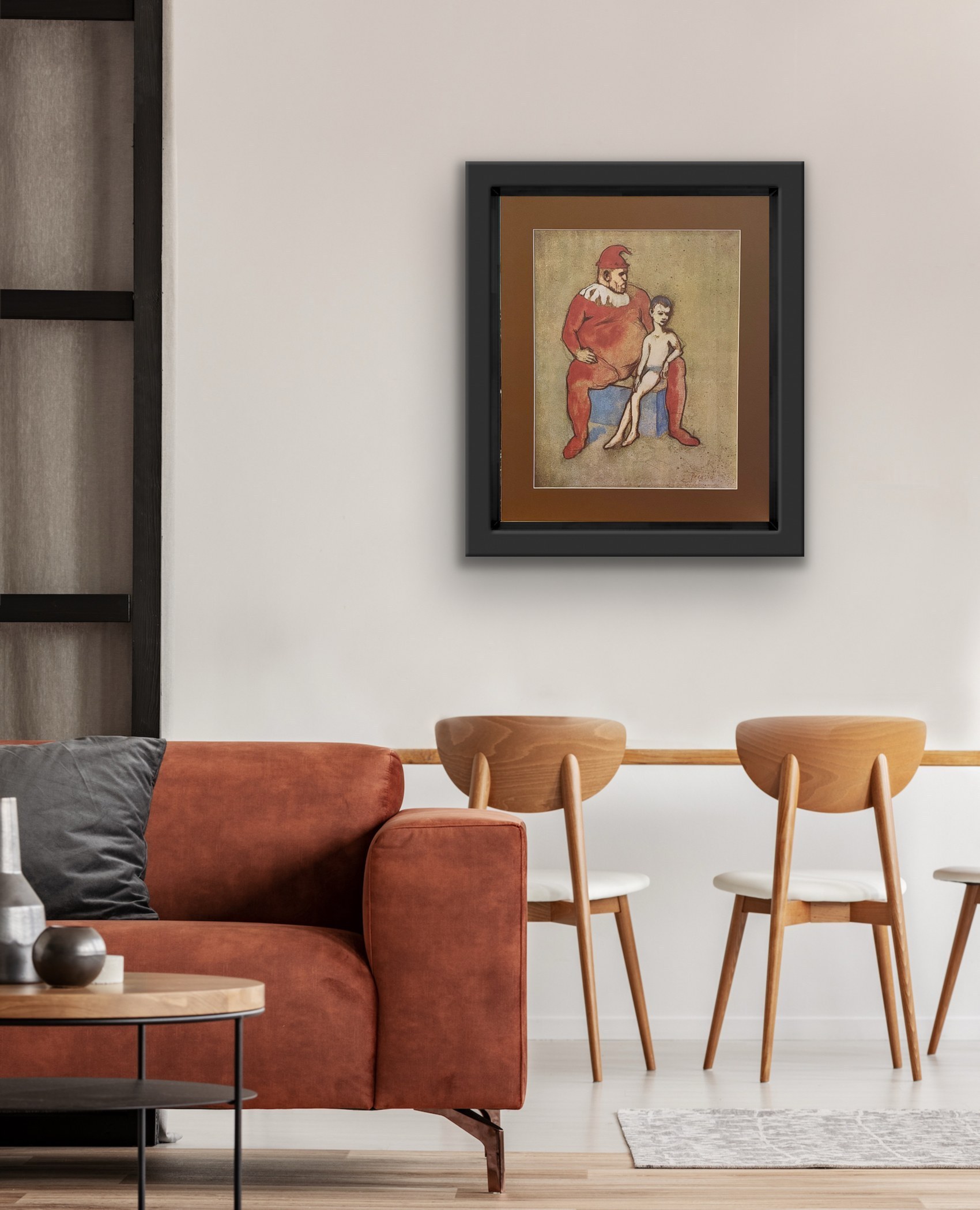
The frames shown in the renderings are for illustrative purposes only and do not constitute a commercial offer.










Πρόσφατες επισκοπήσεις
Συνδεθείτε για να δείτε την λίστα θέσεων
Αγαπημένα
Συνδεθείτε για να δείτε την λίστα θέσεων