


Polish Steel Combat Helmet, Model 50
After 1945, the Polish Army used many models of military helmets, most of which were Soviet model 40, Polish interwar model 31 helmets, as well as helmets of various origins adapted in different ways for service. In the late 1940s, the need arose to design a new military helmet that could be mass-produced domestically. In accordance with the political line of the authorities in Stalinist Poland at the time, it was decided to create a design clearly inspired by the Soviet Model 39 and Model 40 helmets. In 1950, a new helmet model was officially approved; its design broke decisively with the traditions of the Second Polish Republic and made the Polish soldier resemble a soldier of the “allied” Workers’ and Peasants’ Red Army. Despite its external resemblance, however, the Polish helmet was far superior to its Soviet prototype in terms of build quality. Polish pre-war specialists, who had worked on the production of the wz. 31 helmets before the war, participated in the design and production process. The production itself was commissioned to Huta Silesia and Huta Ludwików (renamed Kieleckie Zakłady Wyrobów Metalowych). The new helmets underwent tests involving shooting at them from a distance of 3 meters with ammunition from a wz. 33 TT pistol and an AK carbine, targeting the front and side of the helmet. Penetration was not permitted under any circumstances, and the depth of any dents could not exceed 10 mm. The tests were conducted under very strict conditions, and any deviation from the established standards resulted in the return of the entire batch to the manufacturer. The interior design of the wz. 50 helmet differed significantly from Soviet designs—it was modeled after the interior of Italian wz. 33 helmets. The helmets enjoyed an excellent reputation and, during the People’s Republic of Poland era, were exported to Iraq, Egypt, Syria, and Albania. Today, the wz. 50 helmet serves, on the one hand, as a historical testament to the attempt to “Sovietize” the appearance of Polish Army soldiers, and on the other, as a collector’s item and an example of the high technical capabilities of Polish industry at the time.
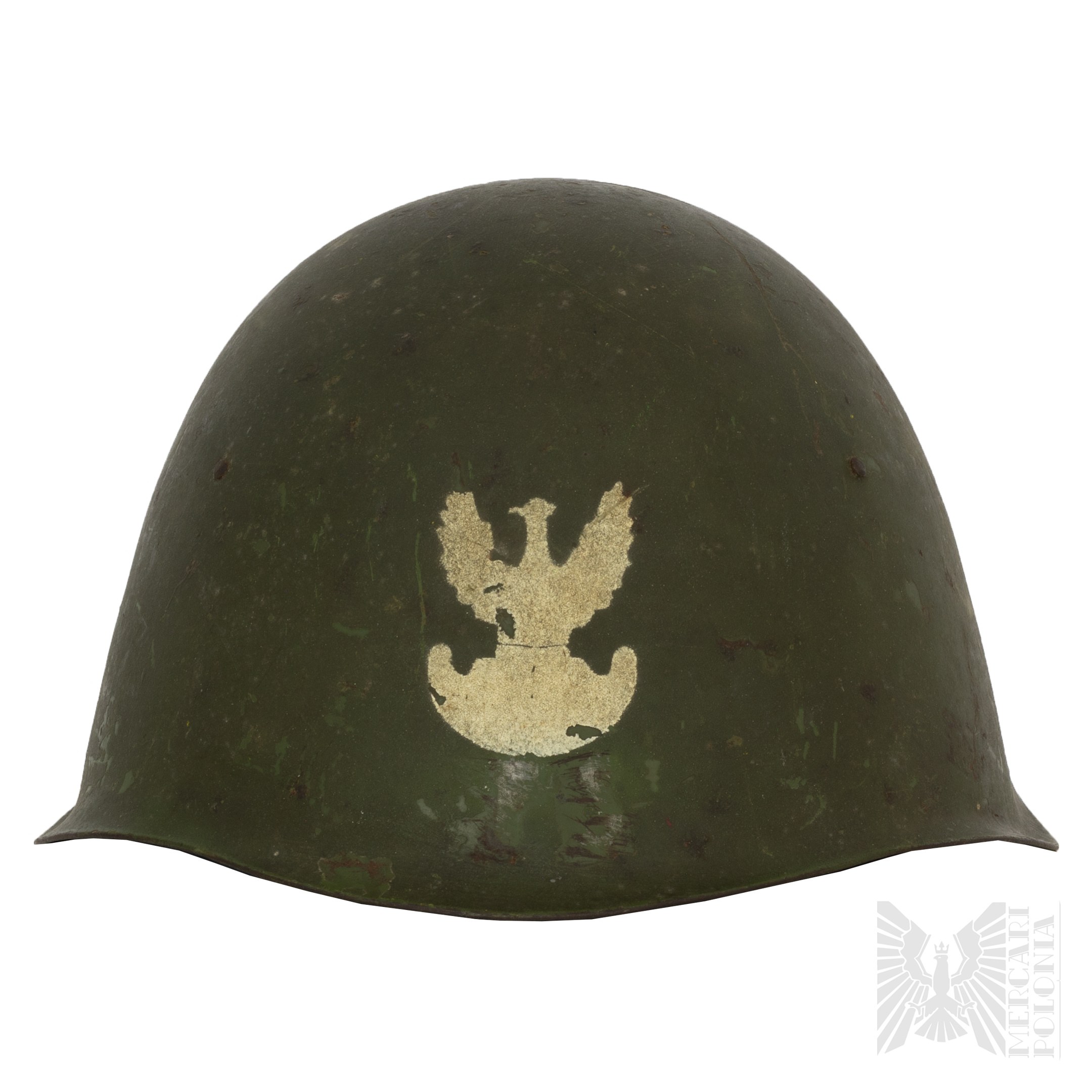
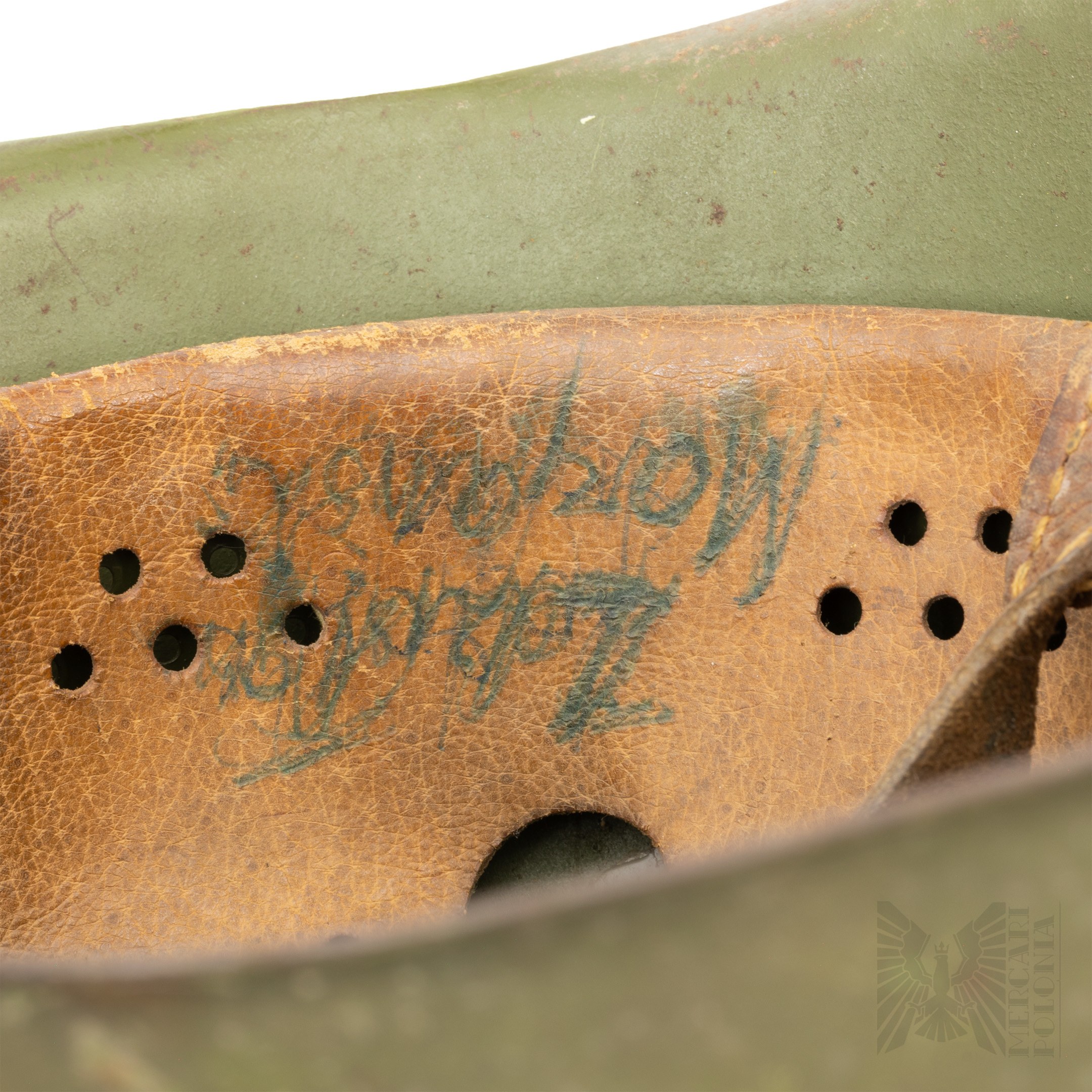
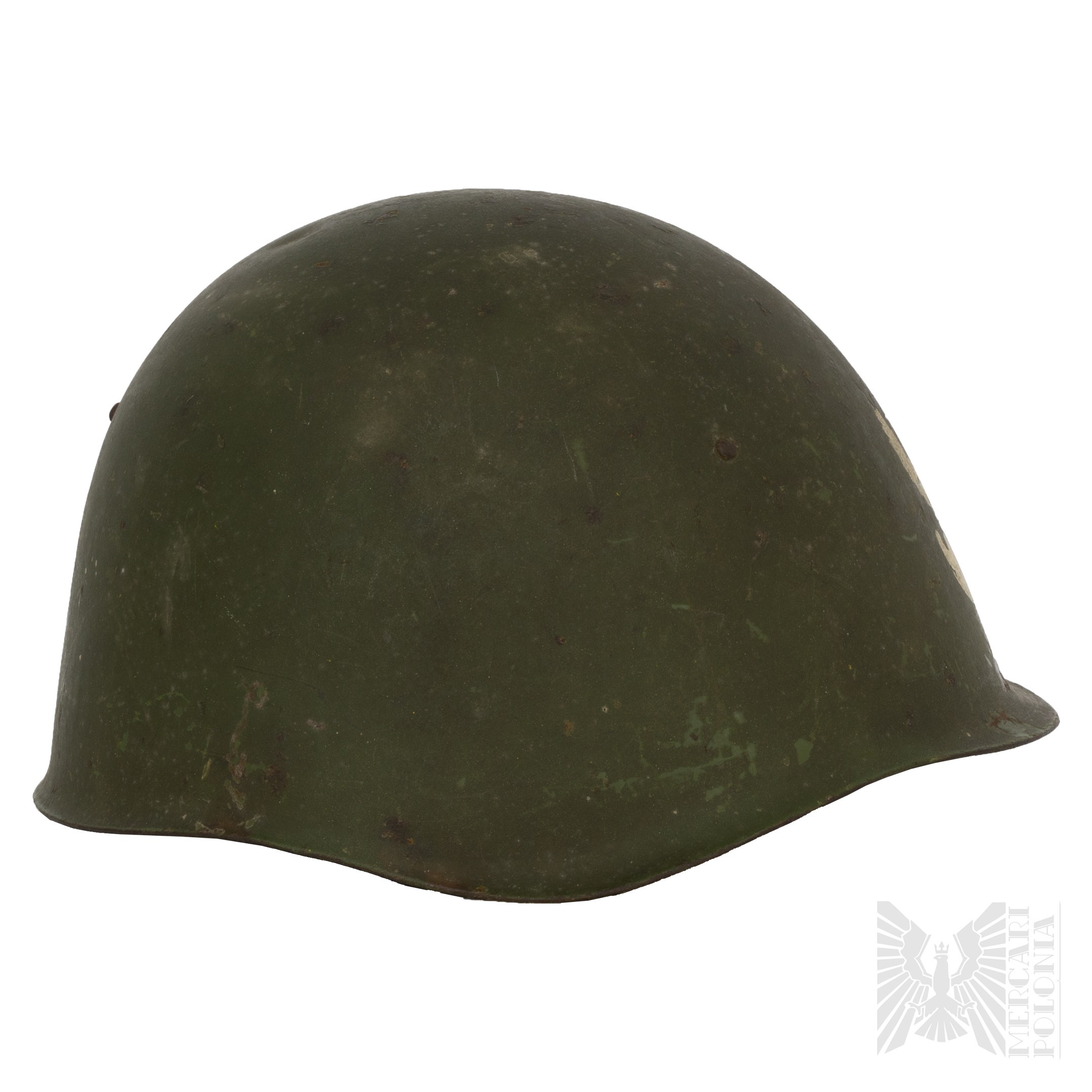
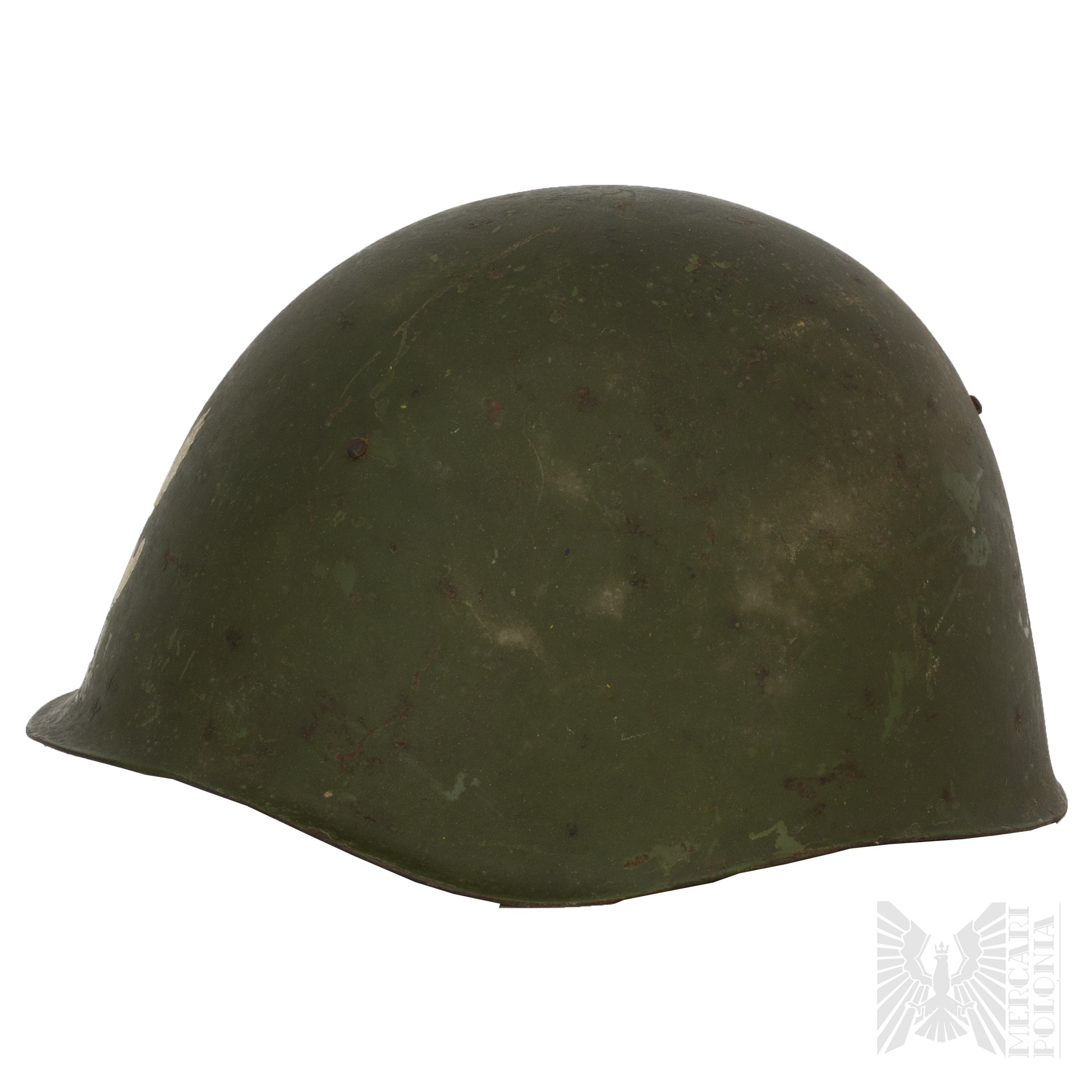
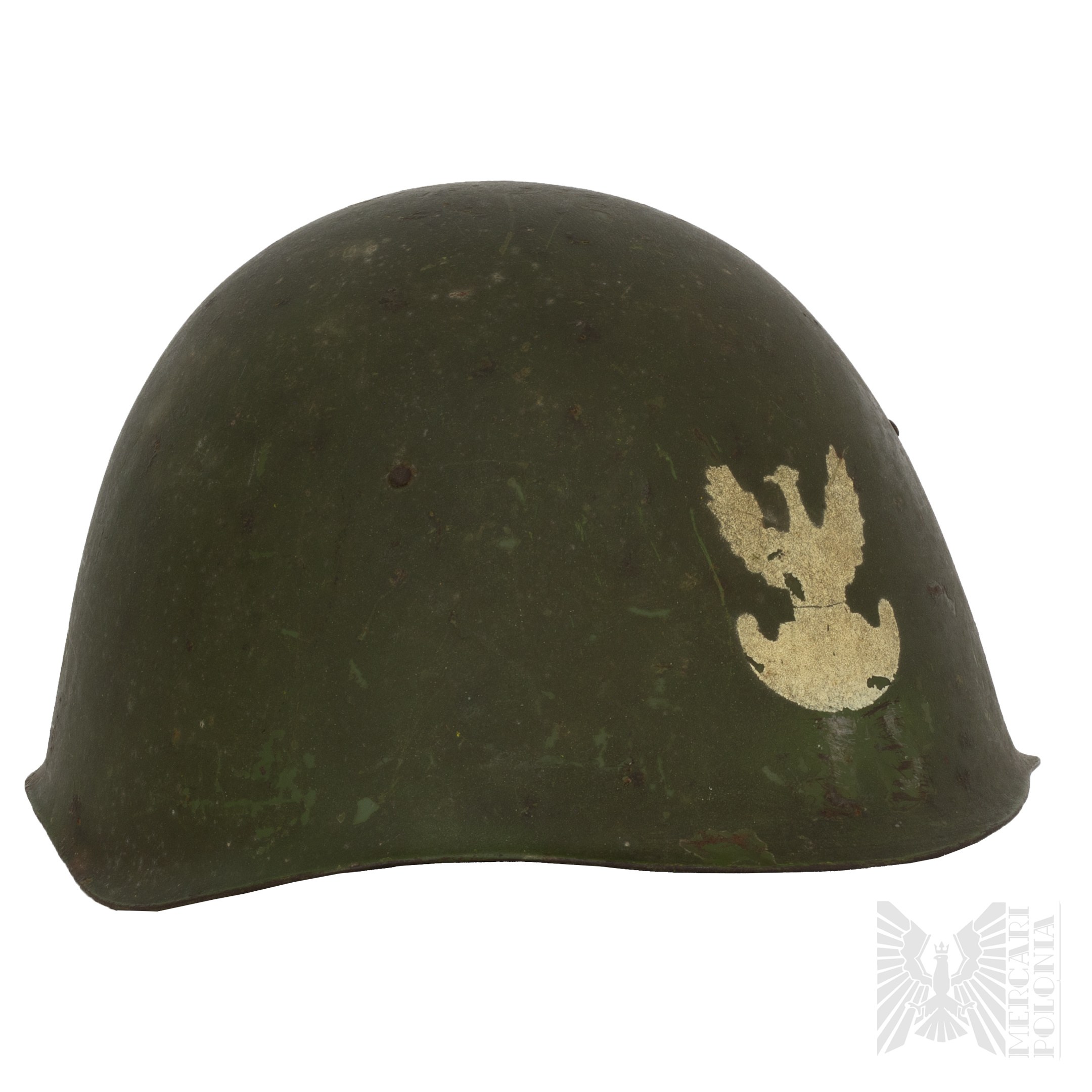
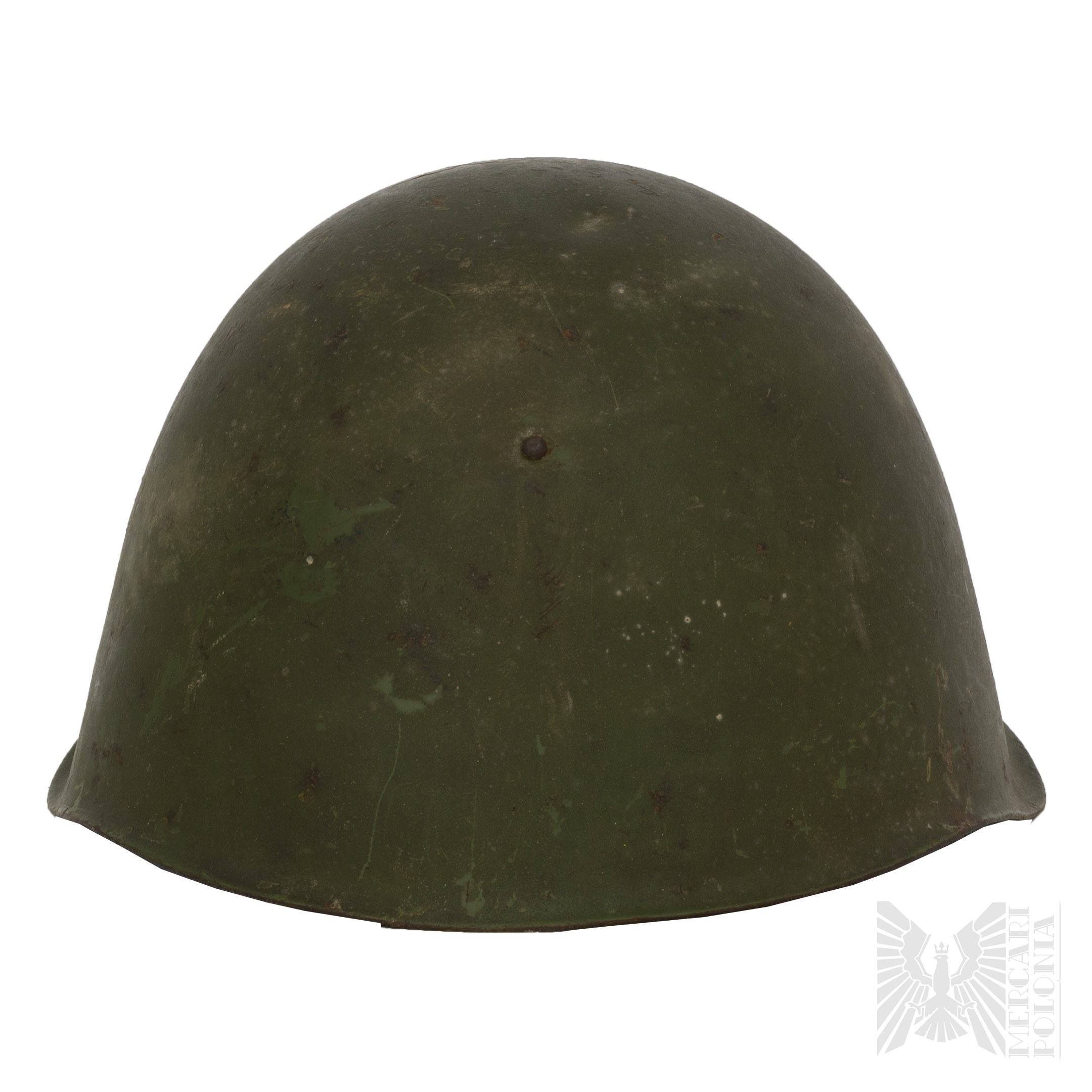
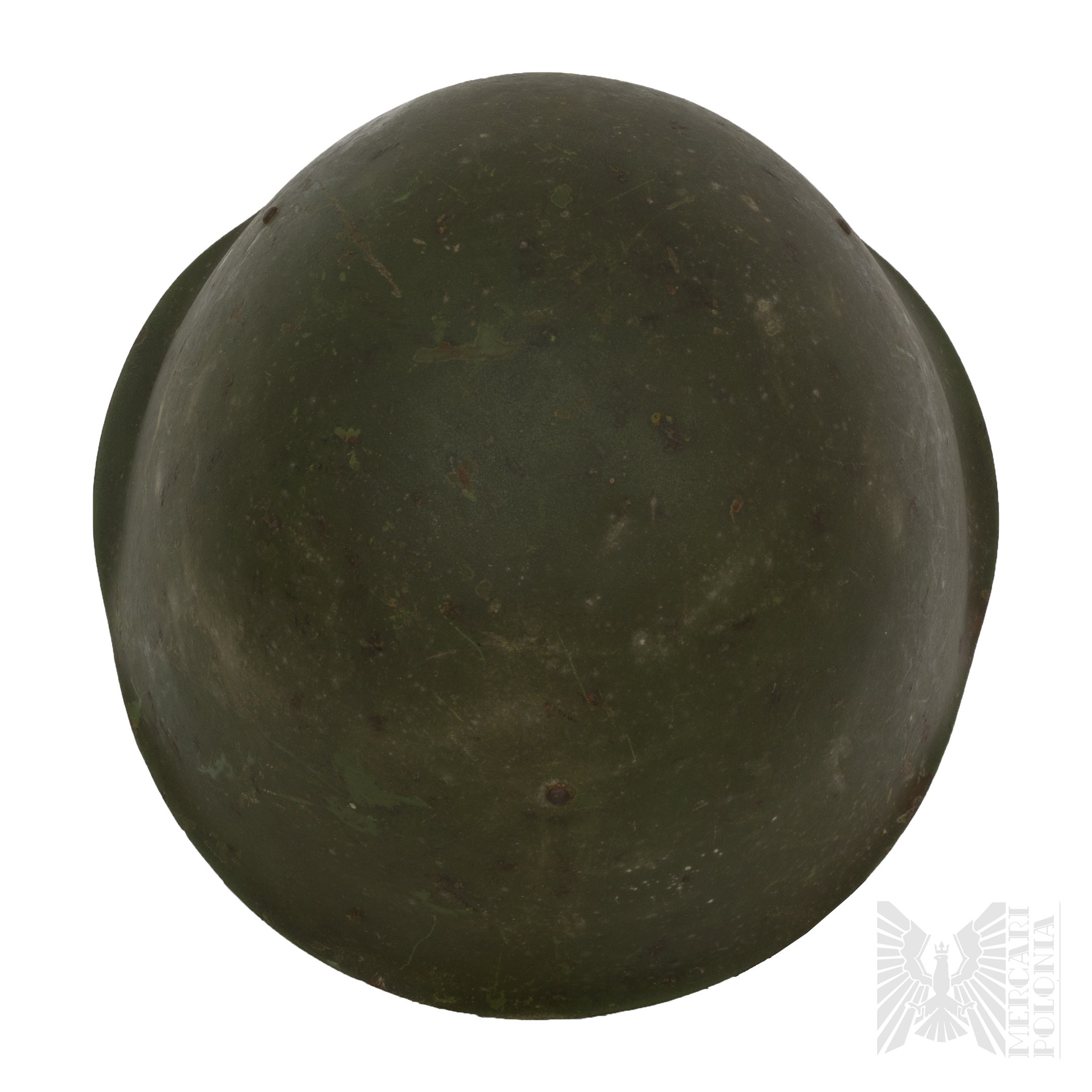
The helmet offered here is painted khaki. Two layers of paint are visible; the second was applied during a military refurbishment in 1966. On the front of the helmet is a striking eagle painted by the Military Repair Workshops. Inside the helmet shell is a black stamp: “WZR|66/I/IX” inscribed within a black rectangle. Dimensions: 16.6 x 27 x 25 cm. The condition of the item is shown in the attached photos.











Πρόσφατες επισκοπήσεις
Συνδεθείτε για να δείτε την λίστα θέσεων
Αγαπημένα
Συνδεθείτε για να δείτε την λίστα θέσεων