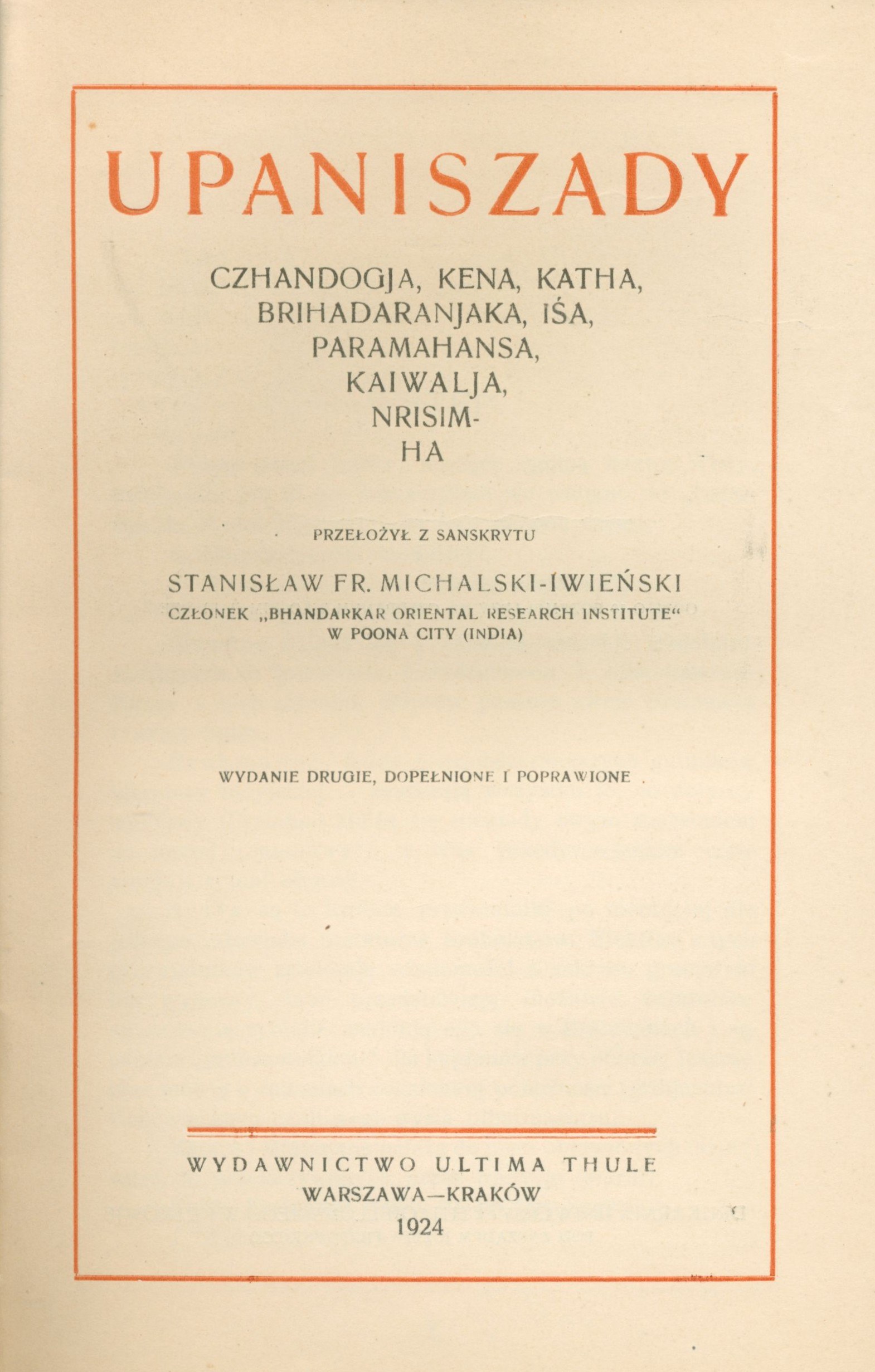
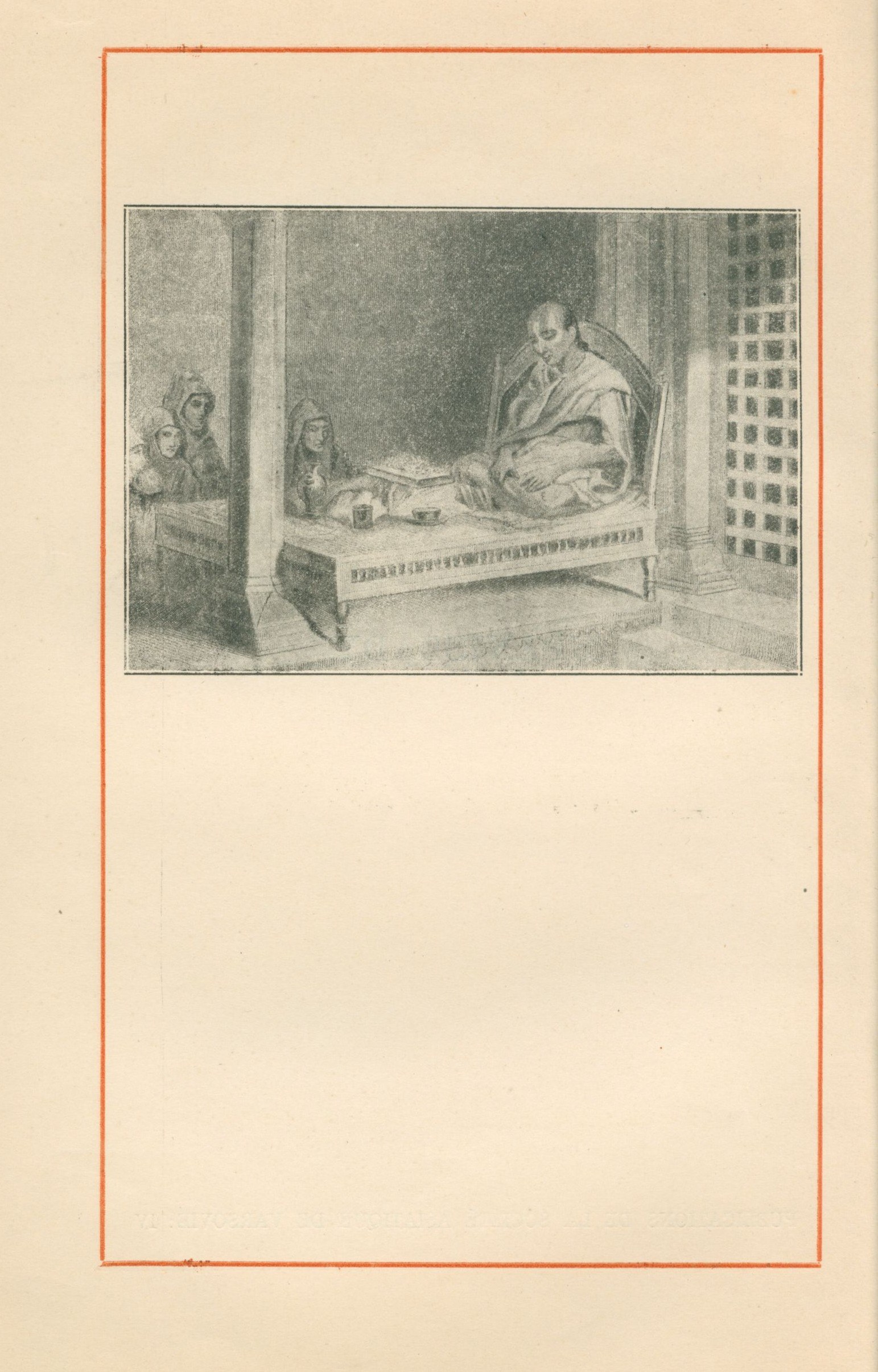
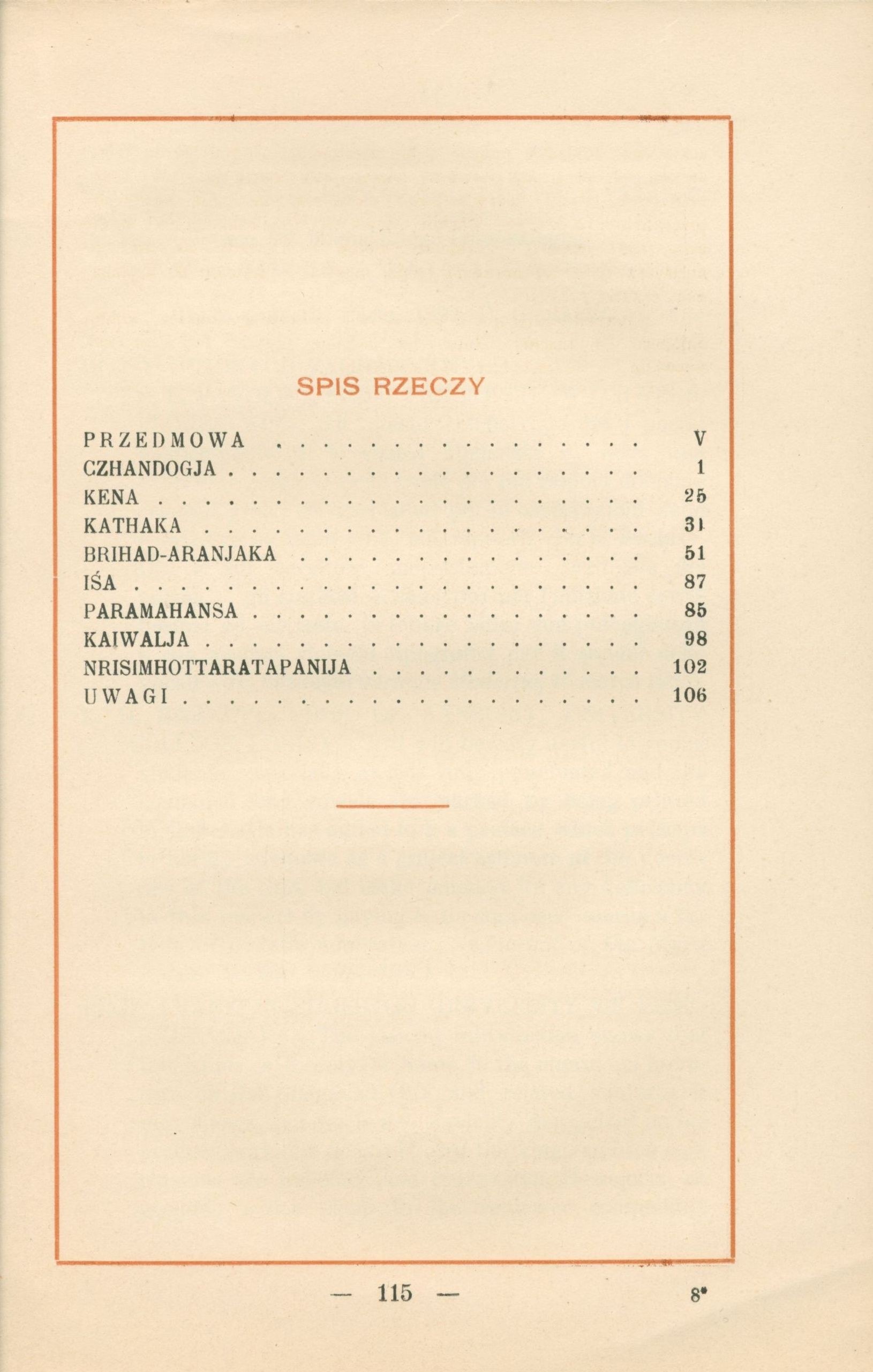

Upanishads: Chhandogya, Kena, Katha, Brihadaranjaka, Iśa, Paramahansa, Kaiwalya, Nrisimha; translated by. St. Michalski - Iwienski / Warsaw 1924 / Ultima Thule Publishing House / softcover / pp. ( XV) 119 / black and white illustration; vignettes / very good condition-; minor soiling on covers; scuffs on edges; minor soiling here and there; notations in pencil; loose folds; p. XV loose; p. 16 loose
2nd edition, completed and supplemented.
The Upanishads are, in a sense, a continuation of Vedic literature and, like it, do not lend themselves to precise dating. The period of composition of the oldest of them remains largely unclear; it falls between the era of the Vedas and the emergence of Buddhism. However, if an approximate time frame is accepted, the years 1500-800 BC can be indicated. Determining the sequence of the various Upanishads is somewhat simpler, since later texts refer to earlier ones. However, it should be remembered that almost every Upanishad has a layered structure and combines parts created at different periods. Researchers count among the oldest the elaborate Upanishads written in prose, the Brihadaranyaka and the Chhandogya. This is followed by the subsequent prose texts, Taittiriya, Aitareya and Kaushitaki. A separate group consists of verse works, Kena, Kathaka, Iśa, Svetashvatara, Mundaka and Mahanarajana. The Prajna, Maitrajanya and Mandukya belong to the later phase. The other Upanishads associated with the Atharvaveda were for the most part created much later.
As a kind of "supplement" to the classical Vedic literature, the Upanishads elaborate on the thoughts contained therein, addressing issues of philosophy, meditation and consciousness.