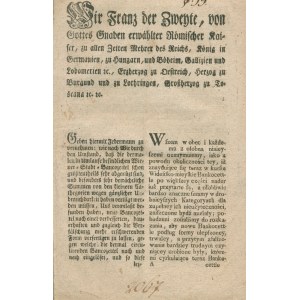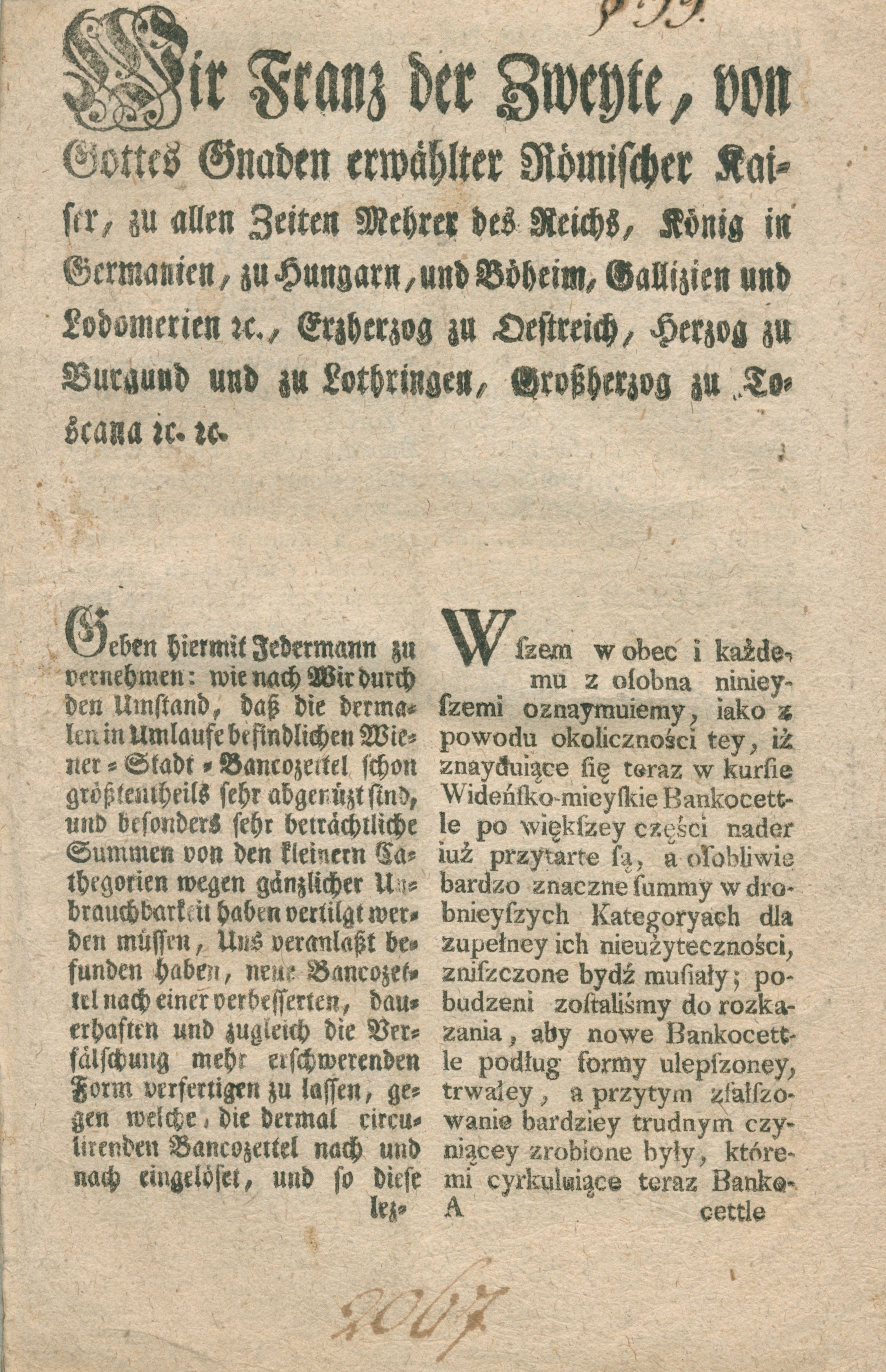
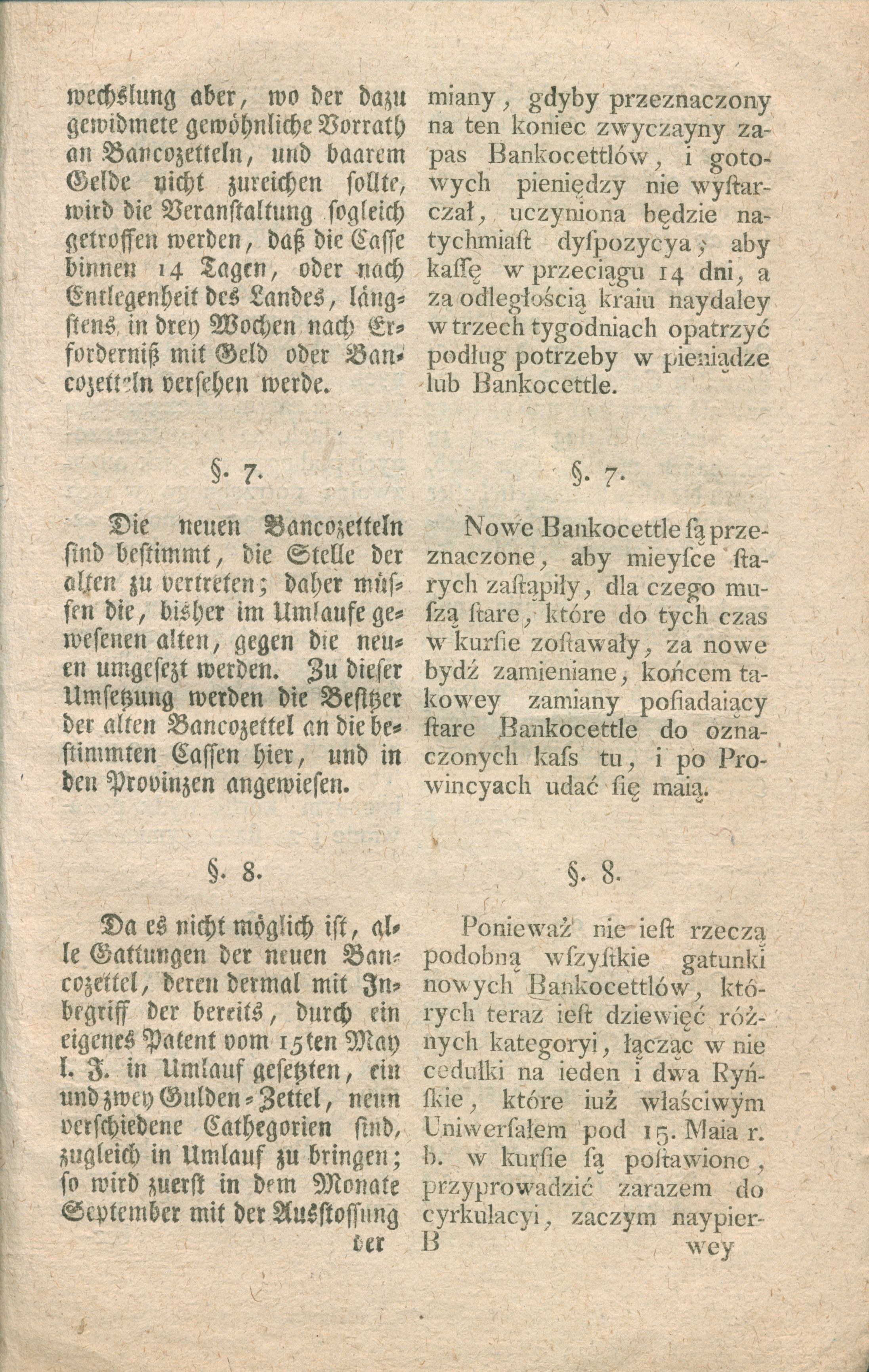
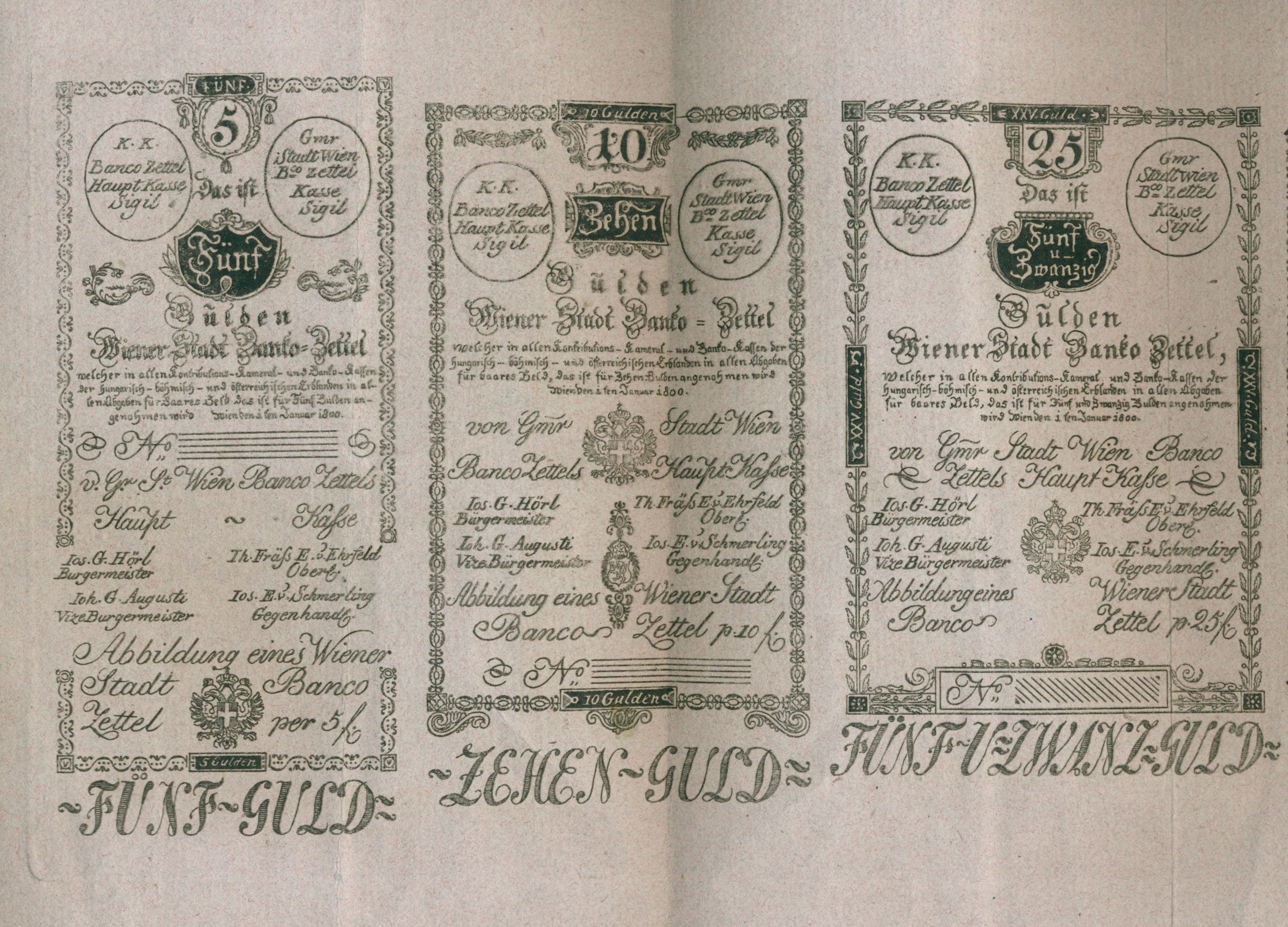
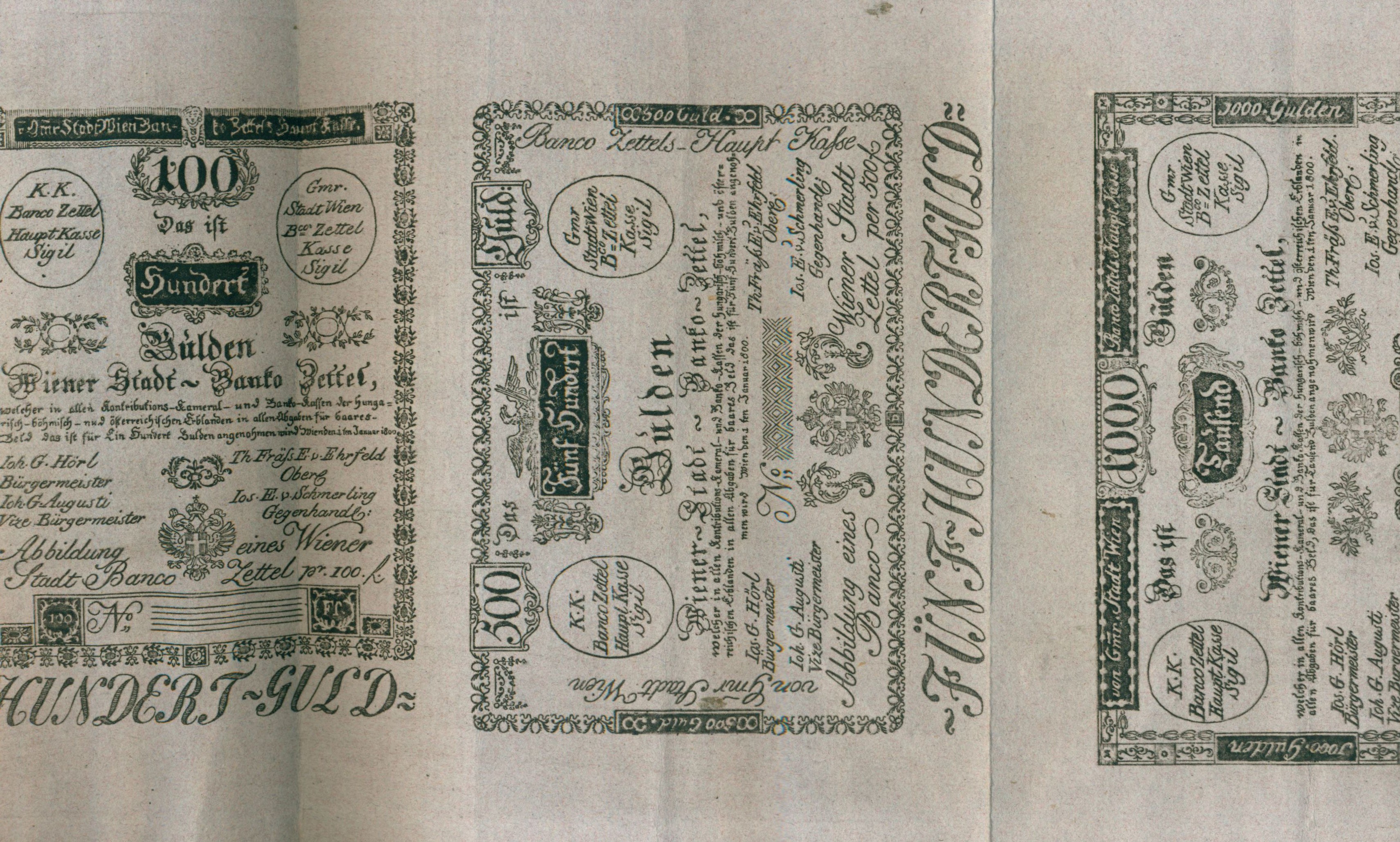

Francis II (1768-1835)/Universal on the introduction of the new Viennese banknotes together with a table of banknote specimens/Vienna, 1800/ six pages, printed on both sides on handmade paper/ folding table in copperplate/ text in Polish and German/ very good condition, reinforcing the spine with paper, small tears on the side and bottom edges of the last page, on the p.tyt. notes in pen from the epoch. Rare.
Rare official print issued on behalf of Emperor Francis II, concerning the reform of the Vienna Bankochet (Wiener Stadt-Banco-Zettel) , one of the earliest paper money systems operating in the Habsburg monarchy. The document announces the introduction of a new issue of bankocetli, caused by significant wear and tear on the banknotes in circulation, especially in the lower denominations.
The universal specifies in detail the rules for issuing new banknotes, their security features and the procedure for the gradual replacement of existing issues. Among other things, it introduced improved paper and solutions to make banknotes more difficult to counterfeit, including printed signatures of officials instead of handwritten signatures. The new banknotes retain their status as full-fledged legal tender, accepted at all public cash registers of the Habsburg monarchy - in Austria, the Czech Republic, Hungary and Polish Galicia.
The document also specifies the timetable for the introduction of the various denominations into circulation and the final date for the replacement of old banknotes, set for June 30, 1801. Also included are detailed provisions for accepting damaged banknotes and strict criminal regulations against counterfeiters, even providing for a reward of 10,000 Rhine guilders for those who uncover the forgery and identify its perpetrators.
A particularly interesting element of the publication is a fold-out illustration board showing specimens of the new banknotes, included as announced in the text of the universal. The board presents, in the form of copperplate reproductions, designs of banknotes of various denominations, 5, 10, 25, 50, 100, 500 and 1000 guilders.
The publication is a valuable testimony to the functioning of the Polish lands under Habsburg rule, and at the same time an interesting document of the history of paper money in the Austrian partition.