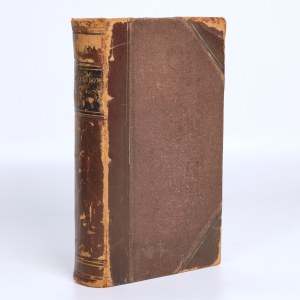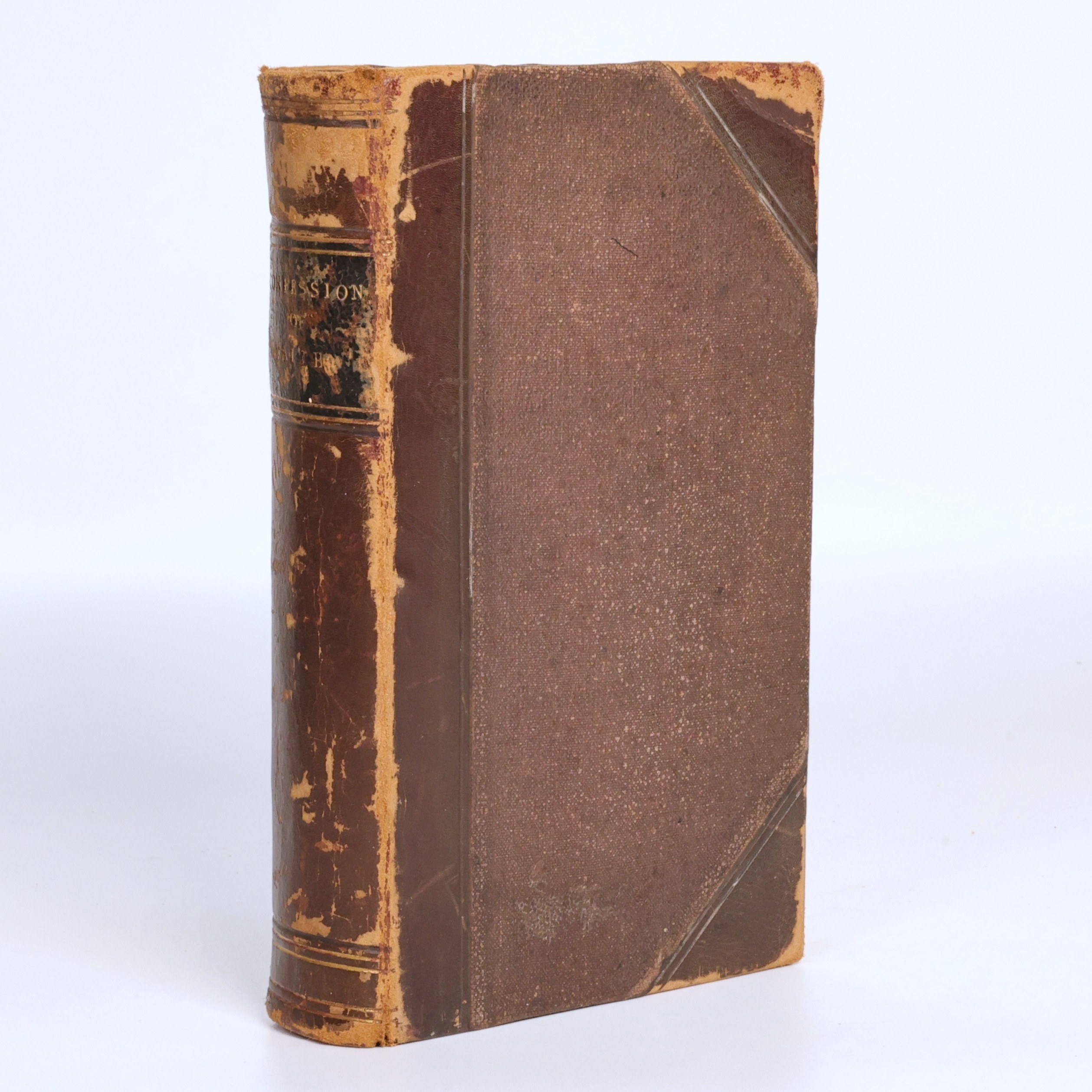
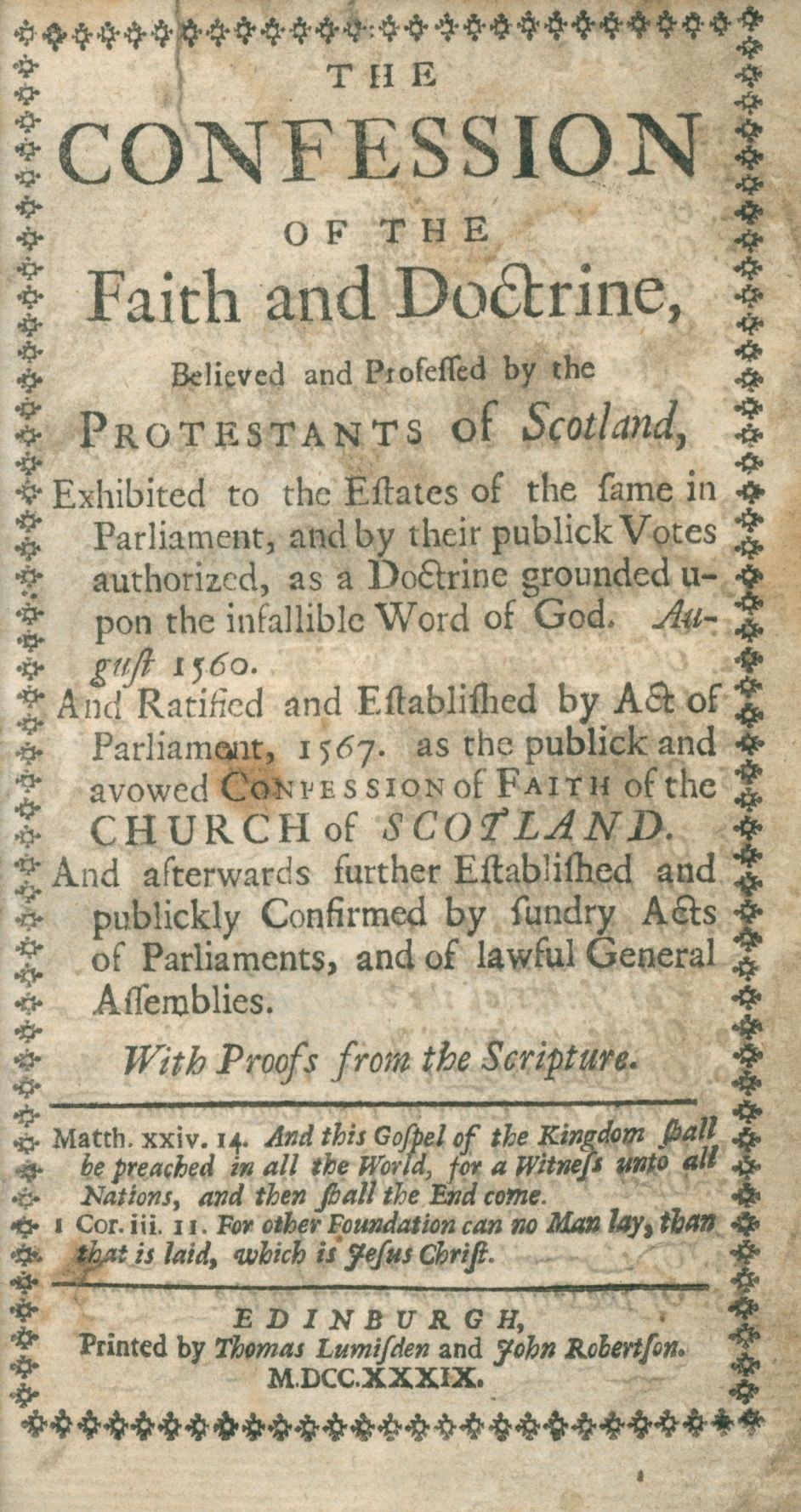
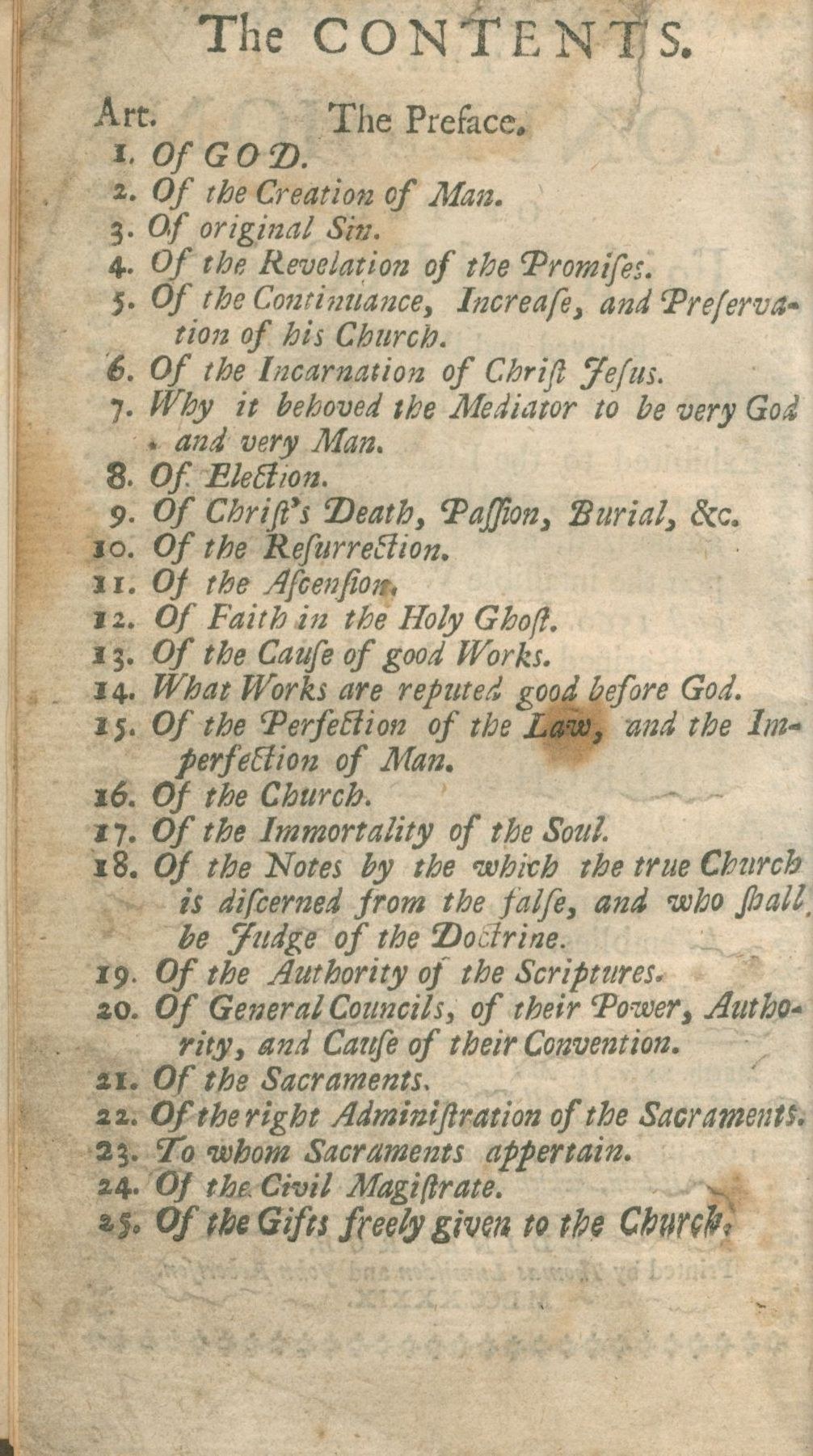
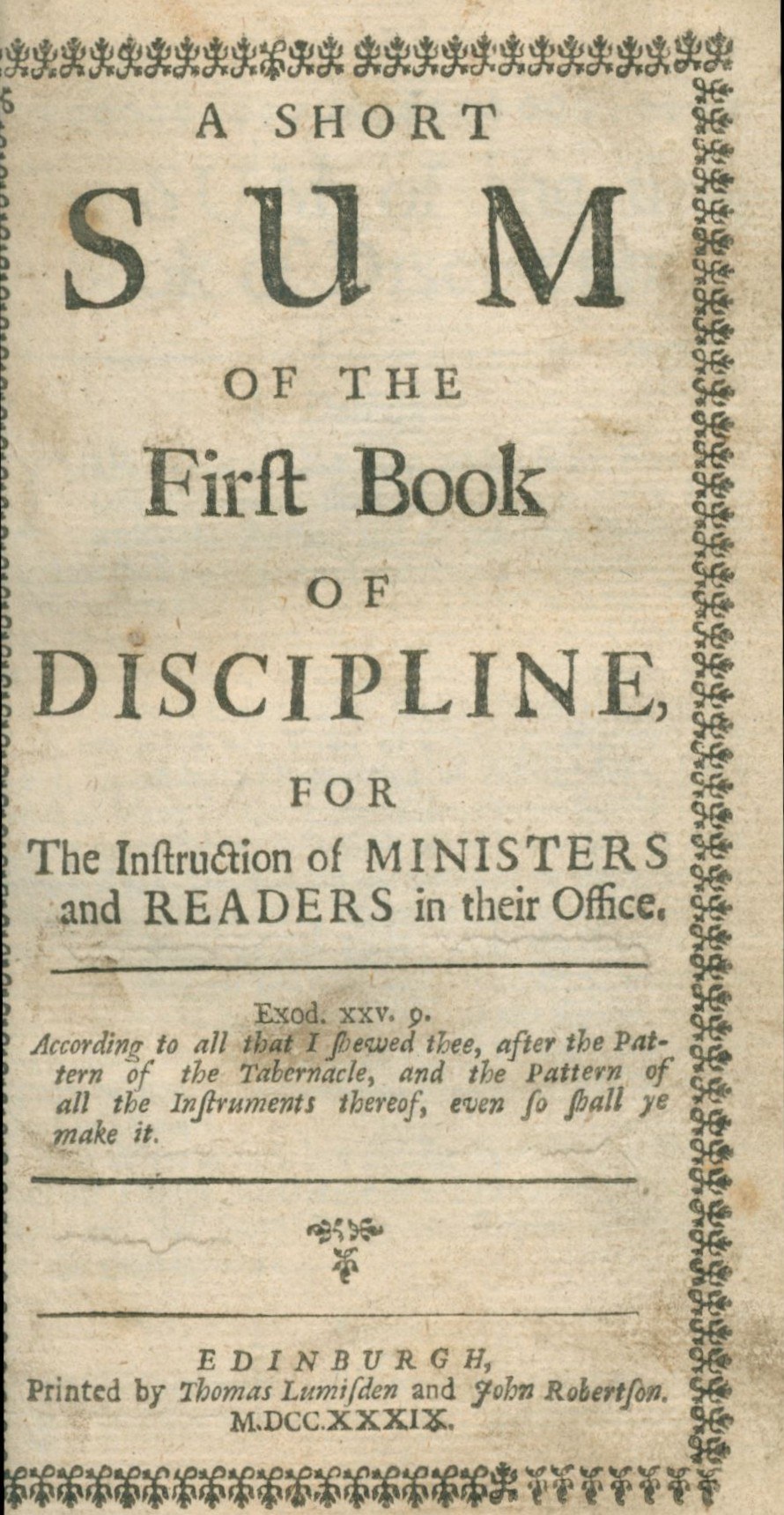

The Confession of the Faith and Doctrine, Believed and Professed by the Protestants of Scotland, Exhibited to the Estates of the fame in Parliament, and by their publick Votes authorized, as a Doctrine grounded upon the infallible Word of God. August 1560. and Ratified and Established by Act of Parliament, 1567 as the publick and avowed Confession of Faith of the Church of Scotland. And afterwards further Established and publickly Confirmed by sundry Acts of Parliaments, and of lawful general Assemblies / Edinburgh 1739 / printed by Thomas Lumisden and John Robertson / bookbinding in half leather; gilt titling on spine; decayed page trims / pp. 550 (incomplete) / good condition; rubbing on spine; minor soiling on covers; pp. 1- 24 missing (important contents, including preface, are preserved); loss on pp. 27, 55, 59, 65, 109, 110, 111, 112, 163, 164, 165, 435, 436, 481,482 to the detriment of the text; traces of dampstaining; foxing; dampstaining; scuffing on p. 323; printing error on pp. 518 and 519 (is 506 and 507); visible sewing grid at front pastedown and back pastedown
The Scots Protestant Confession of Faith of 1560, printed in Edinburgh in 1739. After the withdrawal of French and English troops from Leith, near Edinburgh, the Protestant movement in Scotland took real shape. One of the first acts of parliament in 1560 was to task leading clergymen with drafting a document that would define the basis of the Protestant faith in the country. The document, known as the Scottish Confession, was prepared in a remarkably short time by six theologians bearing the name John: John Knox, John Spottiswood, John Willock, John Row, John Douglas and John Winram.
The speed of the work, only four days, was due to the fact that the essential doctrinal issues had already been discussed in detail and established over many years. After the Confession was read before the Scottish Parliament, it was adopted by the Three States, the Lords, the burgesses and the clergy, with little opposition. The document thus gained official status on August 17, 1560, and was further confirmed by parliamentary acts.