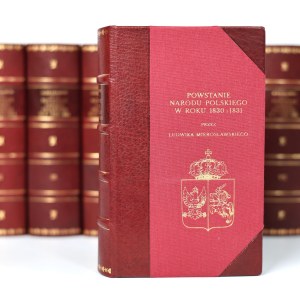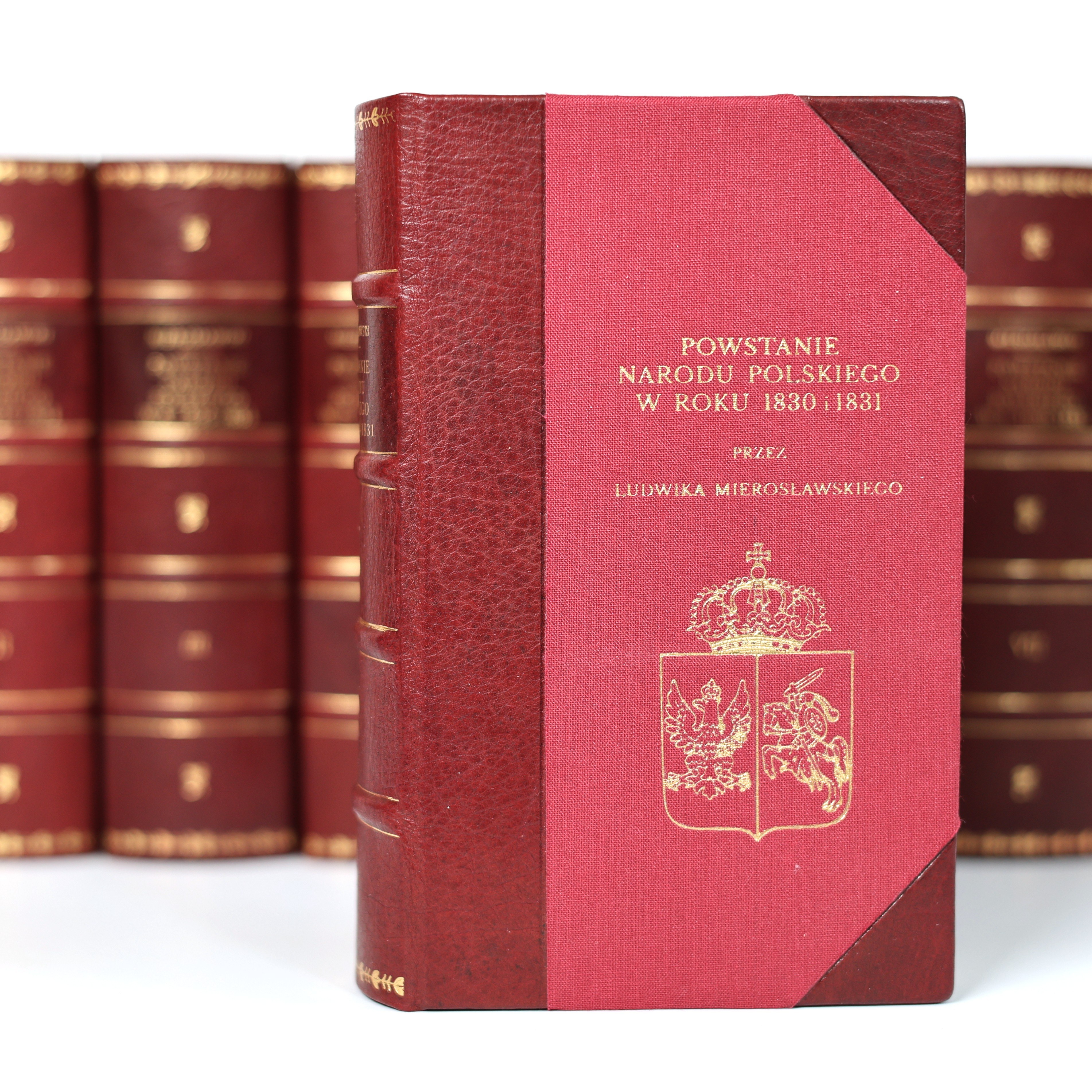

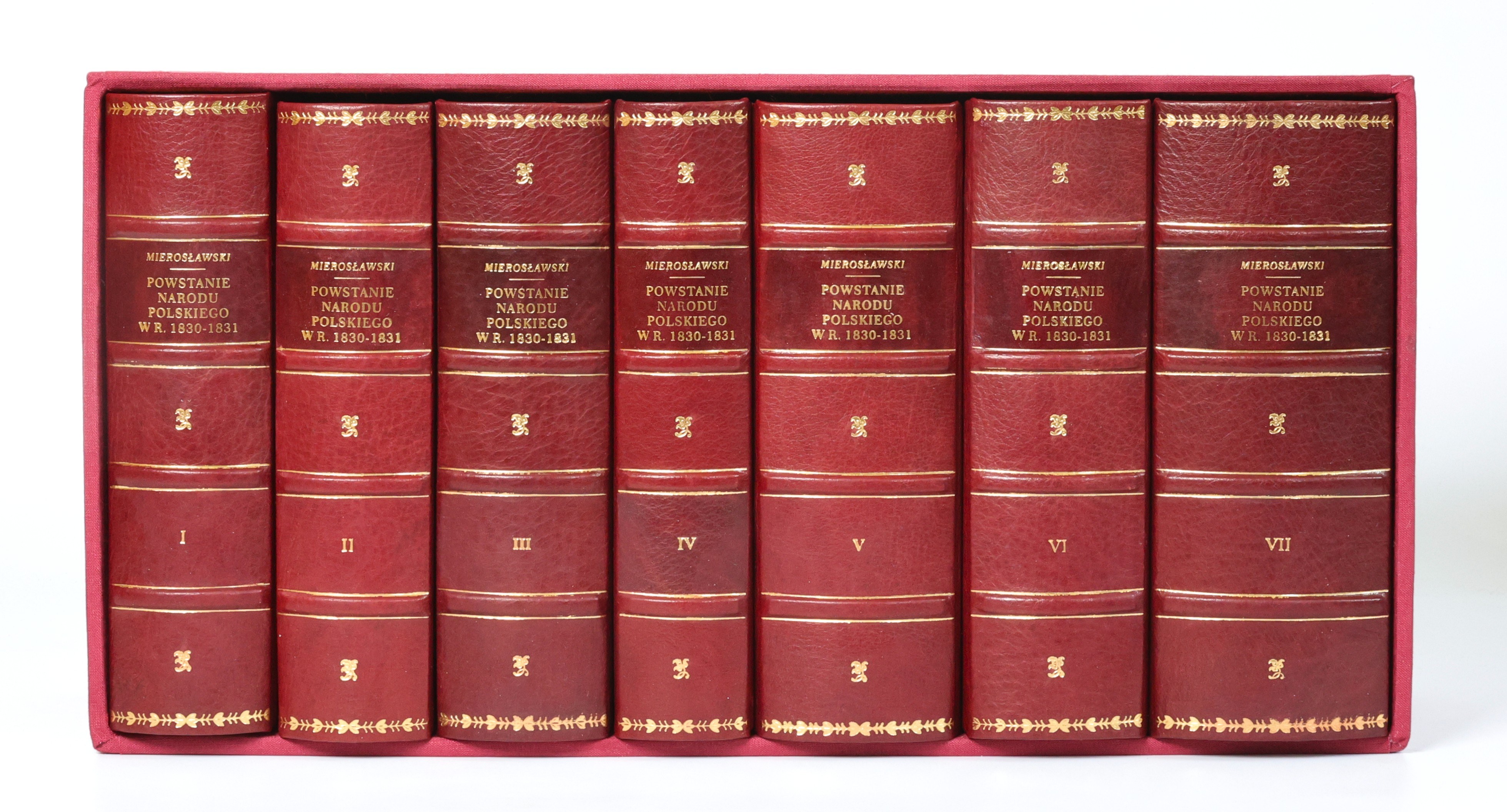
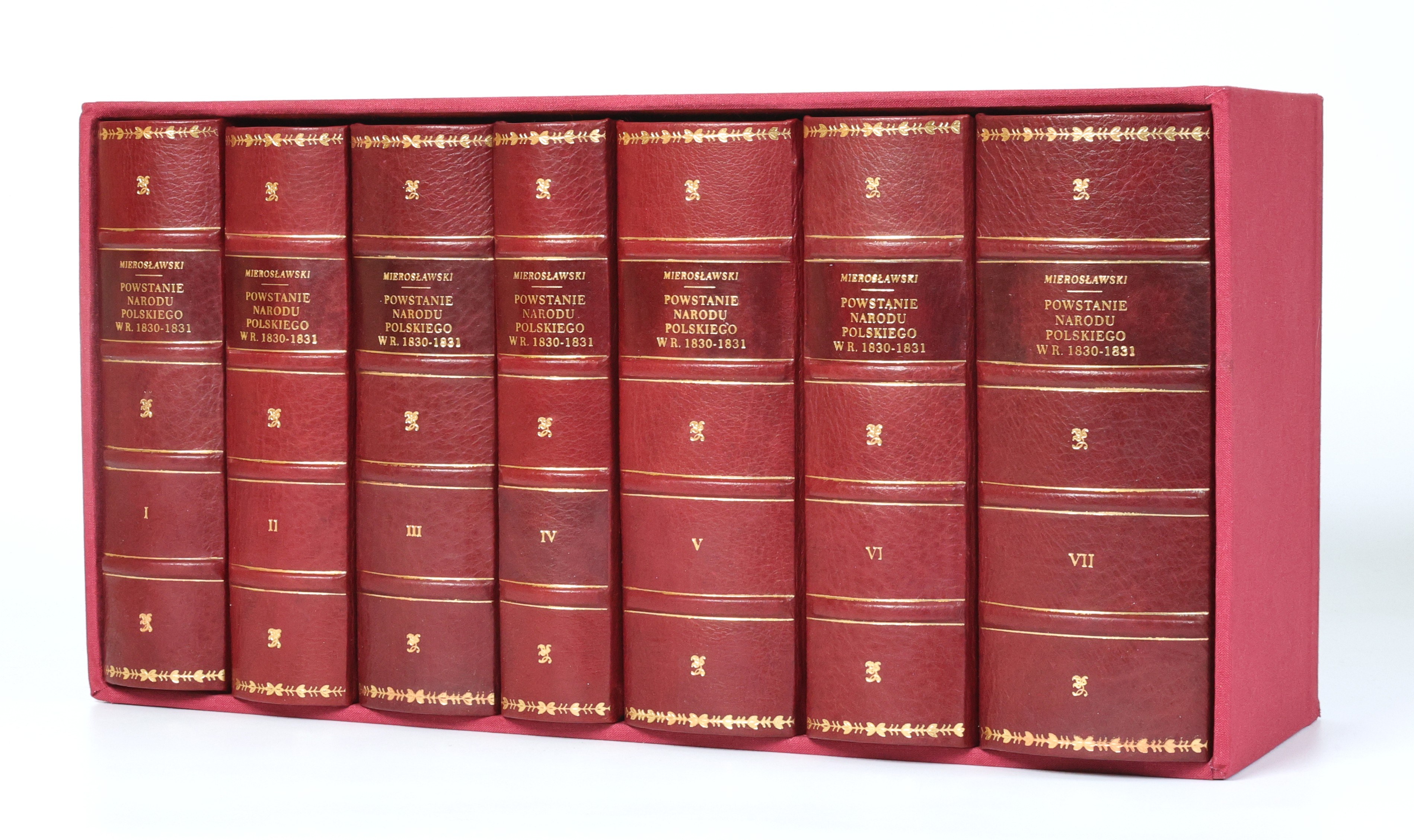
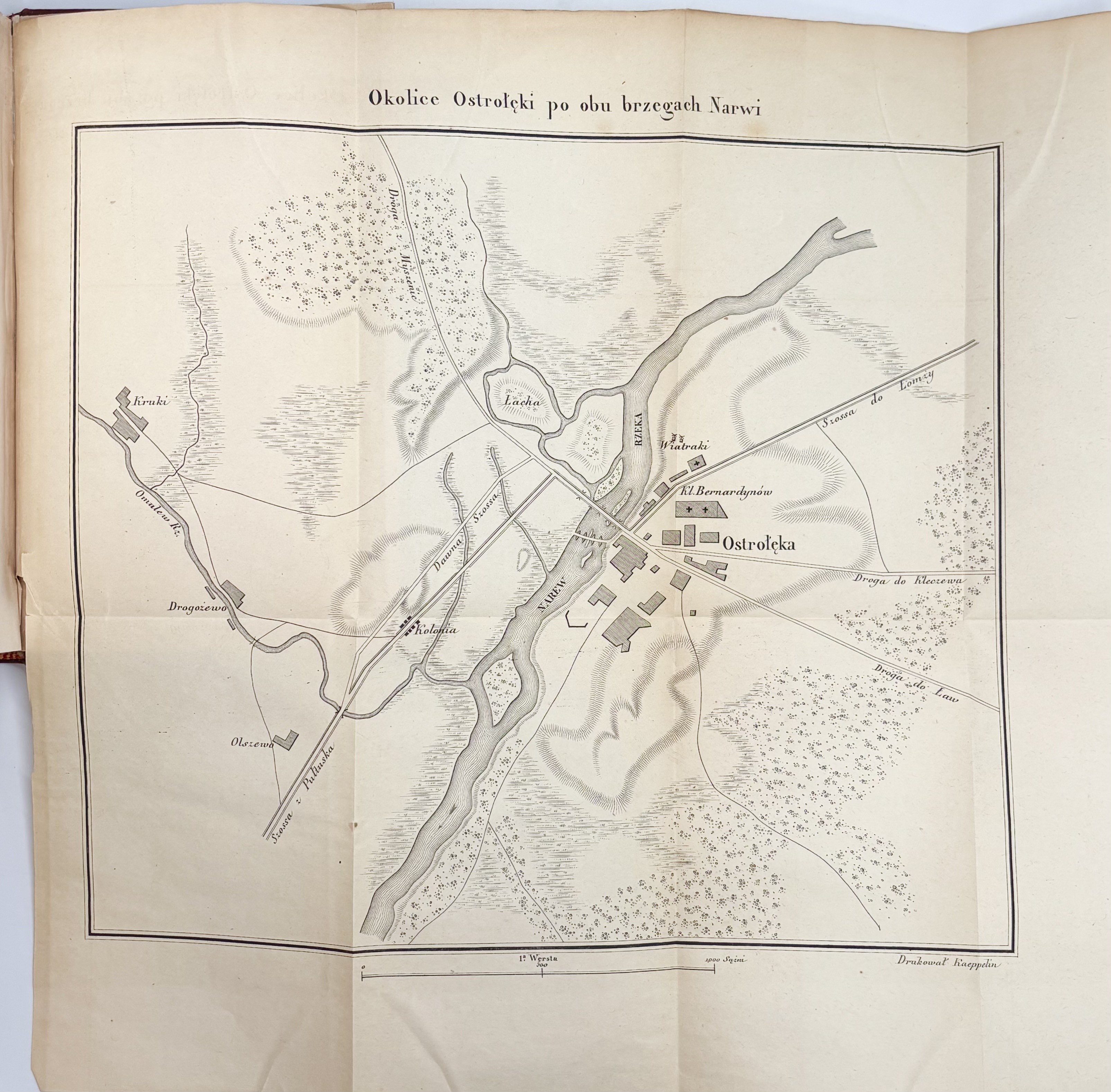
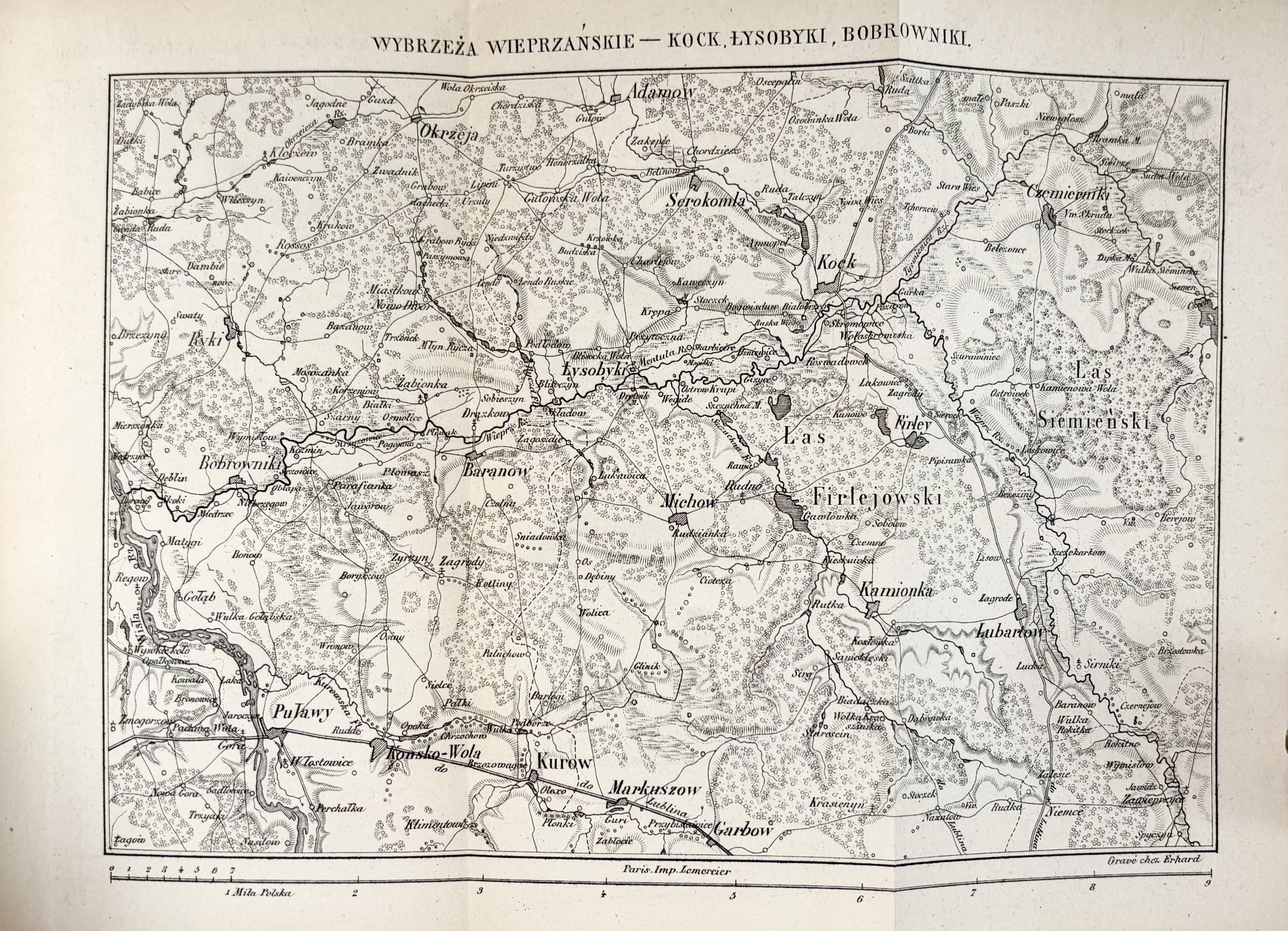
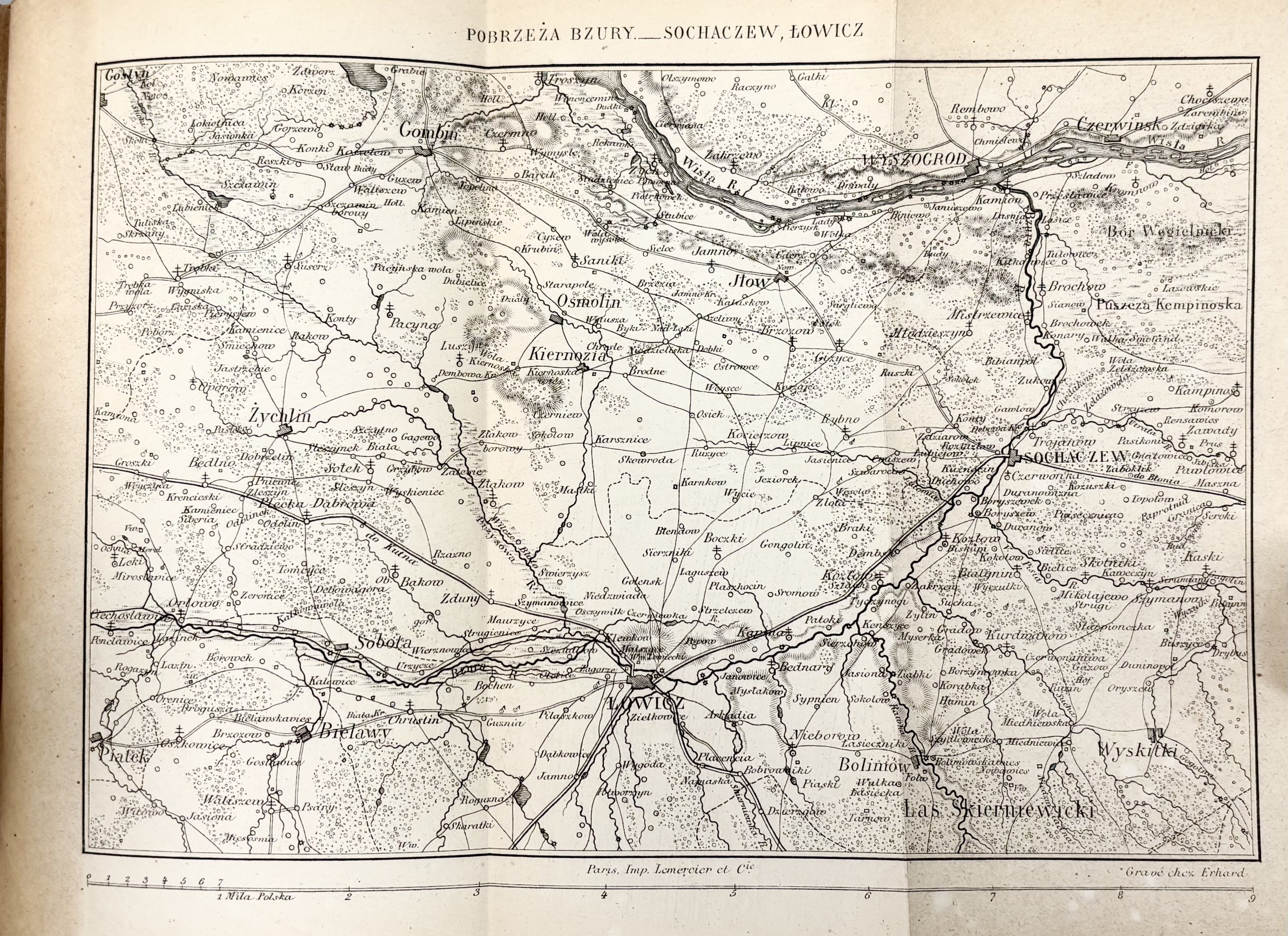
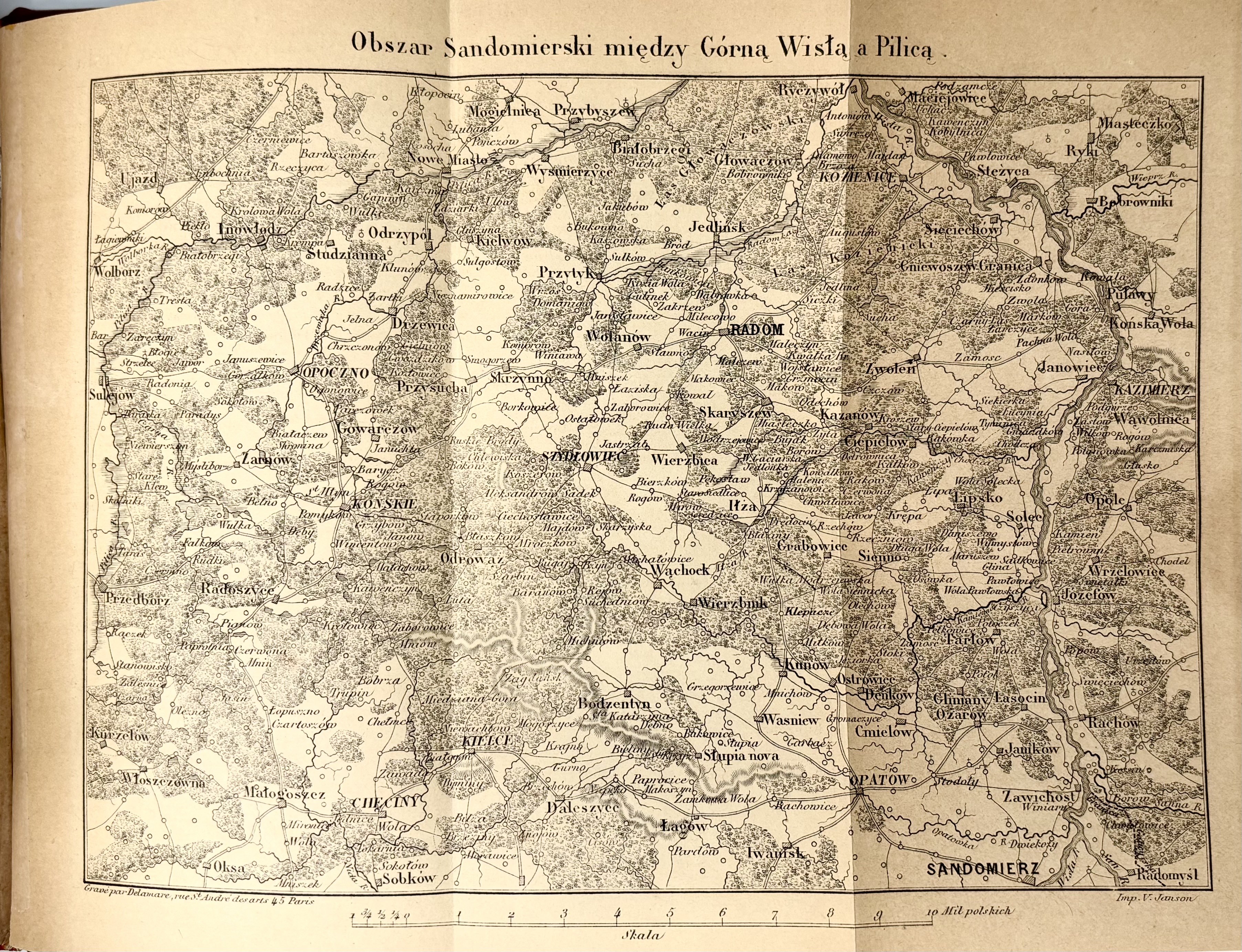
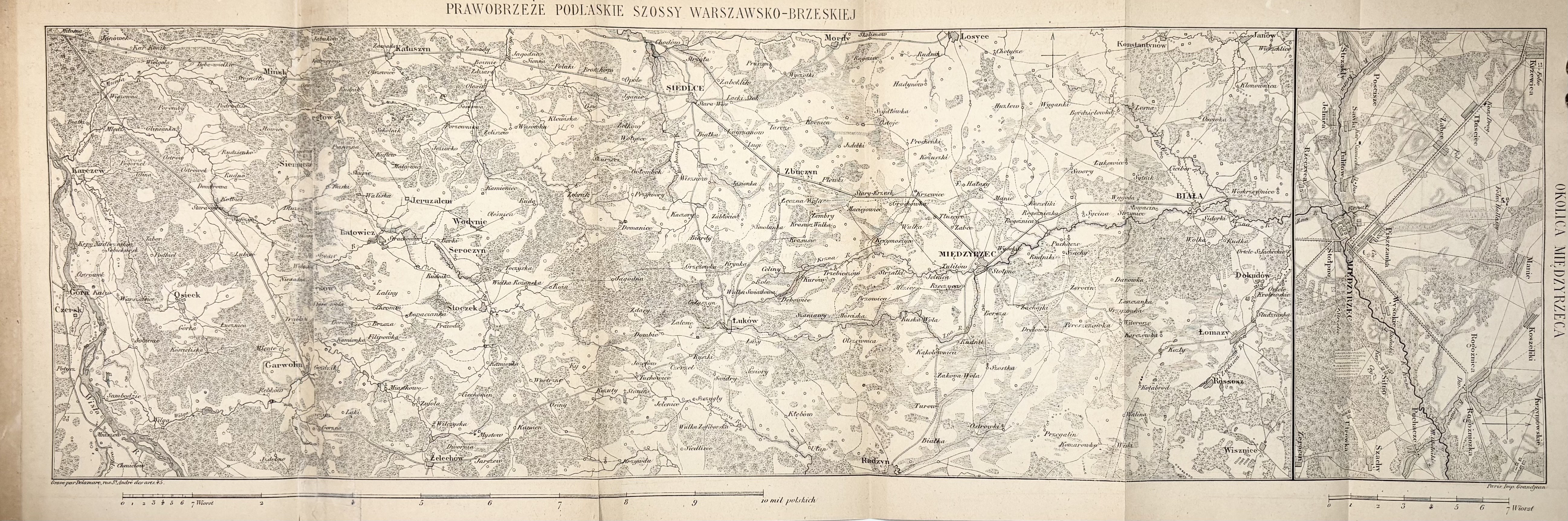
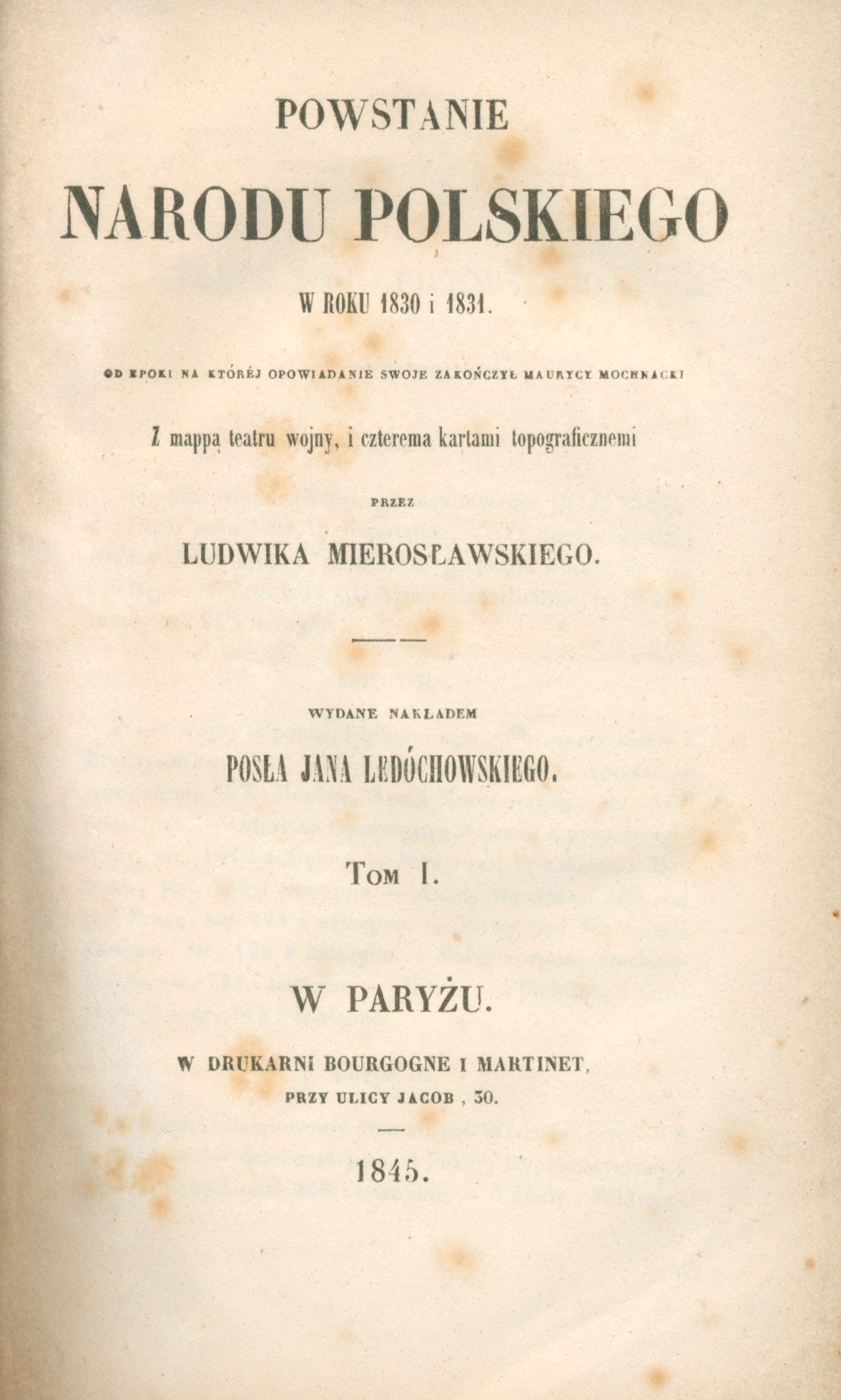
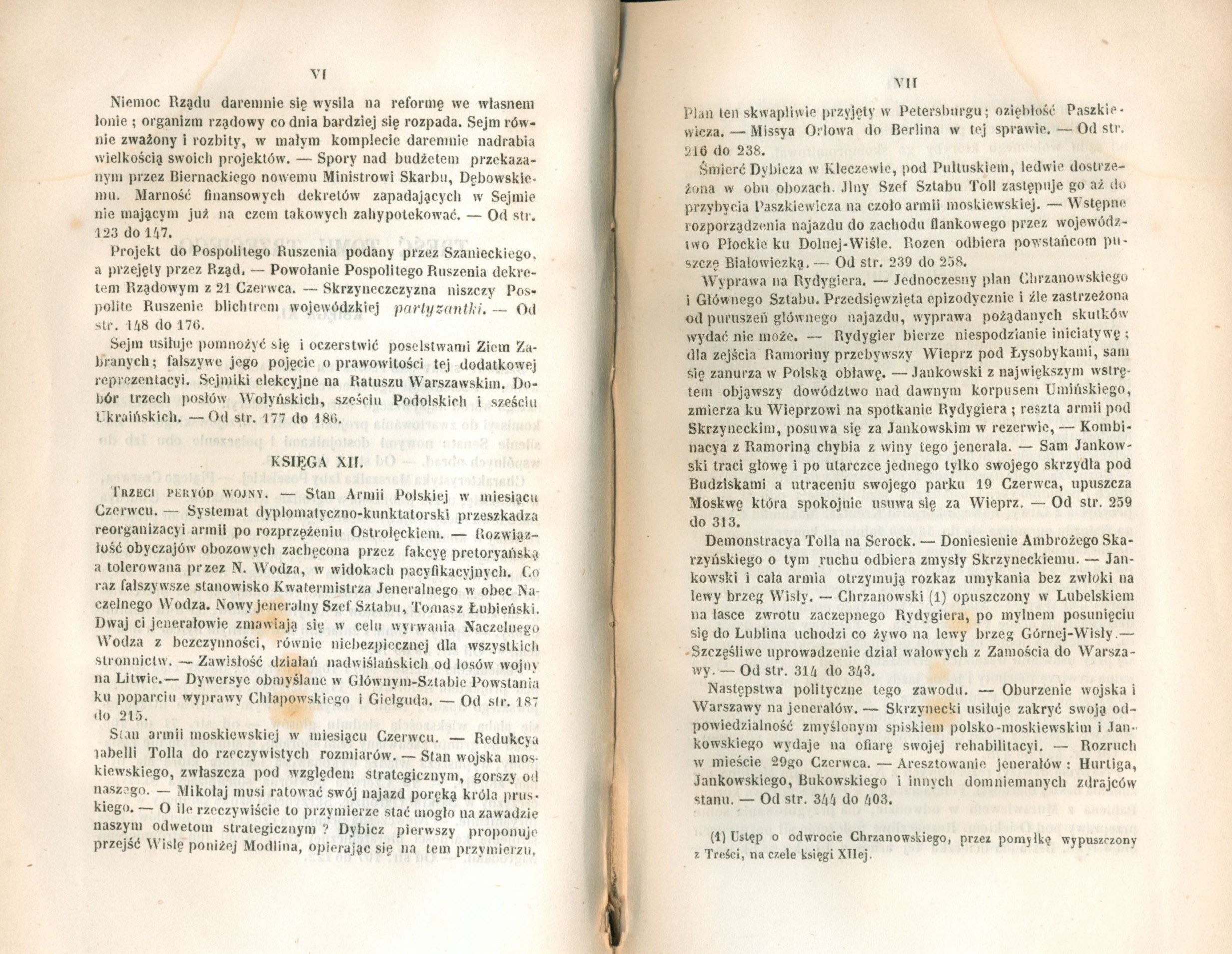
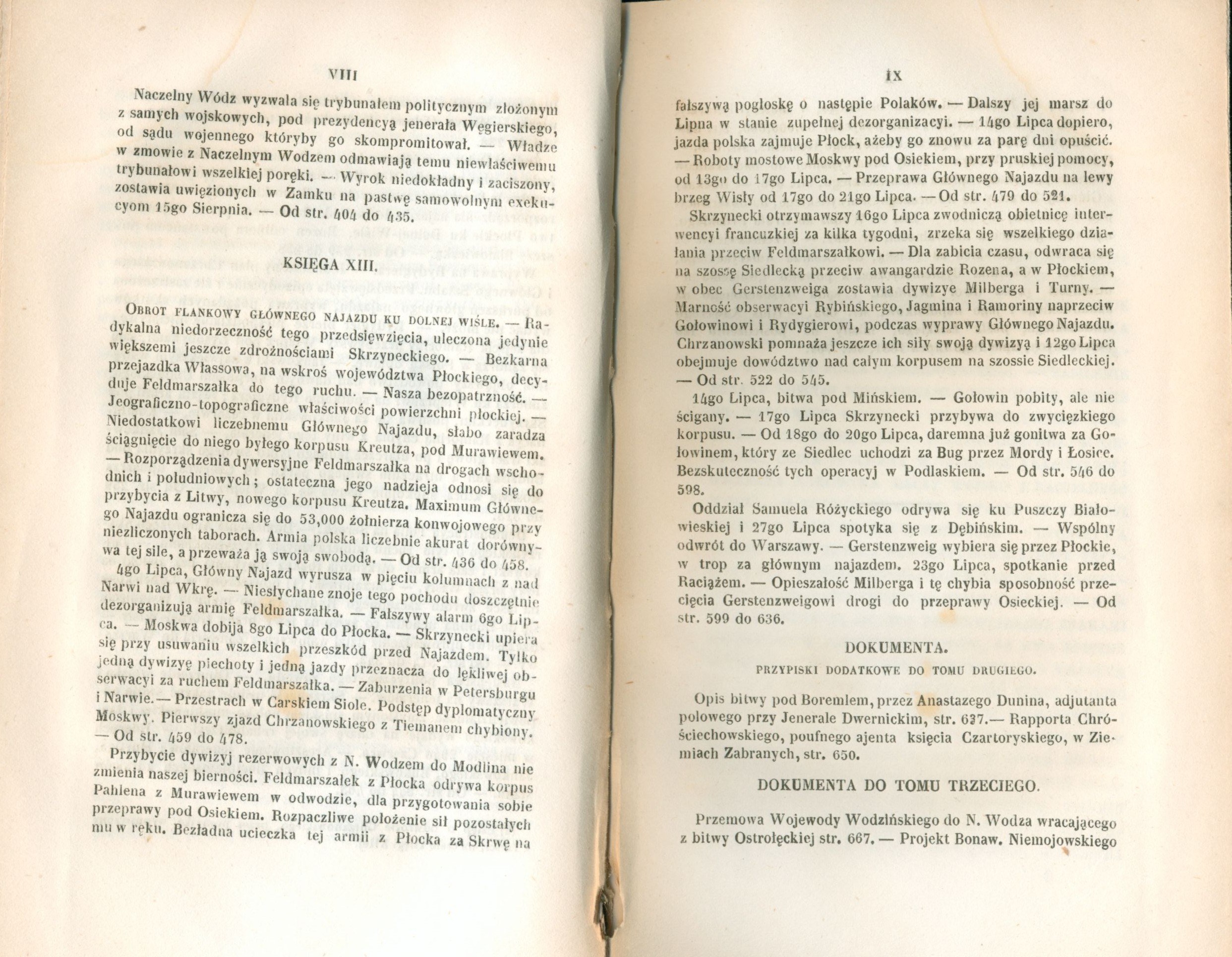
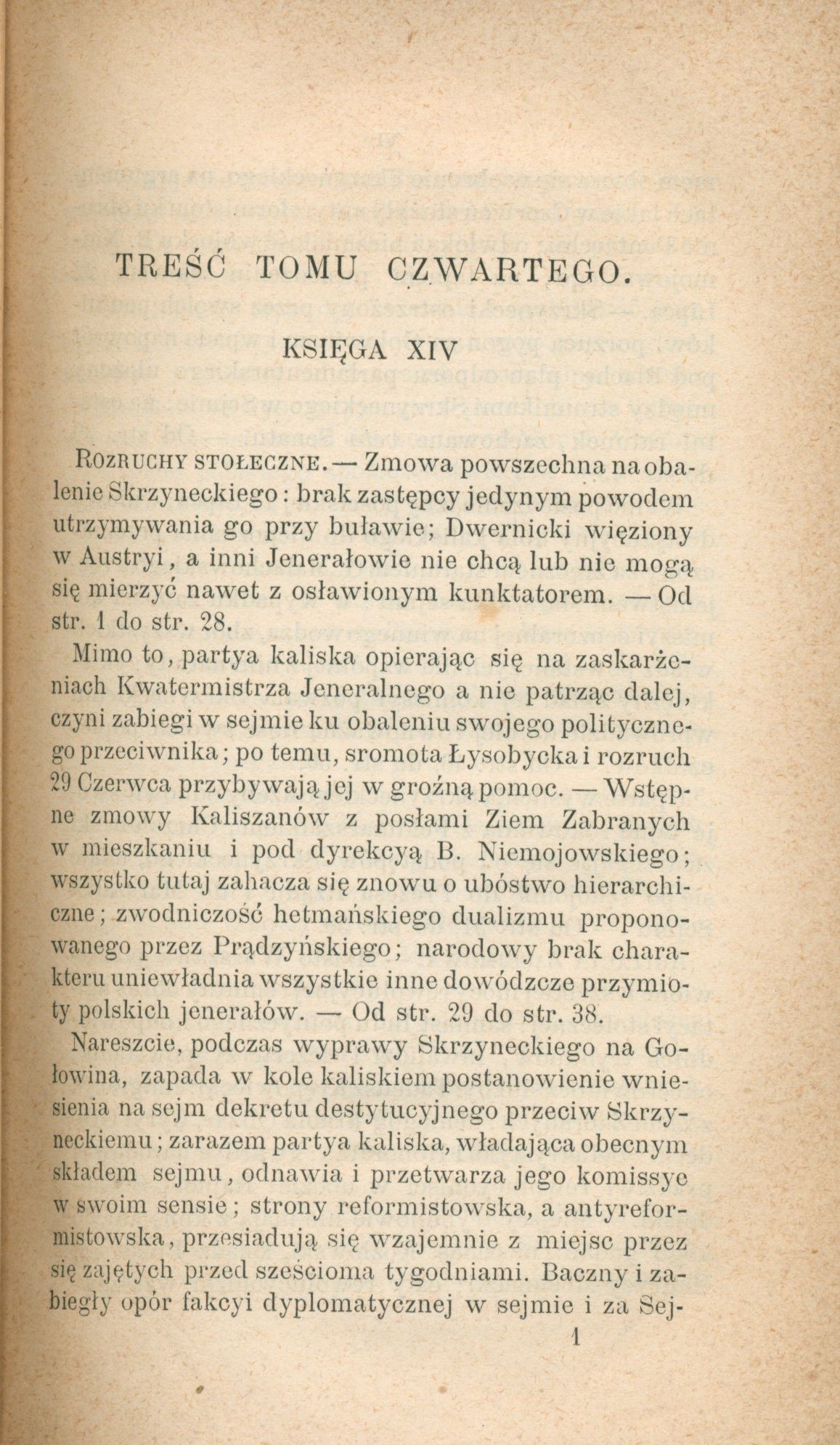

Mieroslawski Ludwik/ The Uprising of the Polish Nation in the Years 1830 and 1831 : from the epoch on which Maurycy Mochnacki ended his narrative/ / Paris, 1845-1876/ by Jan Ledóchowski, in the Printing House of Bourgogne and Martinet, Luxemburg Bookshop/ first edition/ luxurious half-leather with rich embossing and gilding; gilded titulature and coat of arms of the November Uprising on the faces/ pp. VII, [1], 725; VIII, 631; X, 703; XII, 591; XIX, [1], 783; XXIII, [1], 765; XXXVI, 820/ maps: in vol. I 5 map sheets in copy, in vol. II 2 map sheets including 1 in copy, in vol. III, IV, VI and VII 1 map sheet each/ very good condition, foxing in text in places, minor browning, several publisher's covers with minor repairs. Very rare.
Luxurious half leather binding (signed with MillaArte sticker on back cover of volume I). Spines divided by convex scrolls, gilt titling, volume numbering and subtle decorations in the fields. Covers covered with red cloth On the faces gilded titulature and the coat of arms of the November Uprising; a bipartite shield with the White Eagle and the Lithuanian Pogo, surmounted by a royal crown, symbolizing the unity of the Crown and Lithuania in the struggle for independence. Leather corners, upper page edges spotted. Original booklet covers pastedown in each volume.Entire volume enclosed in an elegant maroon box.
A monumental seven-volume Paris edition of one of the most important 19th-century studies devoted to the November Uprising, by Ludwik Mieroslawski (1814-1878) - general, political and independence activist, leader of the 1846 and 1848 uprisings in Greater Poland, dictator of the January Uprising, as well as tactician, military theorist and historian, and inventor. Conceived as a continuation of the narrative interrupted by Maurycy Mochnacki, Mieroslawski's work, however, grows far beyond the framework of a mere chronicle of the campaign: it is at the same time a history of the war of 1830-1831, an elaborate strategic analysis, a study of the political life of the uprising and a harsh balance sheet of the mistakes of its leadership.
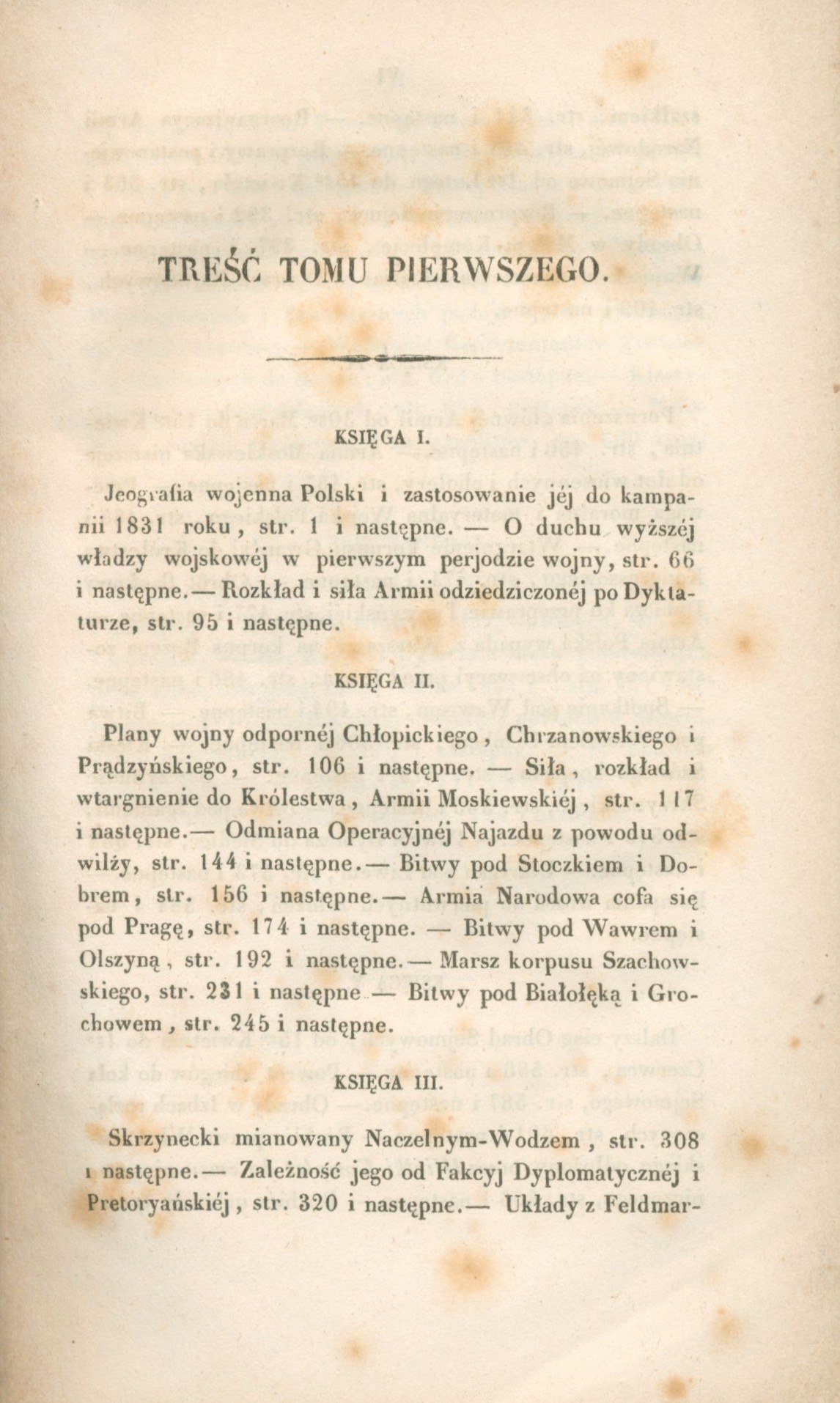
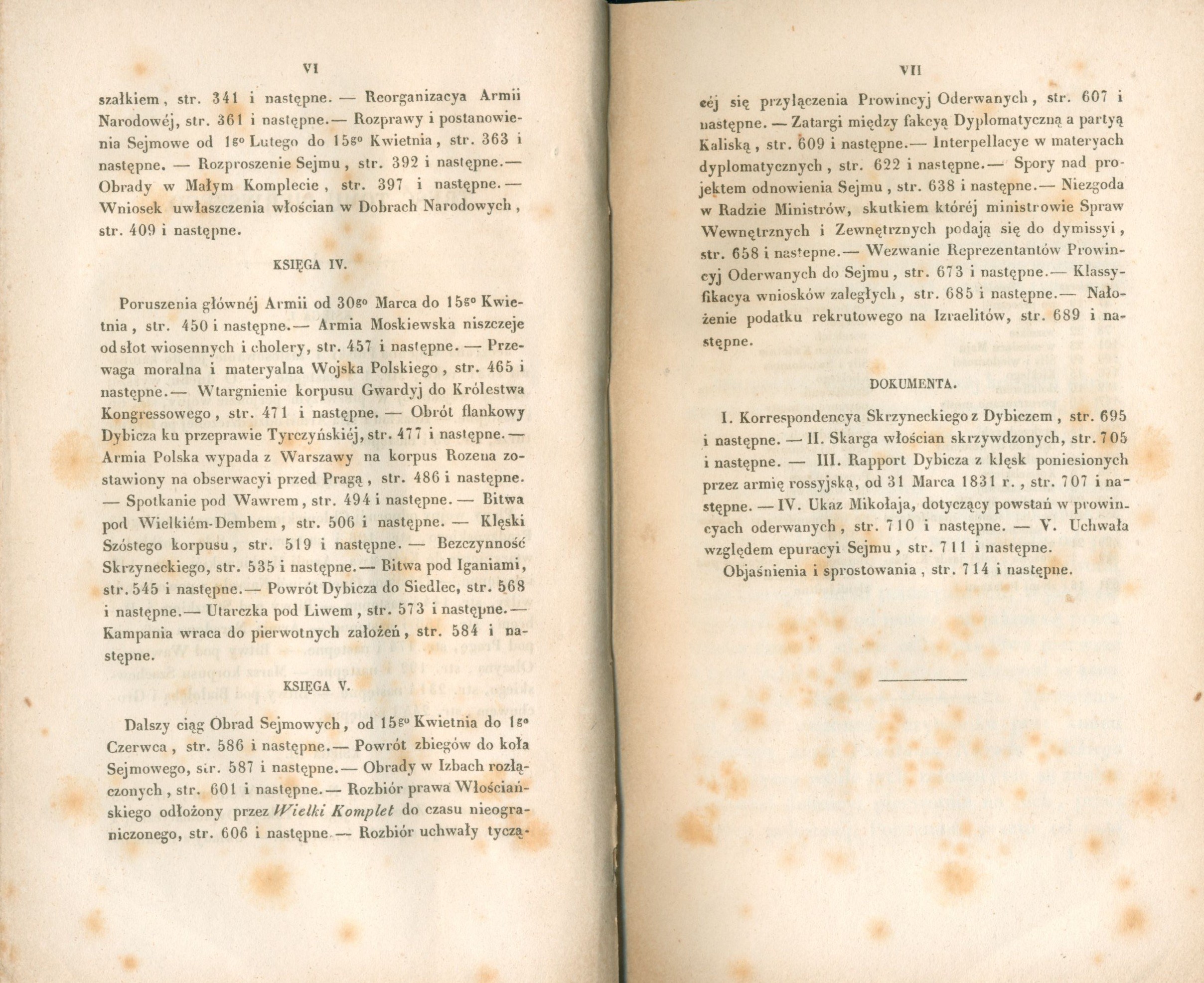
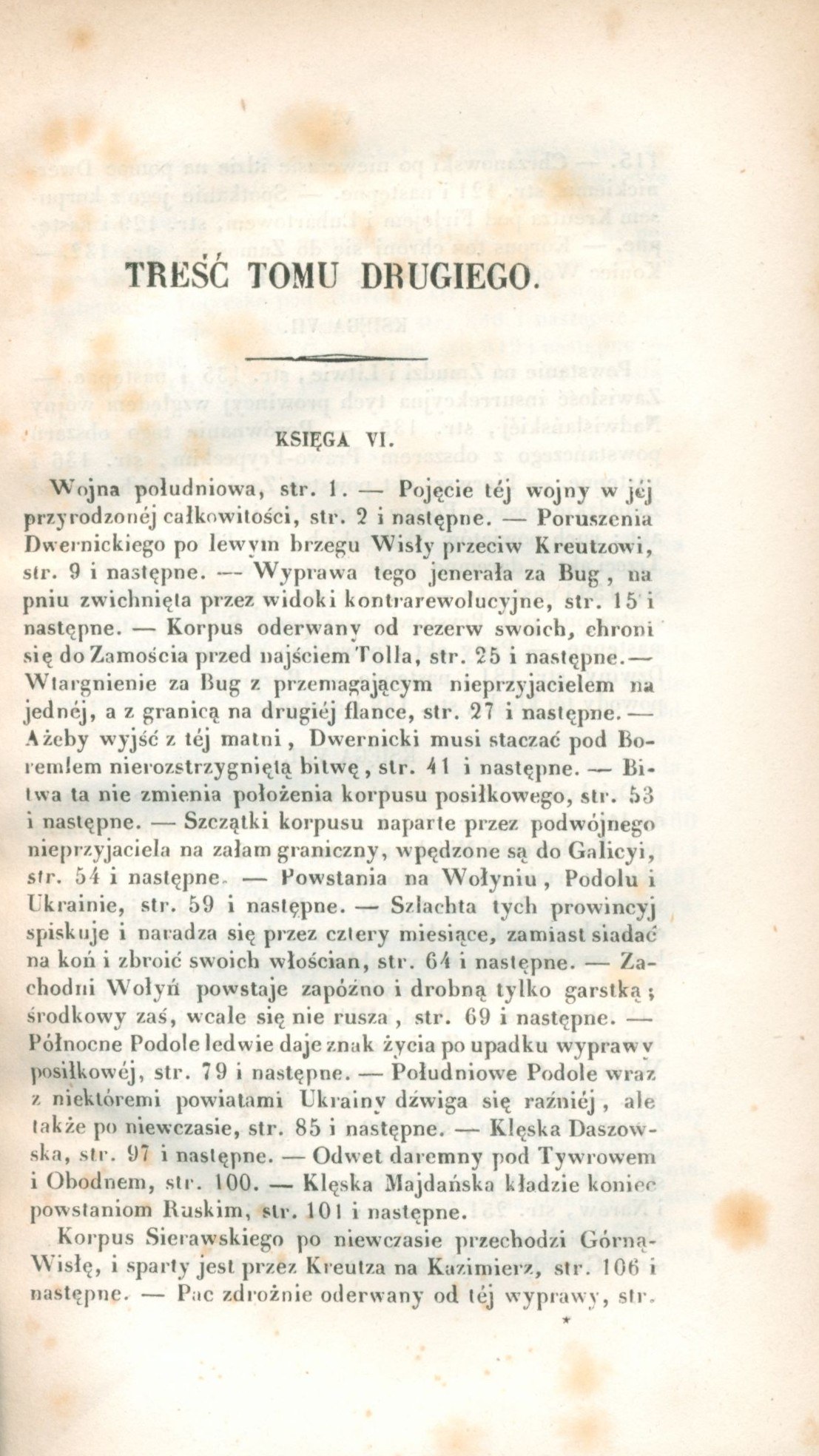
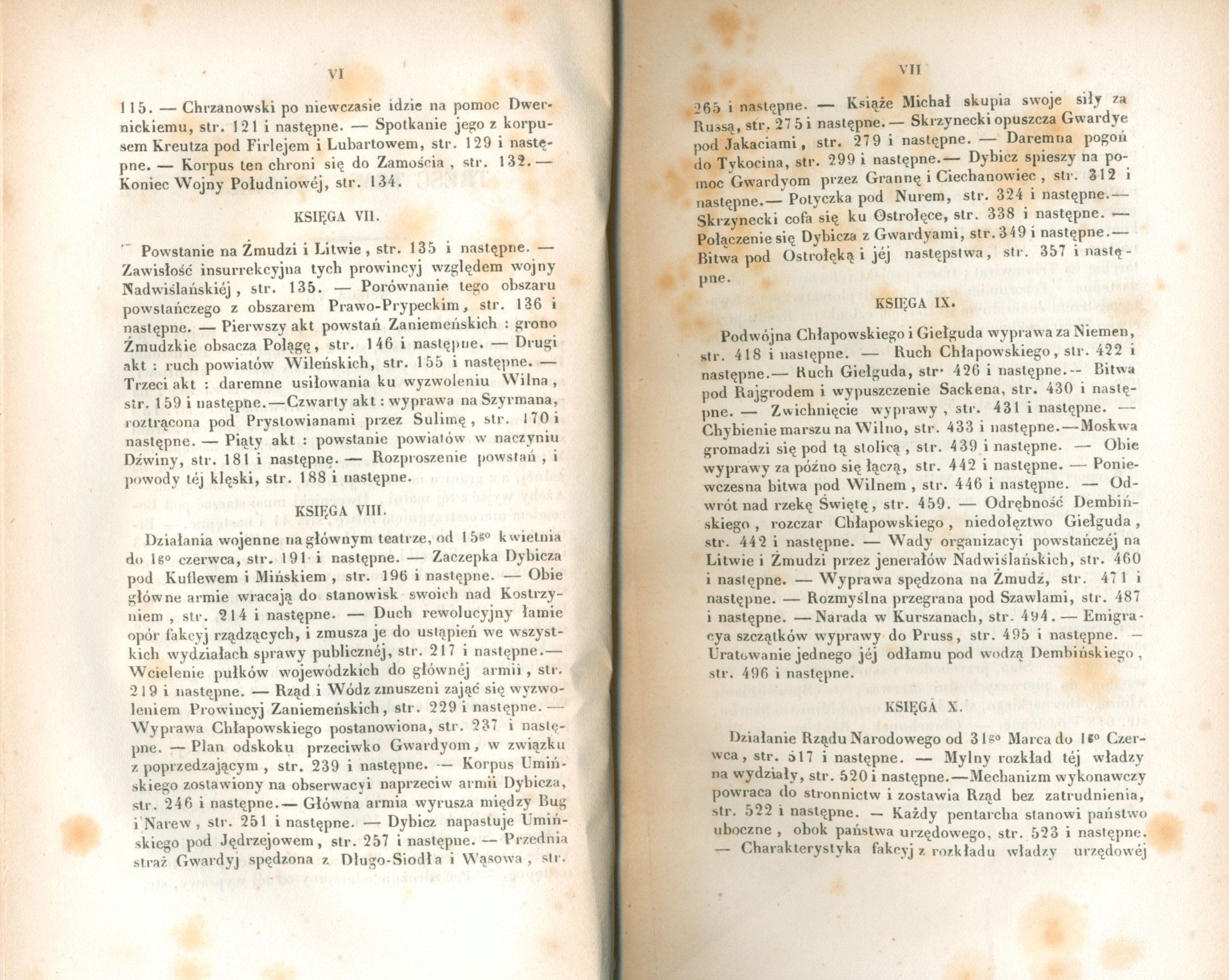
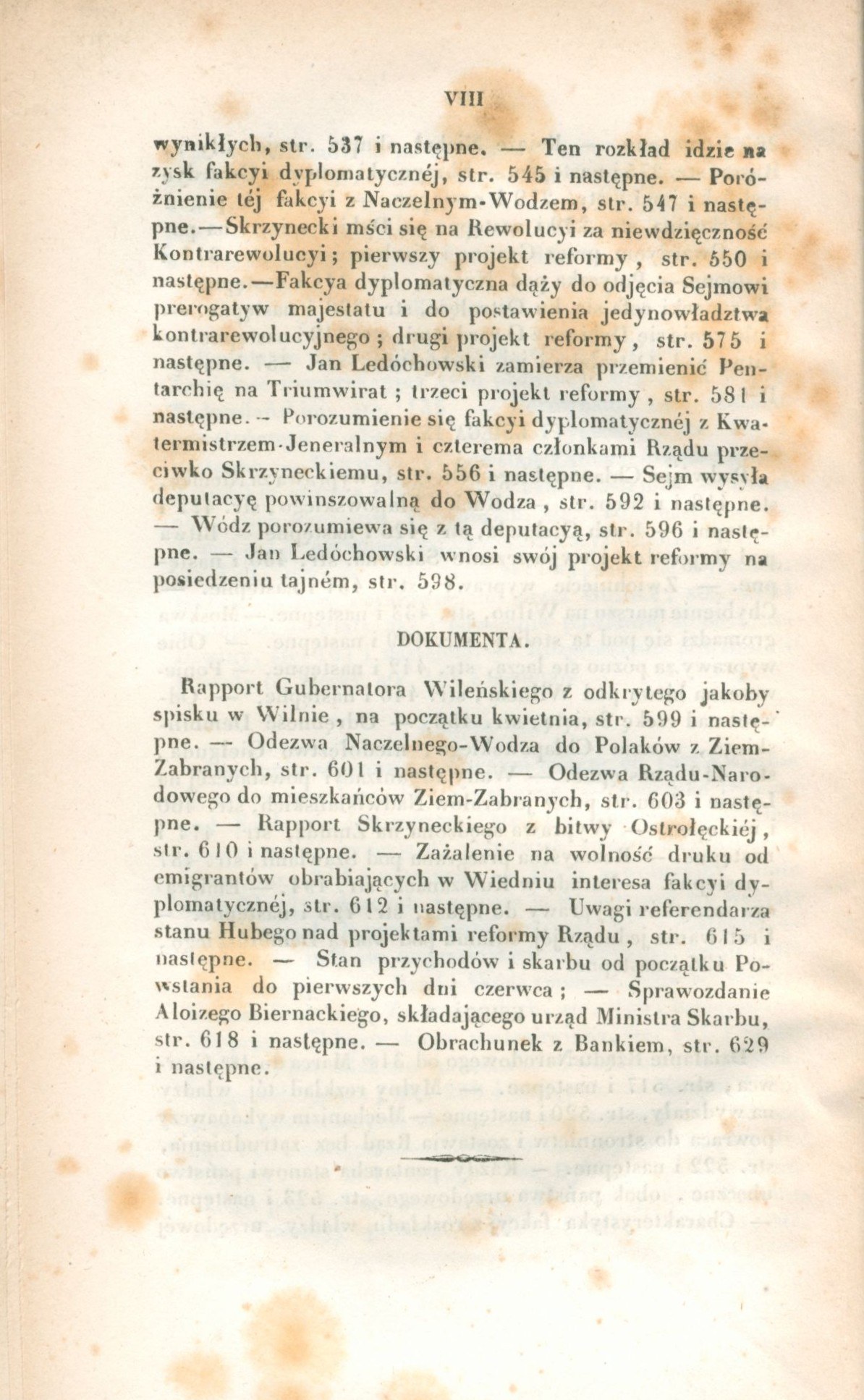
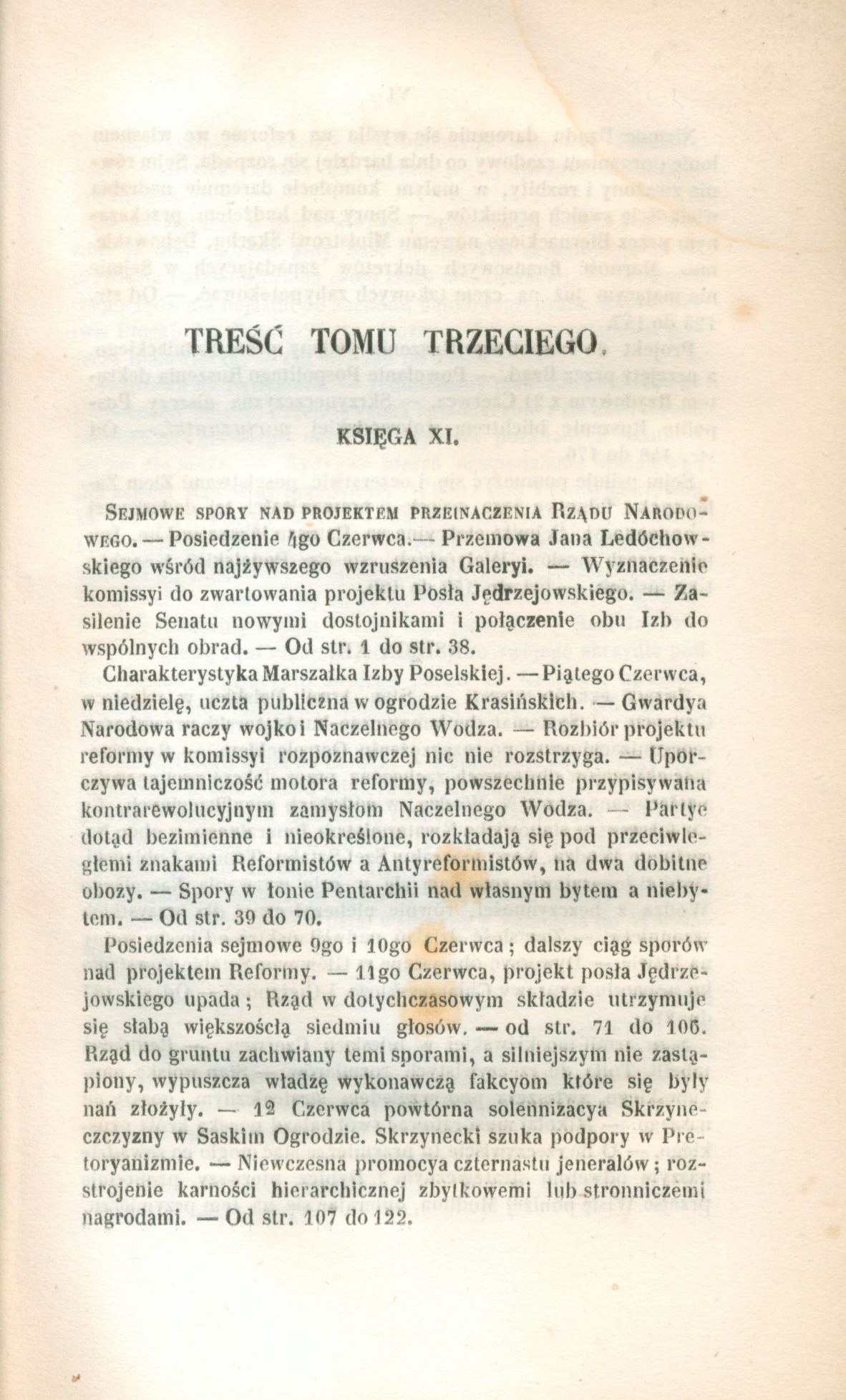
The entire volume covers seven volumes leading the reader from the first phase of the campaign, through the operations in Lithuania, Samogitia, Volhynia and Podolia, the Battle of Ostroleka, the crisis of command, the Warsaw riots and Krukowiecki's rule, to the diplomatic illusions of 1831, the final operations of the war and the immediate prelude to the fall of Warsaw. The author follows with equal attention the movements of the army, the importance of the theater of warfare, the crossings, operational lines and strategic points, as well as the Sejm deliberations, the conflicts of the partitions, the question of the partitioned lands, the peasant problem, the activities of the National Government and the diplomatic endeavors carried out in Paris, London and other European capitals.
The special value of this edition is the scale and ambition of the coverage. Mieroslawski does not describe the uprising solely as a series of battles, but as a drama of the entire insurgent state, stretched between the war effort, social tensions, party power struggles and the progressive decay of the authority of the supreme authorities. Subsequent volumes create a sweeping panorama of the decline of the insurrection: from hopes for offensive maneuvering and the expansion of the war to Lithuania and Ruthenia, to the inertia of the command, factional games, unsuccessful relief expeditions, diplomatic illusions and the ultimate squandering of the chances of defending the capital.
At the same time, the work has significant source value. In addition to the author's narrative, it contains numerous documents, reports, correspondence, proclamations, circulars and supplementary materials, remaining one of the most important nineteenth-century voices in the dispute over the causes of the defeat of the November Uprising.The vehemence of the author's attacks on the successive commander-in-chief of the uprising, portrayed as spokesmen of the counter-revolution, caused the book to provoke huge and passionate polemics in émigré circles, which further strengthens its importance as a testimony to the political and historiosophical disputes of the Great Emigration.
It should be noted that the offered set does not include Volume VIII, which no longer entered the Paris edition of the work. This part, devoted to the defense and fall of Warsaw in September 1831, was published separately only after Ludwik Mieroslawski's death, in Poznan by Karol Kozlowski.
Interested in art bindings? Click here ⮕ OPRAWA