Dimensions: 265 x 230 x 192 cm (290 cm high with base)
Signature: signed on the base: 1/1 / Koclęga / 2026
Provenance
Owned by the artist.
Tomasz Koclęga’s sculptures—twisted, captured in acrobatic poses, and teetering on the edge of balance—refer to universal symbols, human desires, and weaknesses. The artist consistently focuses on the human being—their physicality, emotions, energy, and internal tensions. His characteristically deformed figures, contorted into nearly impossible positions, become representations of our human condition: fragility, ambition, the fear of falling, and the need to transcend our own limitations.
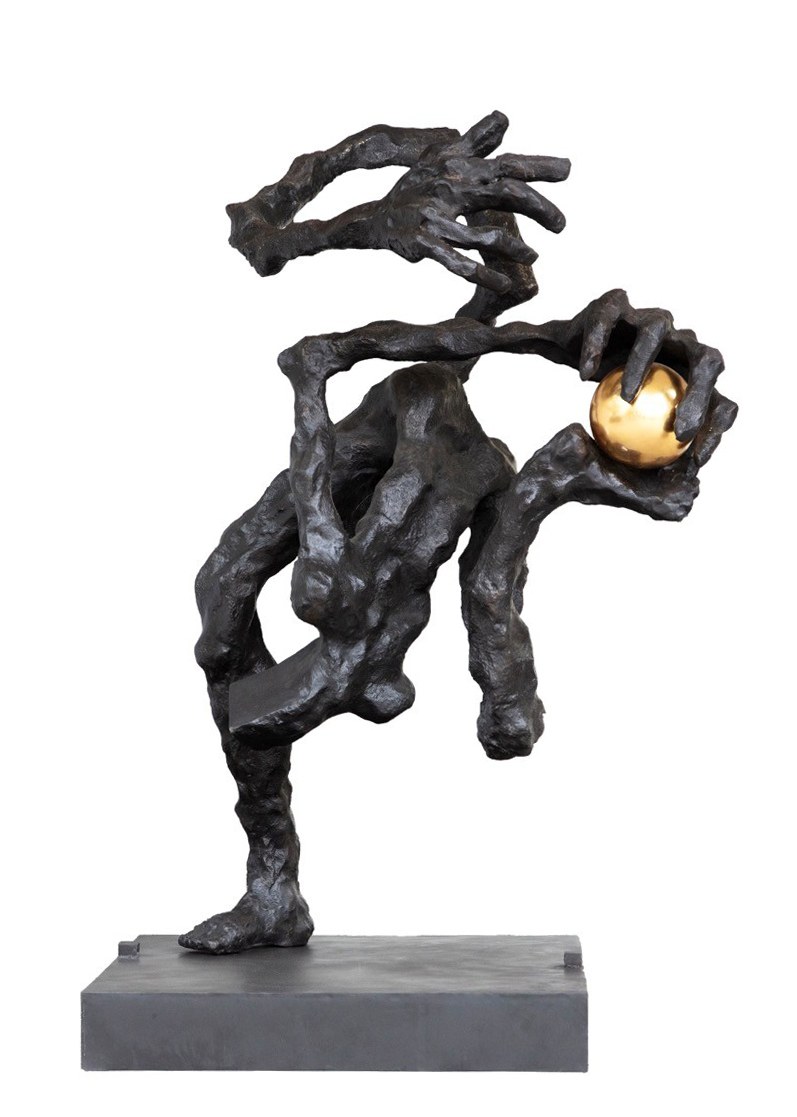
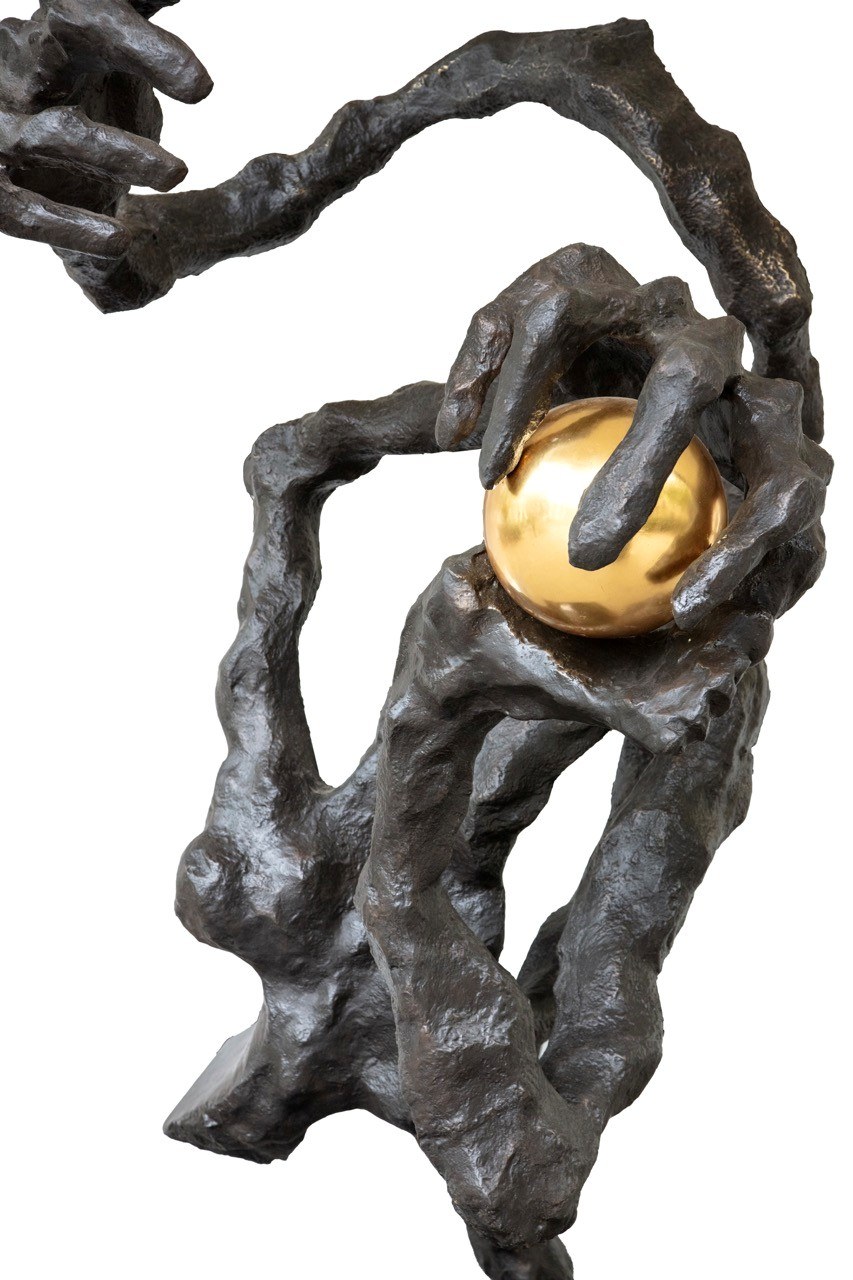
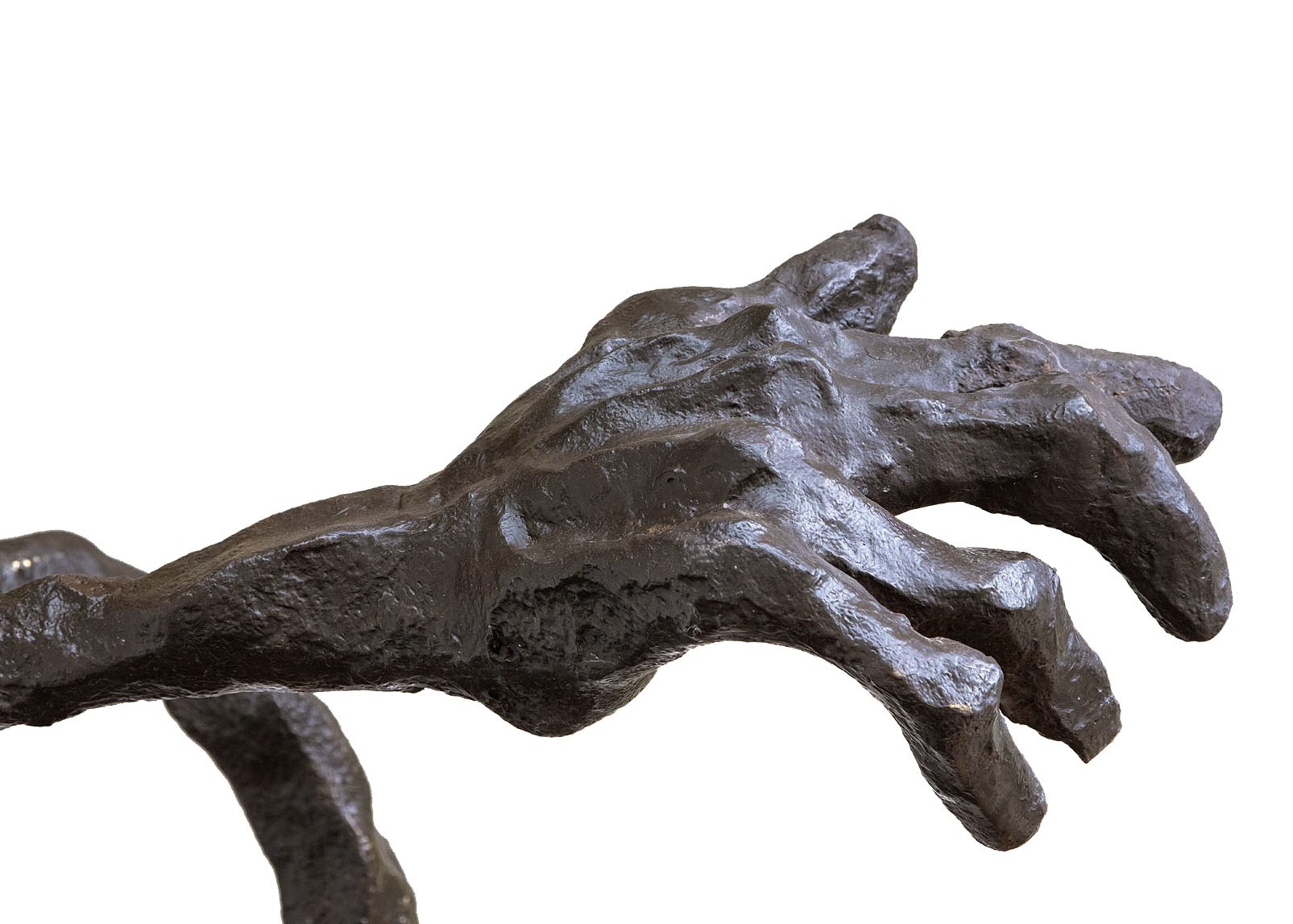
The monumental work on display, “Splendor Fragilis,” is Latin for “fragile splendor” or “fleeting splendor.” The sculpture depicts a being almost thrown off balance, who, with her last ounce of strength, is trying to grasp and hold onto a golden sphere. The figure stands on one leg, heavily leaning forward, twisted, and strained to the limit. With her other leg and arm, she clings to her treasure, as if afraid that a moment’s inattention would be enough for everything to spiral out of control. The entire composition is based on the tension between movement and stillness, desire and the risk of catastrophe.
For centuries, the sphere has symbolized perfection, wholeness, and the absolute. In Koclęga’s work, covered in 24-karat gold, it also evokes wealth, splendor, and the promise of fulfillment. However, the way the figure grasps it strips this gesture of its triumphant character. It is more of a desperate attempt to maintain an illusion than a serene possession. The figure’s tremulous, almost frenzied dance can be interpreted as a depiction of humanity’s pursuit of that which glitters, seduces, and promises social success. In keeping with the principle of “go all out”—the figure bends to the limit, loses stability, and risks both body and peace of mind, just to keep from letting go of their own vision of happiness.
The sculpture belongs to a series the artist calls “Neo-serpentinata,” whose compositions are based on strongly—even unnaturally—twisted figures. Here, Koclęga draws on the tradition of Italian Mannerism and the classical serpentina figure, but reinterprets it in an incredibly contemporary language. “Splendor Fragilis” is a story about a moment suspended just before a fall. About a radiance that attracts but offers no support. About a person who wants so desperately to hold on to their own treasure that they themselves begin to resemble its hostage. Koclęga shows that the most difficult balance isn’t about not falling, but about understanding in time what is truly worth holding on to.