


Eugenijus Kulvietis (1883-1959)
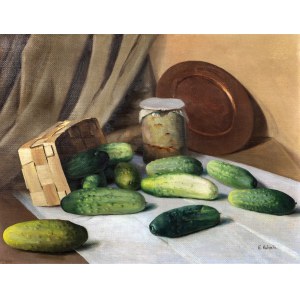
Still life with garden flowers
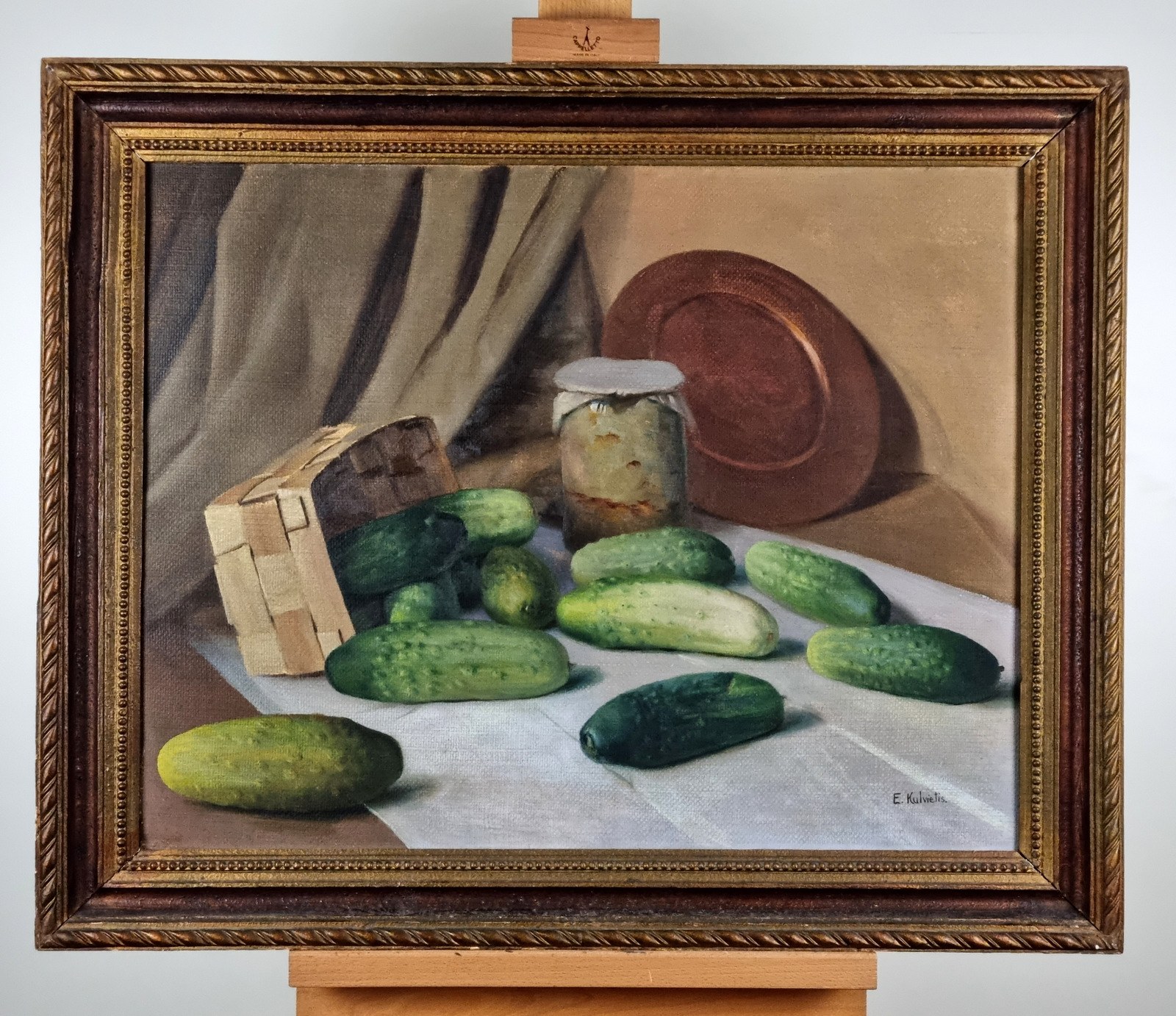
Mid-20th century, drb. on card, al., 59 x 76
Signed. AD: E. Kulvietis
PROSE AND POETRY OF EVERYDAY LIFE
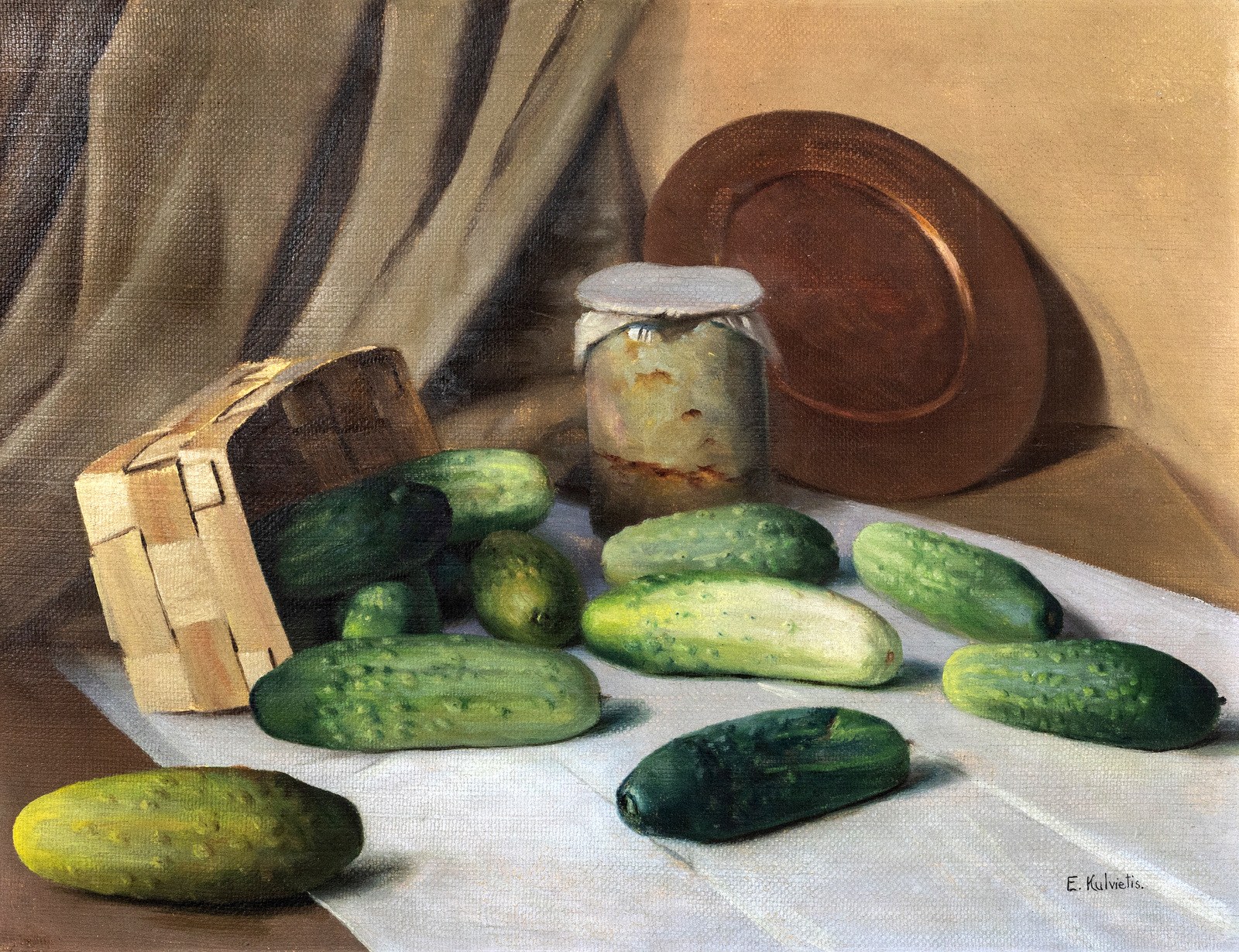
How should one evaluate this strikingly realistic study of Eugenijus Kulvītis's "inanimate nature"? Of the many sub-genres of still life, his work would be closest to the "kitchen" genre, depicting garden produce laid out on the dining table. The still life has a Lithuanian spirit, with familiar objects and vegetables. The pleasing brownish tones help to bring out the physiological precision of the objects. The eye is drawn to the careful drawing of cucumbers and the painterly patterning, marking each cone of the plant, deviation from the regular shape, fresh greenery or the yellowish hue of an overgrown vegetable, as well as to the material precision of the objects (baskets, brass plates, cloth). The author tries to find a balance between the natural arrangement of objects and purposeful staging (drapery, classical still-life composition). A few decades ago, such a manner of painting, far from the colourism and expressiveness common in Lithuania, would have been seen as an inability to look creatively at the environment. However, the development of modern painting has rehabilitated realism and convinced us that the manifestations of the material (neorealism, magic realism, new figurativeness, photorealism), which are revived in art every time, can be used to create subtexts and hints at the transience of life and the material world. Therefore, E. Kulvītis's "Still Life with Cucumbers" today demonstrates not only the possibilities of photographic representation of reality in art, but also testifies to the diversity of Lithuanian painting and the author's cultural interests, perhaps his fascination with the ideas of positivism or the philosophy of art of Hippolyte Taine (1828-1893), which influenced the development of realism and naturalism.
The still life of E. Kulvītis reminds us that his professional training was influenced by his studies in art and photography. At the turn of the 19th and 20th centuries, photography was considered a substitute for nature in the academic training of artists. Kulvietis began studying photography in 1898 in Riga, later worked in a photographic studio in St Petersburg, and from 1910 to 1914, while living in the USA, he had a photographic studio in the Chicago suburb of Sayre. His skills as a photographer encouraged Kulvietis to strive for an illusionistic precision of objects and a meticulous imitation of the forms of reality in his paintings. The essence of his still life is therefore to speak about the prose and poetry of life through the meticulous forms of the visual world and the impartial recording of the environment.
Dr. Lijana Natalevičienė











Πρόσφατες επισκοπήσεις
Συνδεθείτε για να δείτε την λίστα θέσεων
Αγαπημένα
Συνδεθείτε για να δείτε την λίστα θέσεων