


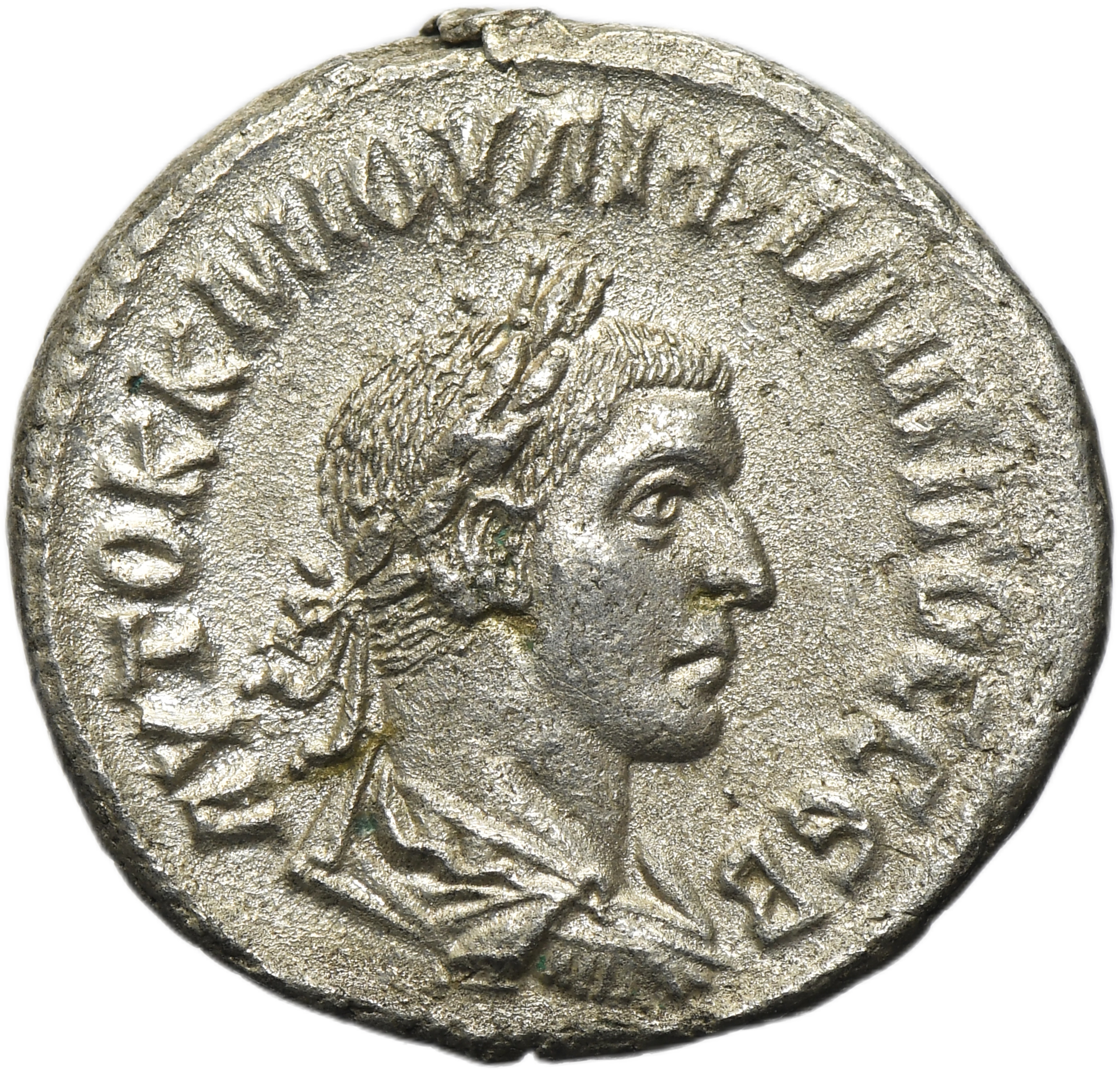
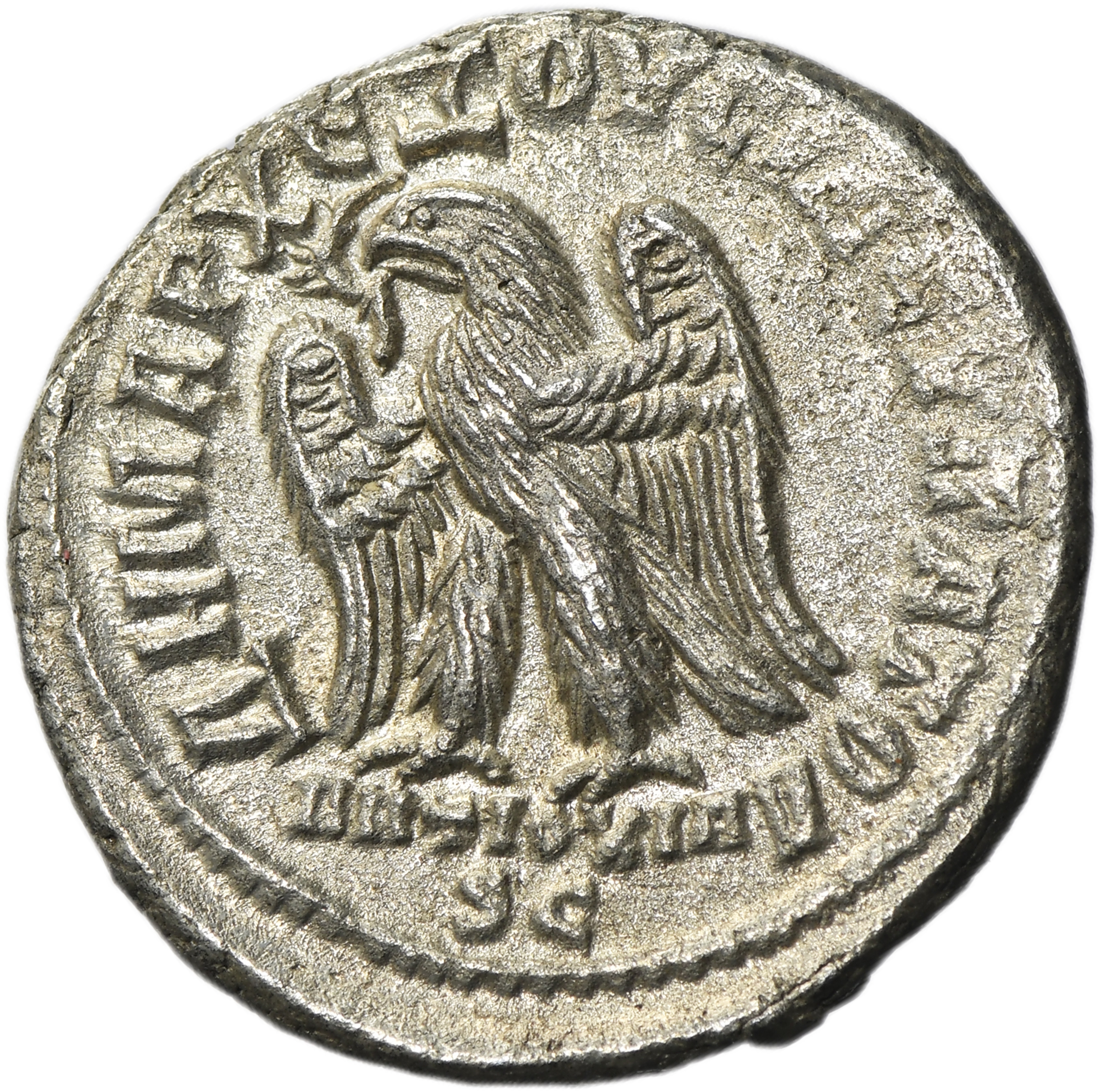


Billon tetradrachm of Philip II (AD 247–249), struck at Antioch in Syria in AD 248, belongs to the issues from the second year of his reign as Augustus, coinciding with the ideologically significant period of Rome’s millennial celebrations. At this time, the Antioch mint remained one of the principal production centers of the eastern provinces, supplying tetradrachms for wide regional circulation across Syria and Mesopotamia.
The obverse shows a laureate bust of the emperor facing right, with the Greek legend AΥTOK K M IOΥΛI ΦIΛIΠΠOC CEB, presenting his full titulature as autokrator and augustus.
The reverse depicts an eagle standing left, with its head turned right, holding a wreath in its beak, accompanied by the legend ΔΗΜΑΡΧ ƐΞΟΥϹΙΑϹ ΥΠΑ ΤΟ Δ and ANTIOXIA SC in the exergue. The eagle (aquila) serves as a primary symbol of imperial authority and the Roman army, while the wreath signifies victory and favor.
The reverse legend refers to the emperor’s tribunician power (tribunicia potestas) and his fourth consulship (ὕπατος Δ), allowing precise dating to AD 248. The inclusion of SC, derived from senatus consulto, is conventional in Antiochene provincial coinage and does not indicate direct senatorial control over the issue.
Roman Provincial
Syria, Seleucia and Pieria, Philip II (247-249), Tetradrachm 248, Antioch mint
Obverse: laureate, draped and cuirassed bust right
AΥTOK K M IOΥΛI ΦIΛIΠΠOC CEB
Reverse: eagle standing left, head right, with wreath in beak, ANTIOXIA in exerque, below SC
ΔΗΜΑΡΧ ƐΞΟΥϹΙΑϹ ΥΠΑ ΤΟ Δ
Diameter 26 mm, weight 11.81 g











