Dimensions: 163 x 110 cm
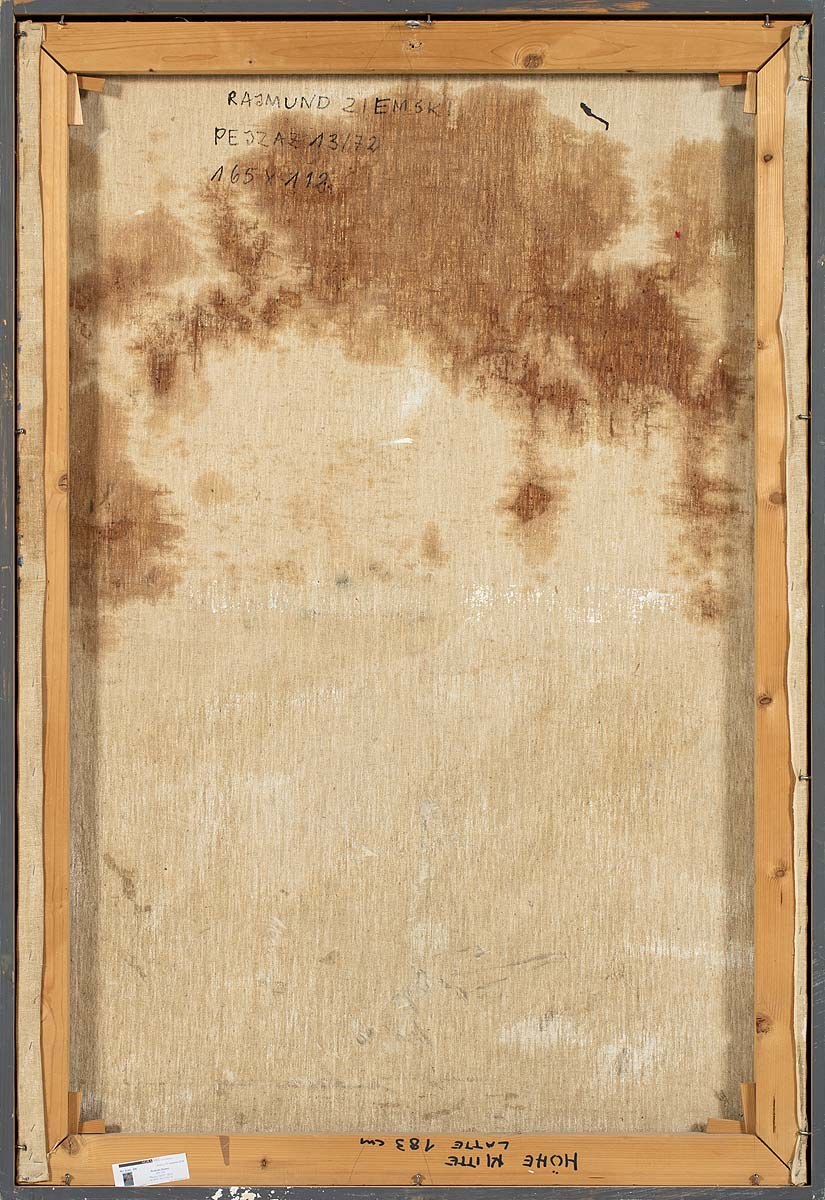
Signed: signed l.d.: RAJMUND ZIEMSKI / 72.; signed and inscribed on the reverse: RAJMUND ZIEMSKI/ PEJZAŻ 13/72 / 165 X 112
Provenance
Poznan, private collection. Agra-Art, auction 17.04.2016, item 26. Germany, private collection. Property of the artist.
Rajmund Ziemski consistently called his paintings landscapes, although they are not views of specific places, but rather records of an intense experience of nature, imagination and matter. "(...) I could reproduce each landscape from memory. These landscapes, accumulated over the years, have been preserved in me somewhere, only that today I don't realize them directly, but through various associations, through not only what I know, but also what I think about the world." - said the artist ("Zwierciadło" 1968, no. 16). In this sense, his painting grows out of the earth, but does not stop at the surface of nature. As has been written about his work: "The attempt to describe Ziemski's painting in terms of 'interior landscape' is insufficient. (...) The density of rain-drenched clay, the powdery dust covering a sunburnt road, the hardness of stones - these are all elements from which paintings can be created (...) Gray is [for Ziemski] only a dark color. It can be a muddy field, it can be the darkness of a forest, it can be a piece of crumpled wall. This is how the specific texture of these unusual landscapes is born" (Rajmund Ziemski. Landscapes, Zderzak Gallery, Krakow 2003, p. 6). The artist himself cut his painting from salon elegance, emphasizing its connection with the primal, material and existential - closer to experiencing the world in its raw form than decorative sophistication.
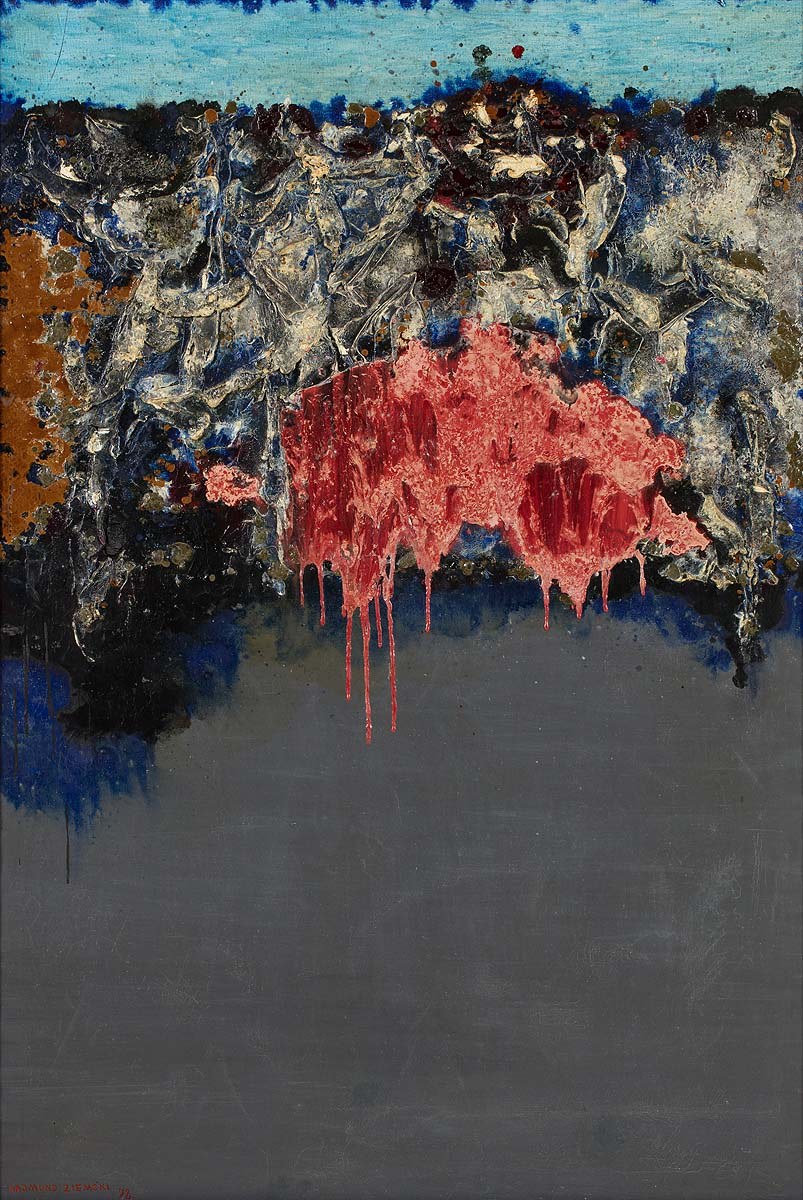
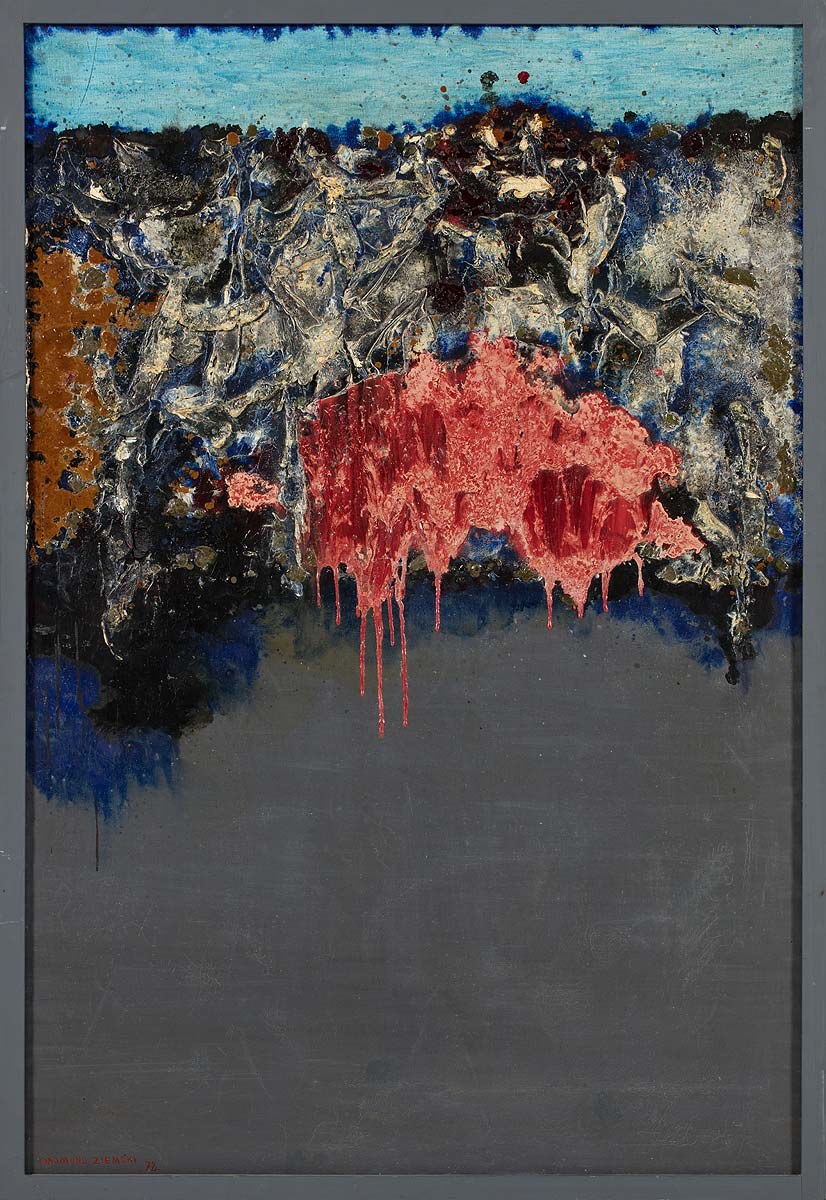
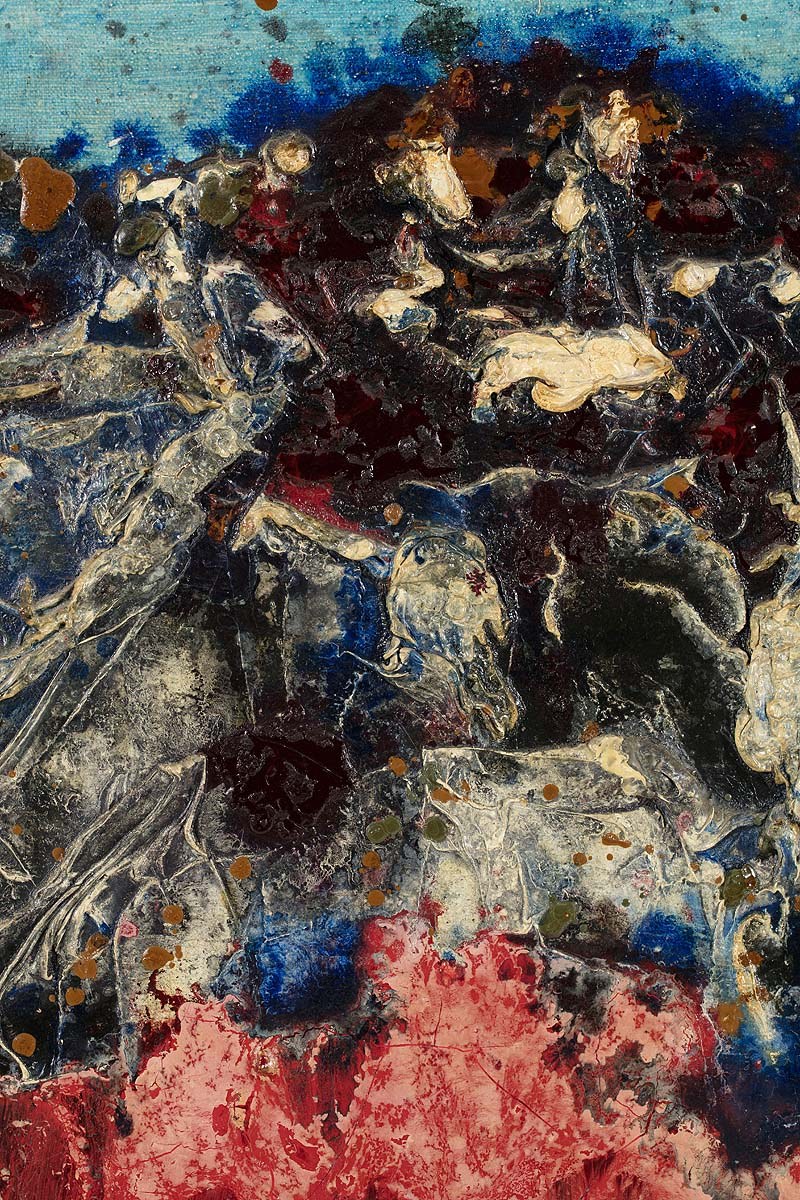
The featured "Landscape 13/72" from 1972 is one of the particularly striking works in Ziemski's oeuvre - both because of its monumental format and exceptionally bold intensity of color. The work is built up of two contrasting zones: the gray, almost smooth lower part and the jittery, piled-up upper matter, in which impasto-layered blues, whites, browns, blacks and violent coral together create an almost organic, three-dimensional vision. The dense, tumbling structure of the forms is as if extracted from the memory of nature: from mud, foam, sky and earth all at once. Here the landscape is transformed into a landscape of the imagination - heavy, colorful and inwardly glowing, retaining a remarkable luminosity despite the dark, massive matter of the painting.