Joachim Weingart (1895-1942)
Artist who painted silence and light - the forgotten voice of the Paris School
Joachim Weingart was born in 1895 in Przemyśl, to a Jewish family assimilated into Polish culture. From an early age, he betrayed great aesthetic sensitivity - his interest in art quickly developed into a conscious passion. He began his artistic studies first in Berlin and later in Vienna, where he absorbed the modern trends of turn-of-the-century European art. However, it was the Paris of the 1920s that proved to be a turning point for him - and it was there that his mature work blossomed.
He arrived in the French capital together with his friend, the painter Sigmund Menkes. The two joined the group of artists gathered around the École de Paris - an artistic phenomenon that attracted talented painters from all over Europe. Although not at the center of avant-garde manifestos, Weingart developed his own style, based on tenderness, subtle expression and mood. He painted portraits, female nudes, children, family scenes, as well as melancholy landscapes and still lifes. His works were characterized by soft lines, a muted color palette and a reflective mood.
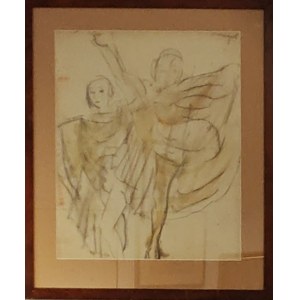
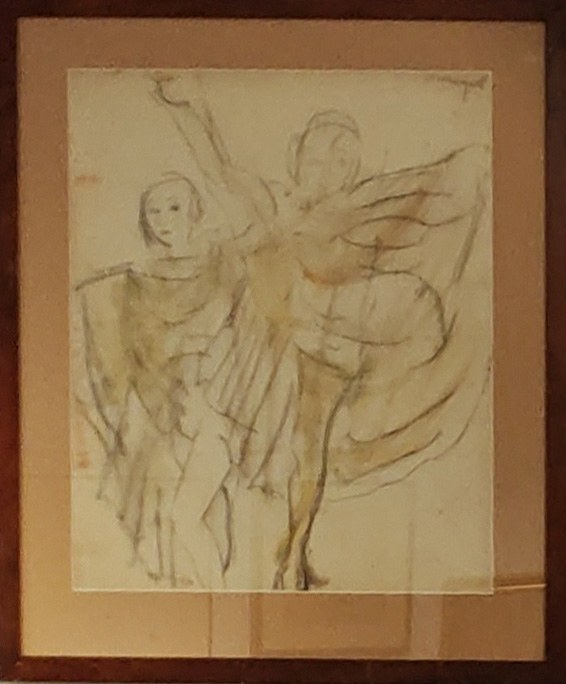
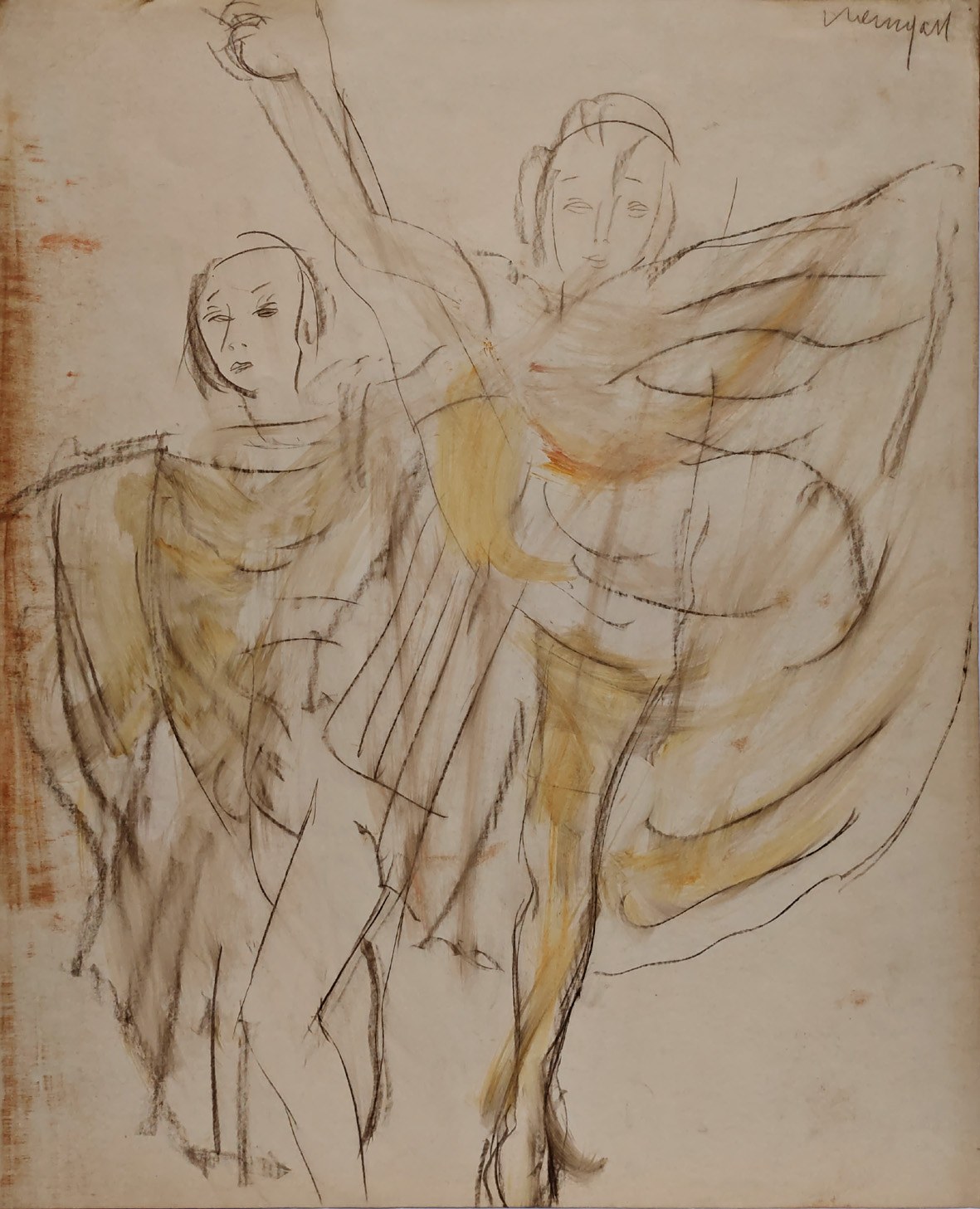
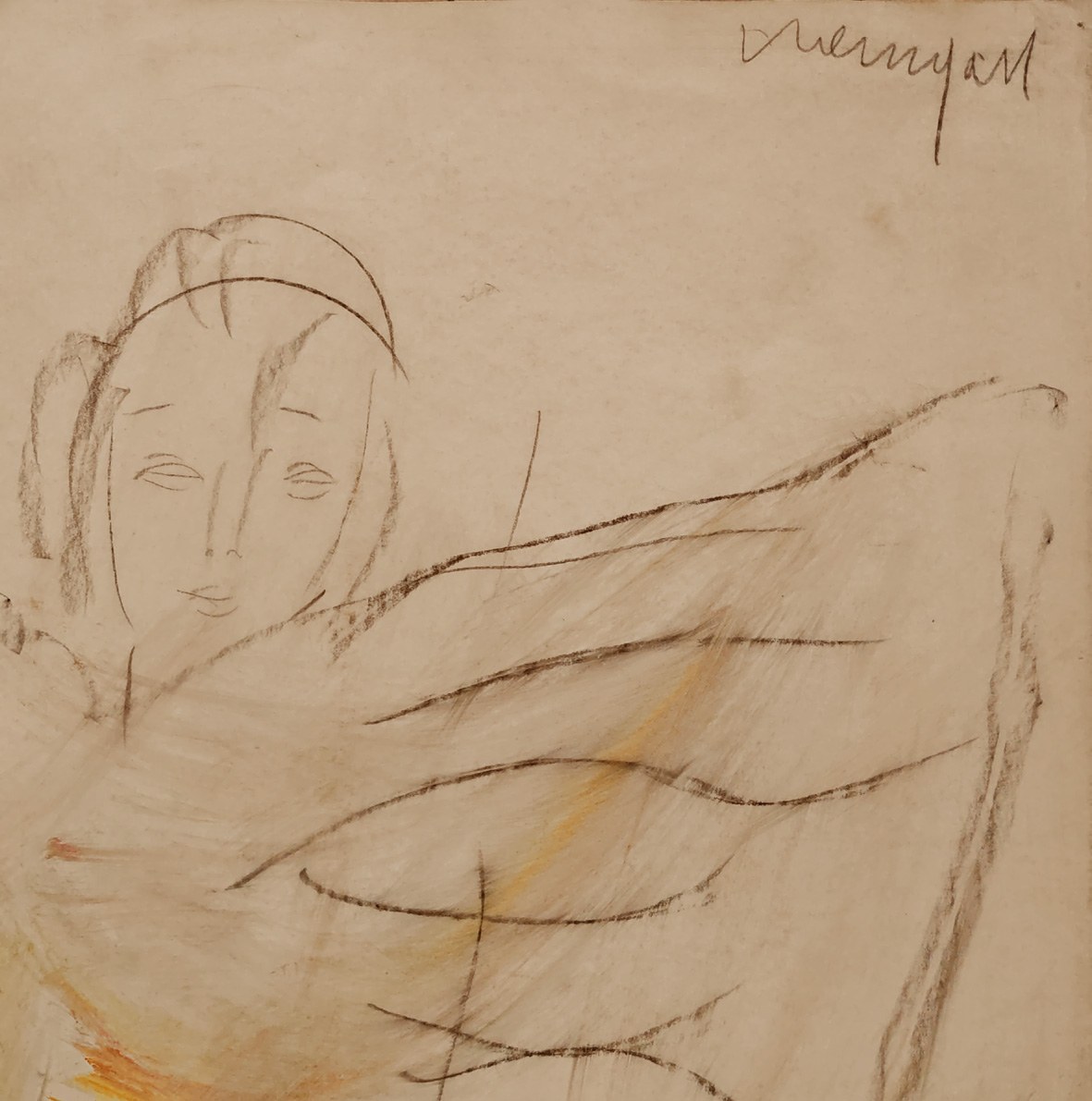
In the 1930s, his work was recognized by a legendary figure in the Paris art market - art dealer René Gimpel, who introduced his works to circulating galleries and collections in France and Britain. After the artist's death, many of his works went to the renowned London gallery Gimpel Fils. One of the surviving works is an ink drawing entitled "Group of Figures," a composition on paper, measuring 57 x 45 cm, signed by the artist in the lower right corner. The work comes from the collection of the artist's family and bears the catalog number GF16403.
Joachim Weingart exhibited in prestigious Parisian salons, including the Salon d'Automne, as well as in galleries in Poland, where he briefly returned in the 1930s. His name appeared alongside other masters - such as Mela Muter, Henryk Epstein and Eugeniusz Zak.
Unfortunately, his life ended tragically. After the outbreak of World War II, he was imprisoned in the Lviv ghetto, where he died around 1942. The exact circumstances of his death are unknown.
Today Joachim Weingart is still being rediscovered. His art - intimate, full of sensitivity - becomes a testimony not only to his talent, but also to the inner world of the artist, who painted the silence, light and melancholy of everyday life.