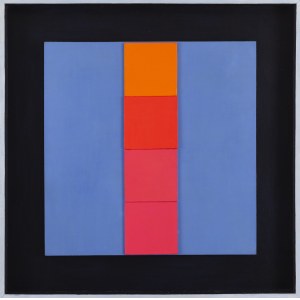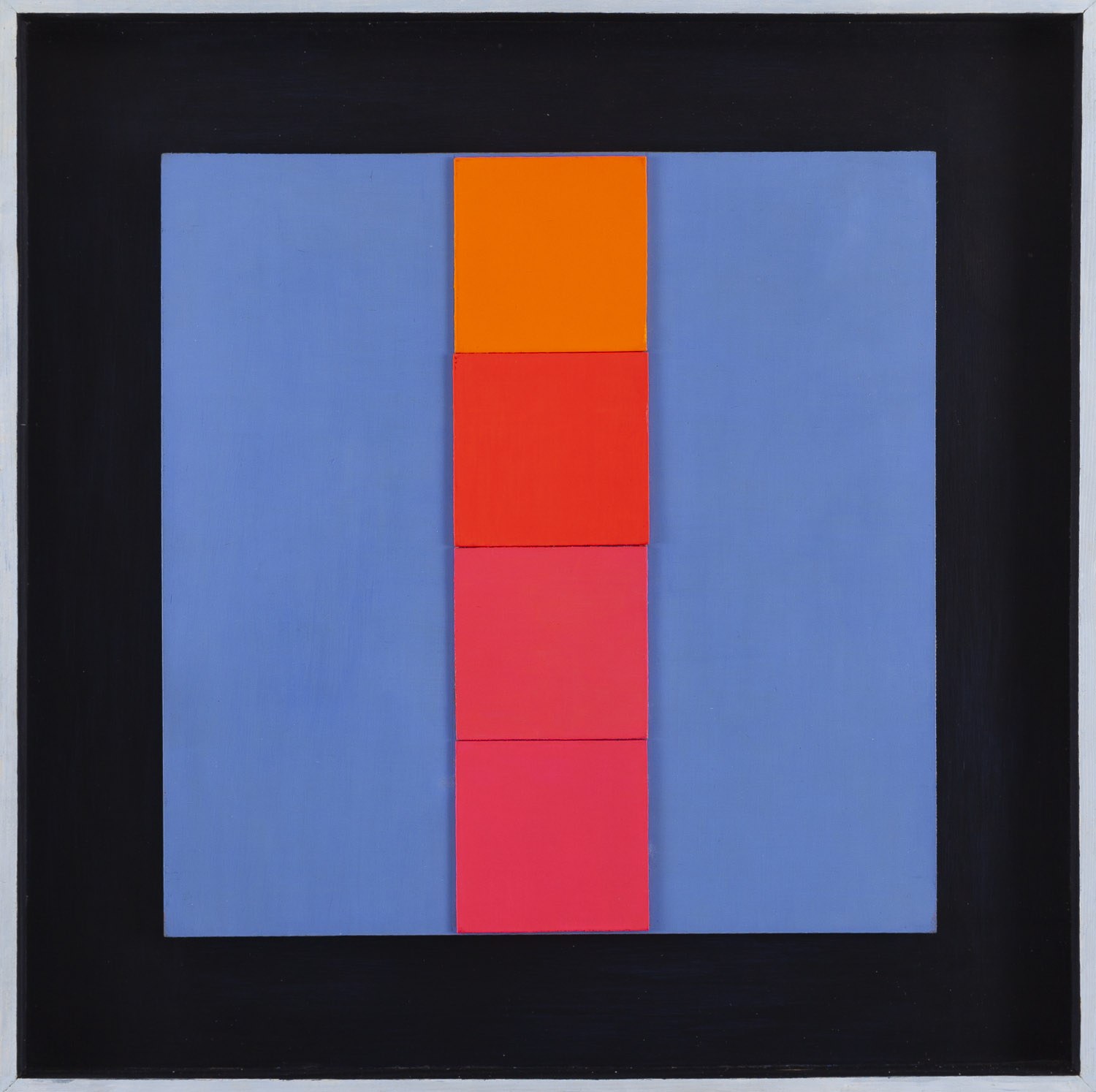
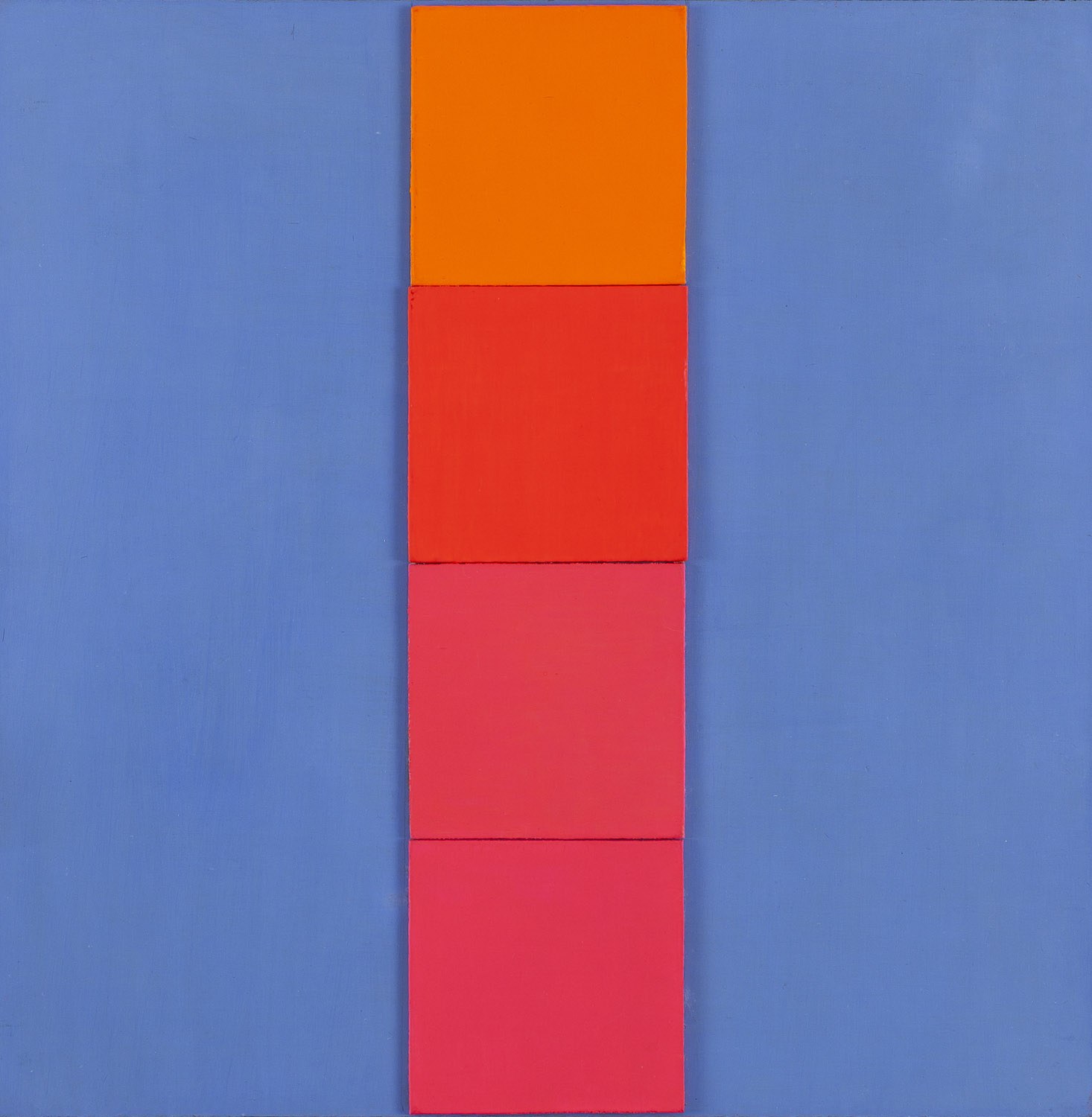
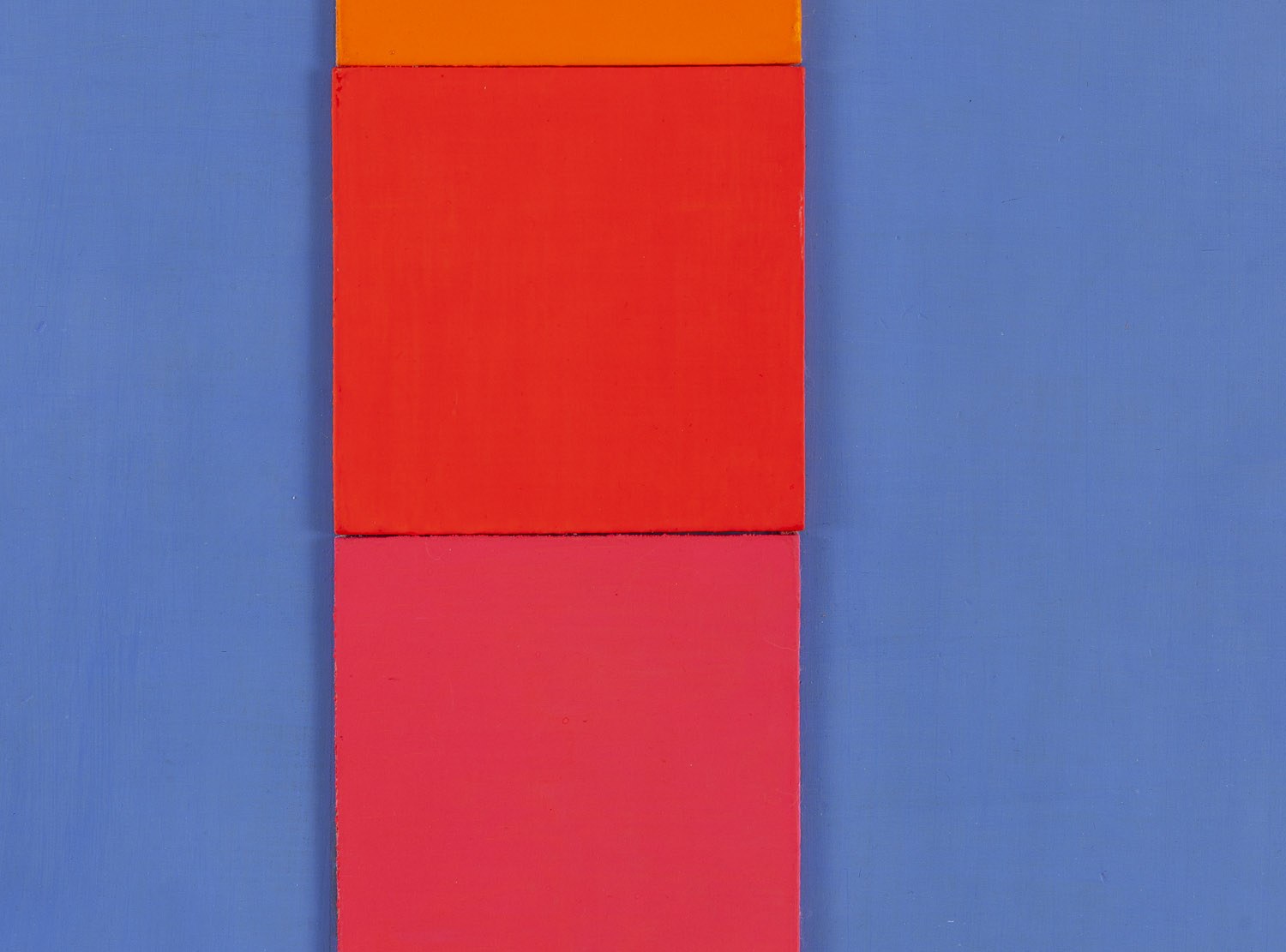
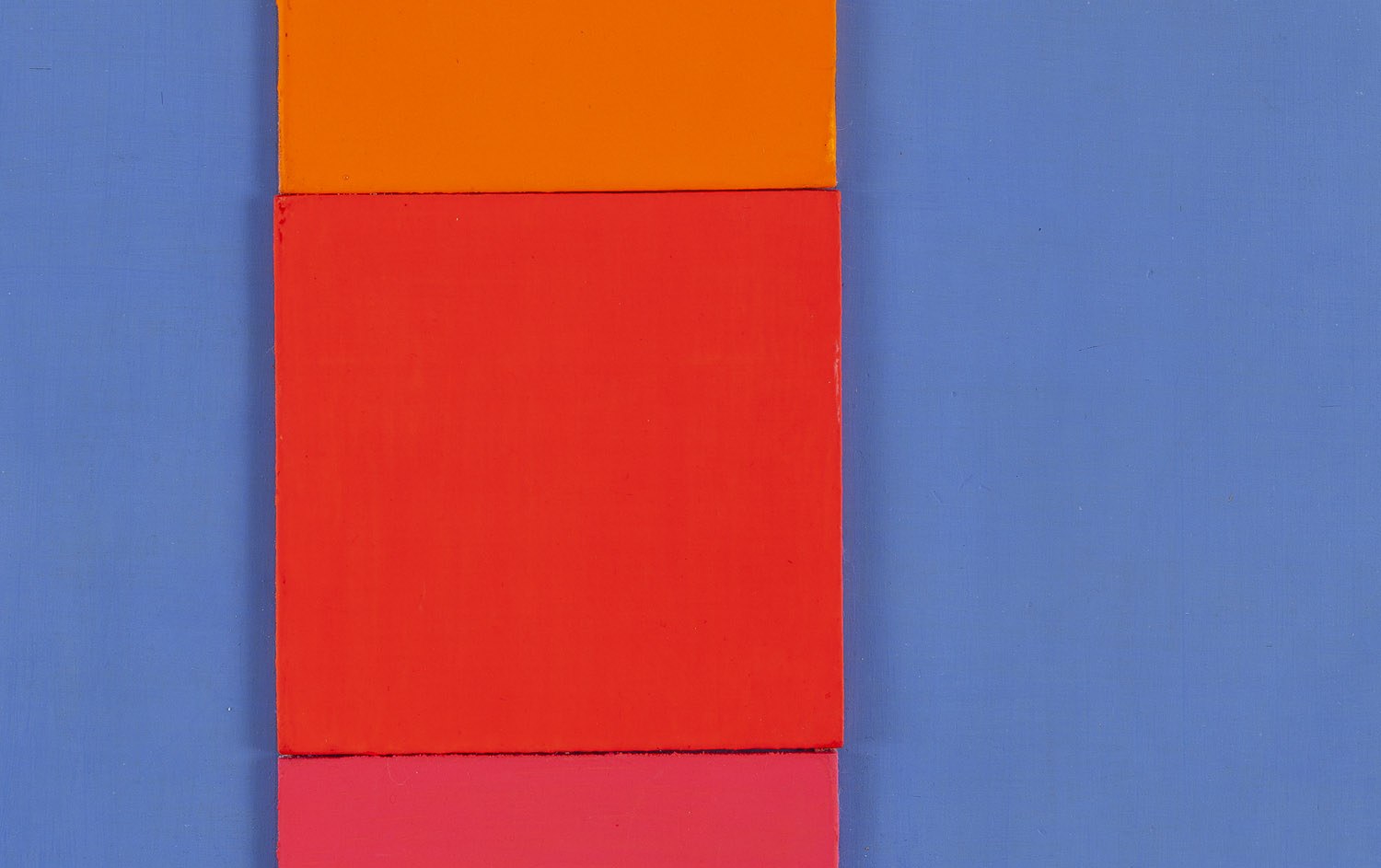
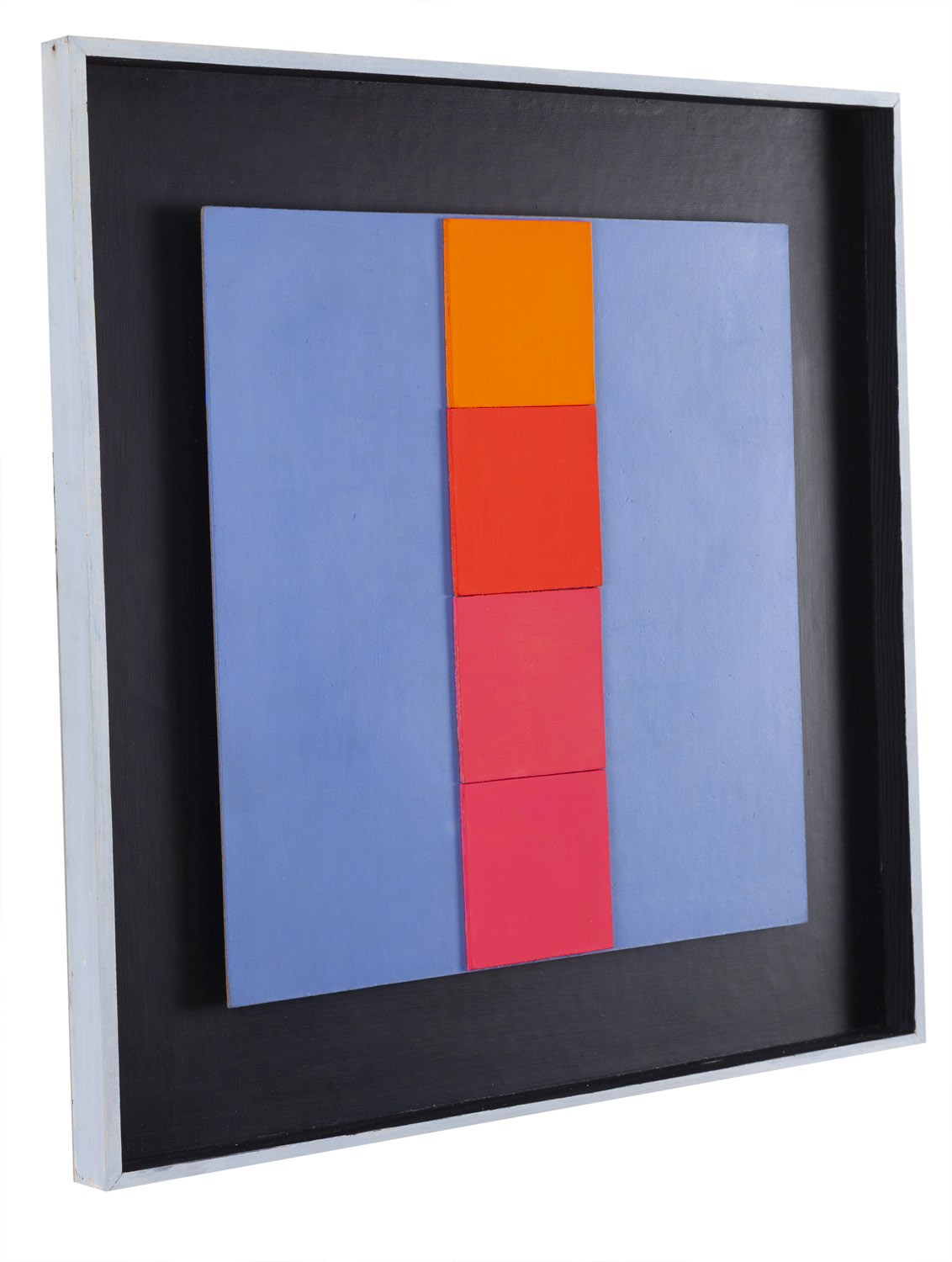
acrylic, relief/fiberboard
Dimensions: 56 x 56 cm
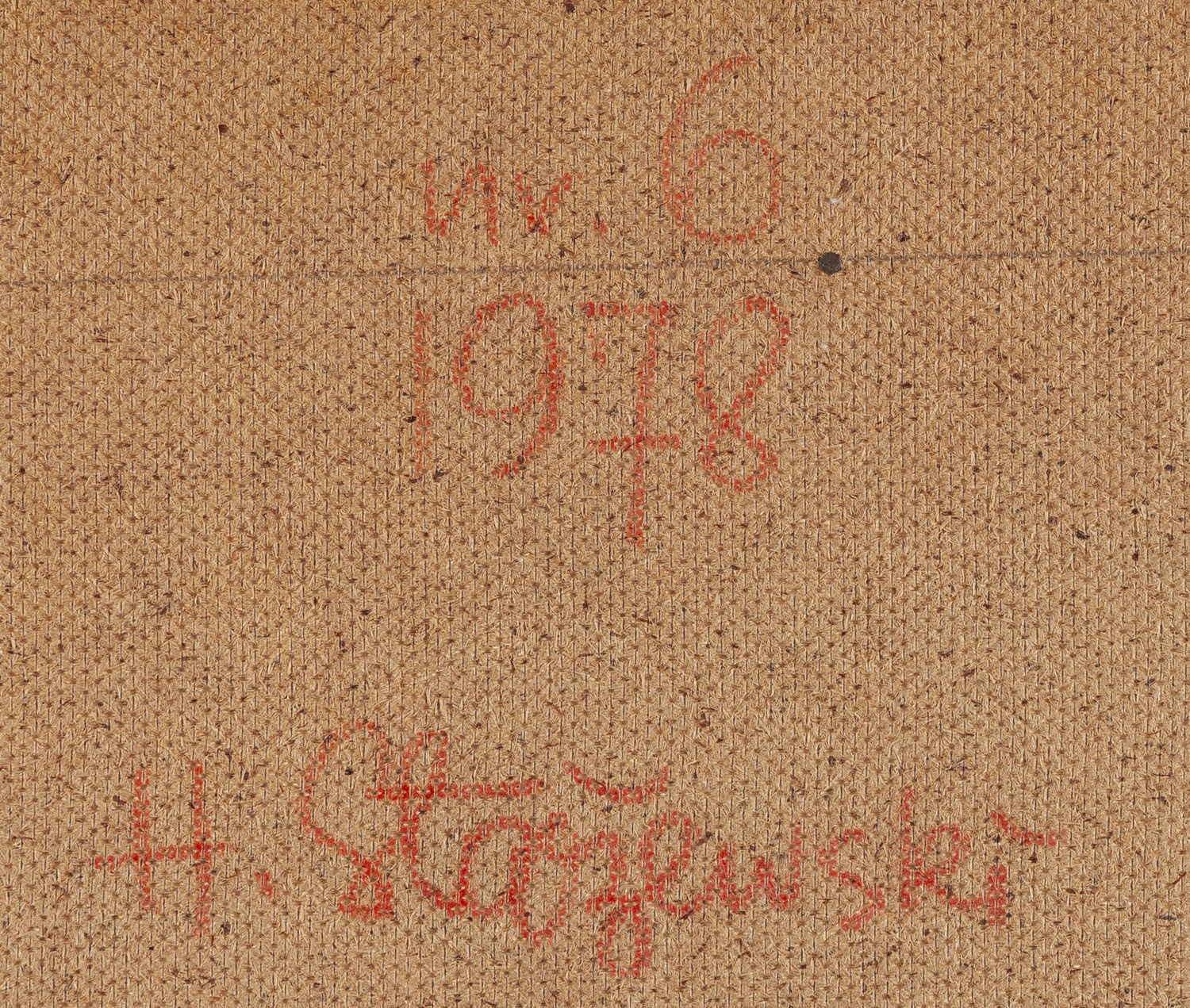
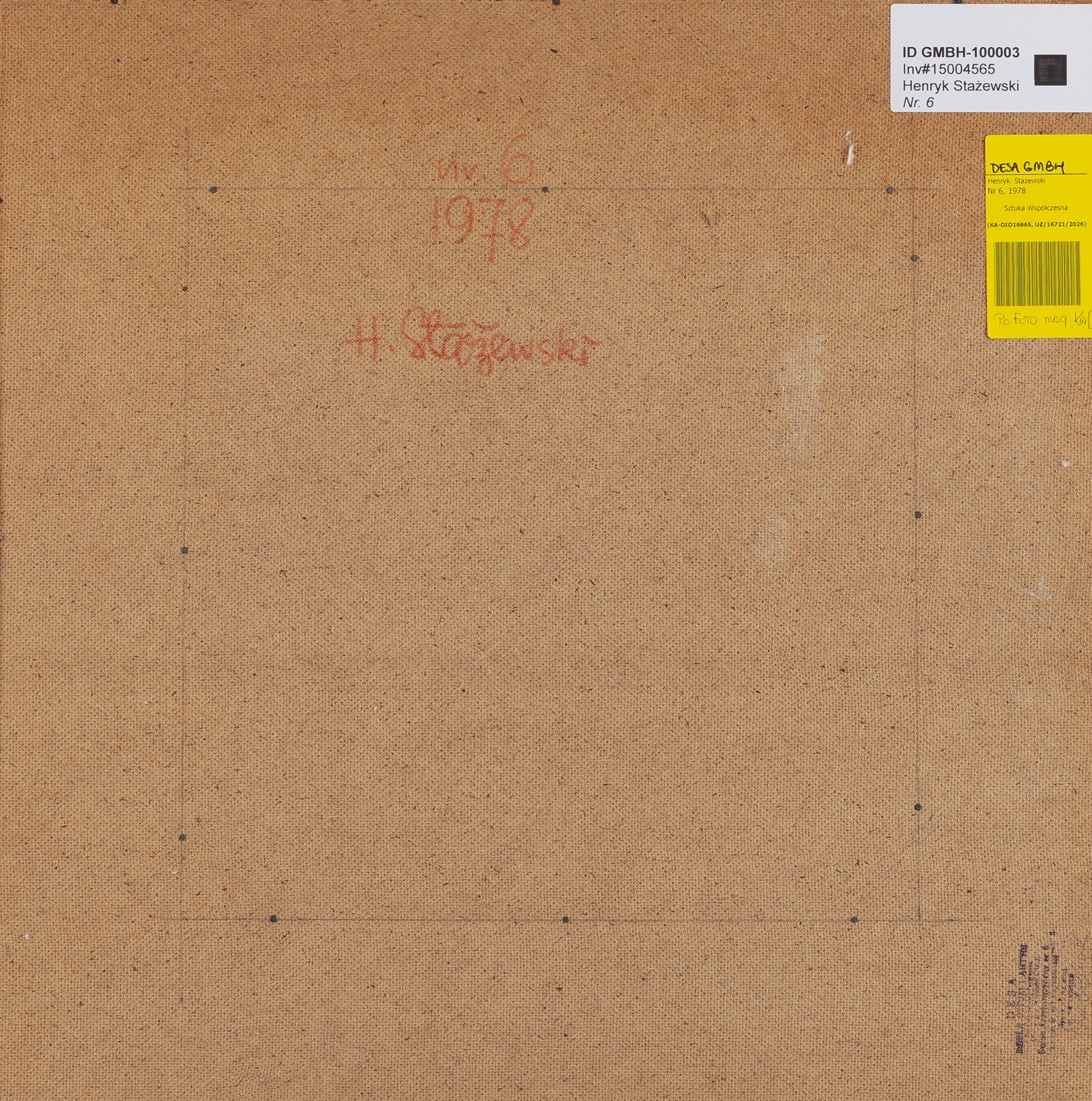
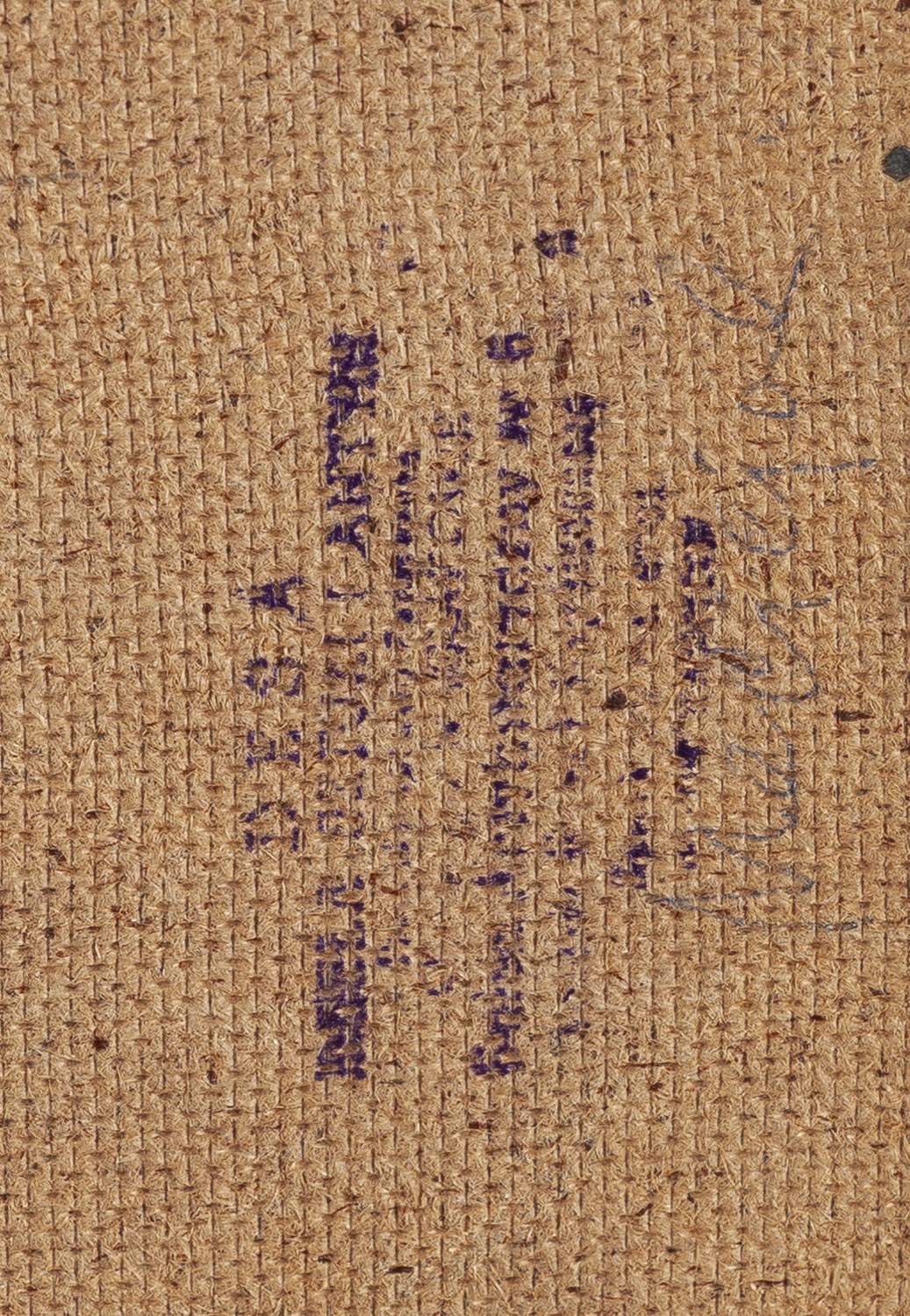
signed, dated and described on the reverse: 'no. 6 | 1978 | H. Stażewski'.
- Object for which the seller is DESA Unicum GmbH, with its registered office in Berlin, at August-Viktoria-Str. 24, 14193 Berlin - Schmargendorf, commercial register number (Handelsregisternummer): HRB 272864 B, tax identification number of the Federal Republic of Germany St.Nr. 127/259/51115 with a share capital of EUR 25,000 - fully paid-up capital (hereinafter: "Partner"). For the avoidance of doubt, all provisions relating to DESA's rights and obligations indicated in the Terms and Conditions shall apply analogously to Objects sold with the intermediation of the Partner cooperating with DESA (on the basis of relevant agreements and authorizations to the extent necessary for the performance of obligations relating to the sale of Objects in the Auction). The Partner in organized auctions acts as an intermediary substitute acting on its own behalf, but for the account of the principal entitled to dispose of the Object. Contracts concluded with DESA Unicum GmbH are governed by the laws of the Federal Republic of Germany. In the case of Objects for which DESA Unicum GmbH is the seller, the Bid Price and Auction Fee is a net amount to which German value added tax (VAT) will be added at the rate of 7%.
Origin
private collection, Zurich
Biography
Henryk Stażewski is a legend of avant-garde art in Poland. He studied at the School of Fine Arts in Warsaw from 1913-20, and in his early career painted still lifes. He temporarily exhibited with the "Formists" grouping (1922). He also took part in the Exhibition of New Art in Vilna in 1923. From that time he created under the influence of Constructivism. In addition to painting compositions, he was involved in book graphics, designed interiors, furnishings, as well as set designs - these were mostly theoretical and studio works. Polish and international avant-garde groups, with which he exhibited and collaborated as a publicist, were as follows: "Blok" (1924-26), "Praesens" (1926-30), "Cercle et Carré" (1929-31), "Abstraction-Création" (1931-39), "a.r." (1932-39). He also belonged to the Circle of Advertising Graphic Artists (1933-39). In 1930 he was co-organizer of a collection of works by artists of the international avant-garde intended for the Lodz museum (now in the Museum of Art in Lodz). After World War II, he lived and worked in Warsaw. In the 1940s and 1950s, he made attempts to adapt to the demands of figurative art. From this period come drawing and painting compositions on the themes of labor, construction, as well as monumental projects. After 1956, widely regarded as the patron saint of the Polish avant-garde, he already practiced exclusively abstraction of Constructivist origin. He created cycles of works that were studies of planes, lines, colors in various arrangements in relation to each other. With the appearance of cool perfection, he knew how to imbue them with the emotion of a direct touch, the trace of a hand. In addition to painting and derivative forms, such as collages, reliefs, multiples, he created spatial forms and graphics (he authorized serigraphic replicas of his works).