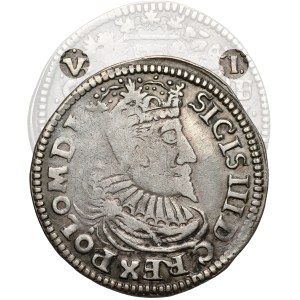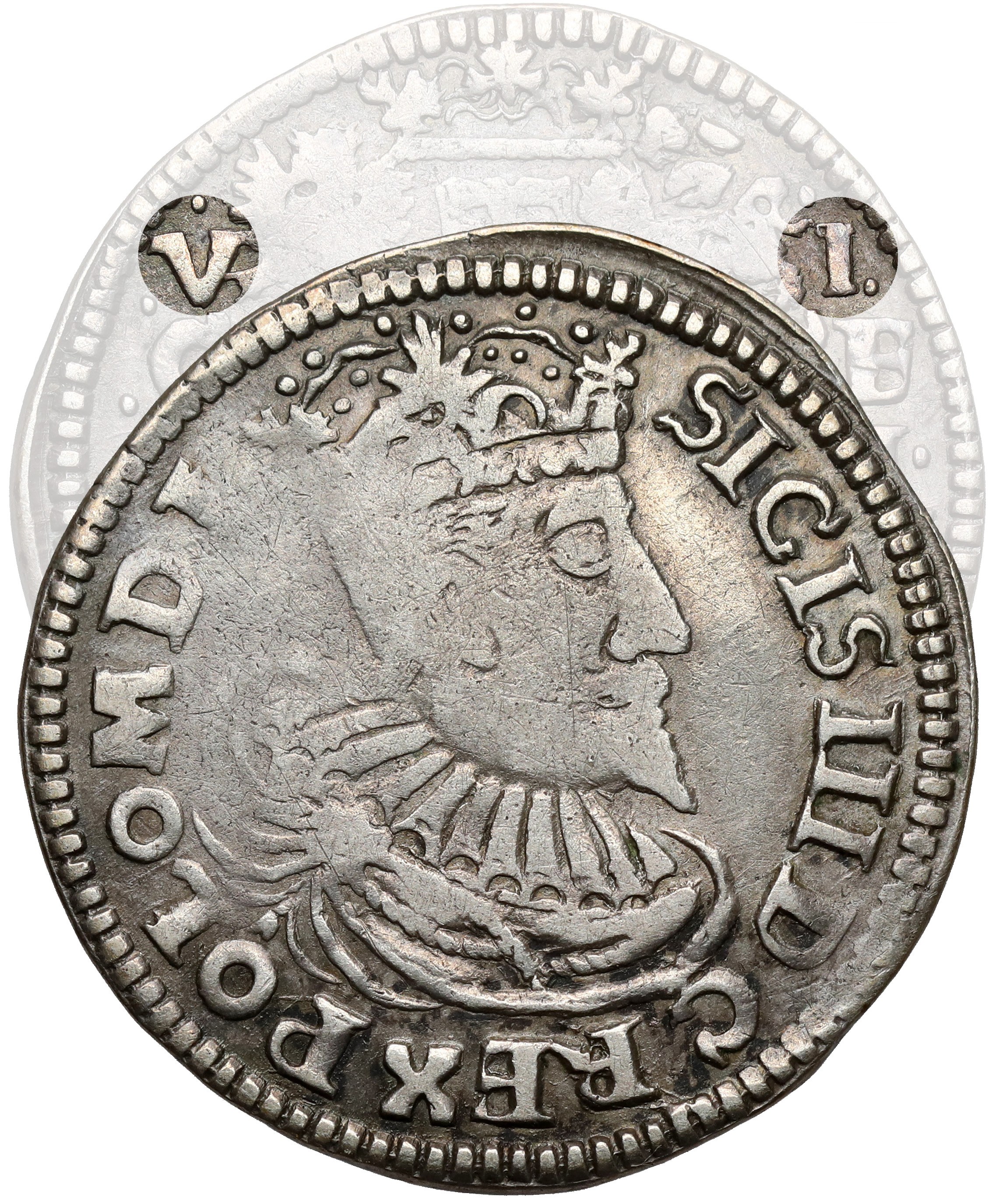
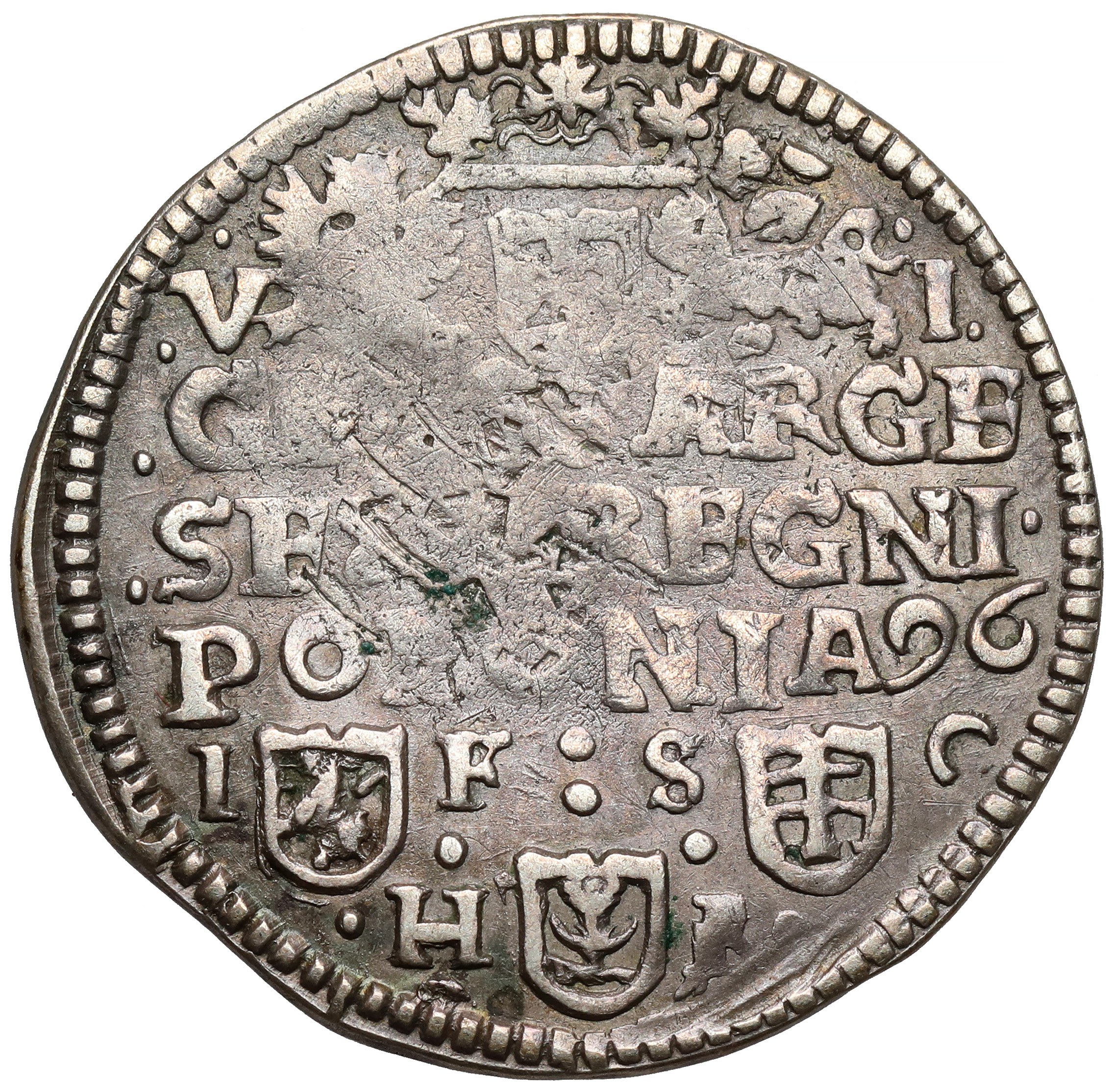
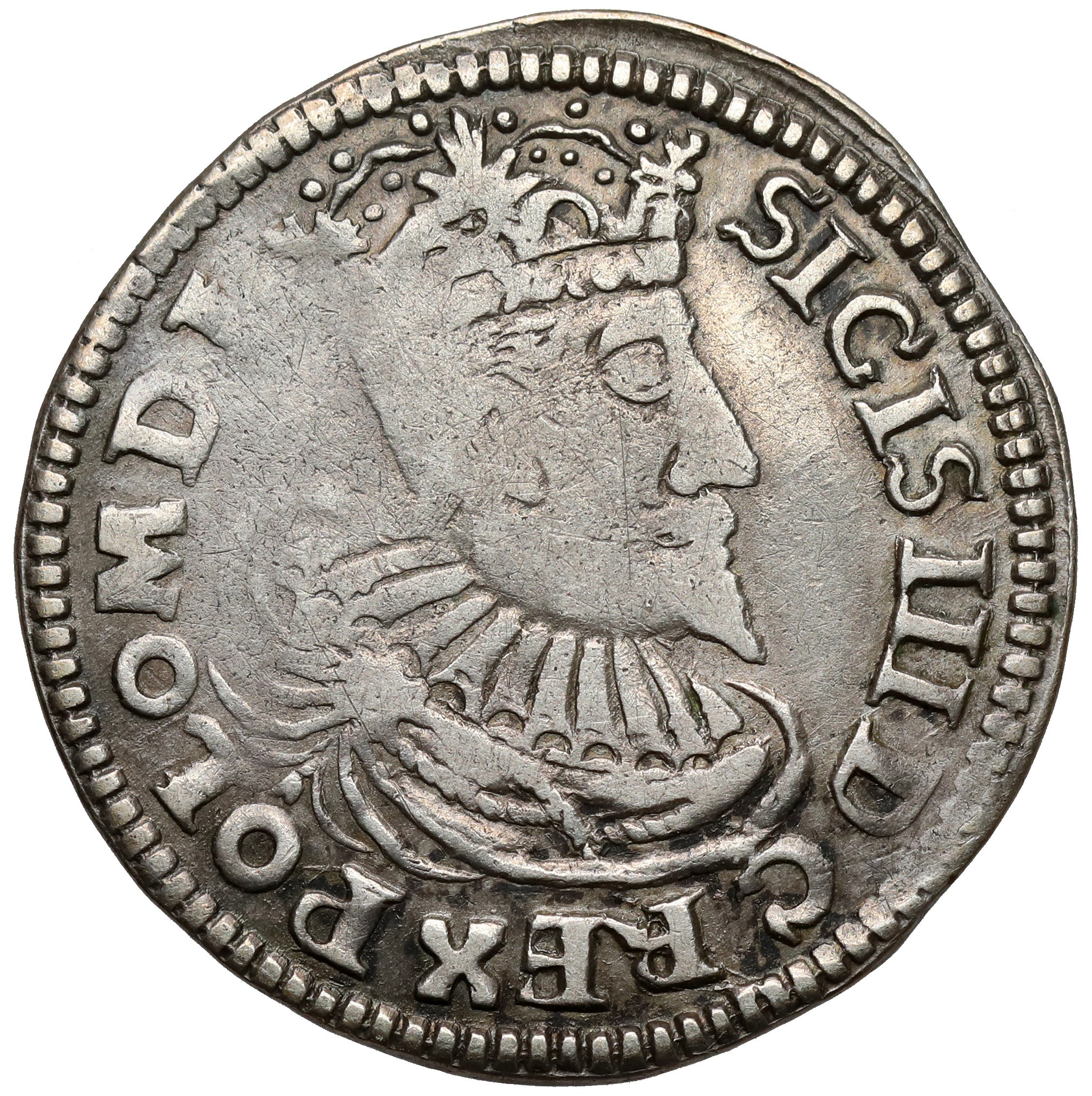
A very rare, early Bydgoszcz six-real coin of Sigismund III.
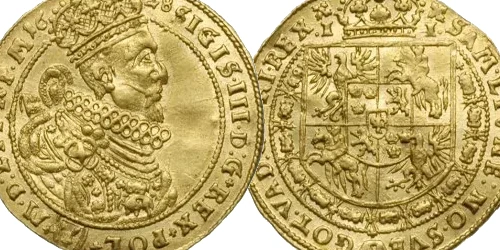
Sigismund III Vasa’s minting activity, in terms of both quantity and the variety of coin types issued, was the most prolific in Polish history. The first of the Vasa dynasty did not ignore the profits derived from minting and, from the beginning of his reign, “pushed” numerous mints to work intensively.
The six-groschen coin—a high denomination at the time—had been struck only sporadically during previous reigns and did not appear under Sigismund III until 1595. The Bydgoszcz Mint struck its first six-grosz coin in 1596, and as can be seen from this coin, they did not yet have a distinct iconographic “concept” for the six-grosz at that time. It was essentially designed as an “enlarged three-grosz.” The coin is larger, but the layout remained the same; only the inscription on the reverse reads “SEX” instead of “TRIP.” The image of the six-grosz coin that we know well today, with its characteristic arrangement of shields on the reverse, was proposed by Lublin and popularized by Malbork.
This six-grosz coin from 1596 is extremely rare. It is typologically significant as the first six-grosz coin issued by the city of Bydgoszcz.
A type bearing the initials HR:SC (Herman Rüdiger—administrator; Stanisław Cikowski—owner) and IF (Jan Firlej—Crown Treasurer). A variant with the title ending in POLO M D L, featuring small lettering on the reverse and the inscription GROSS ARGE SEXD REGNI POLONIA (silver six-grosz coin of the Kingdom of Poland).
A natural, circulated specimen with a slight indentation in the field behind the king. No damage or flaws. Attractive given its rarity.
The coin comes from the outstanding contemporary collection of Zbiór.com and is illustrated on its website.