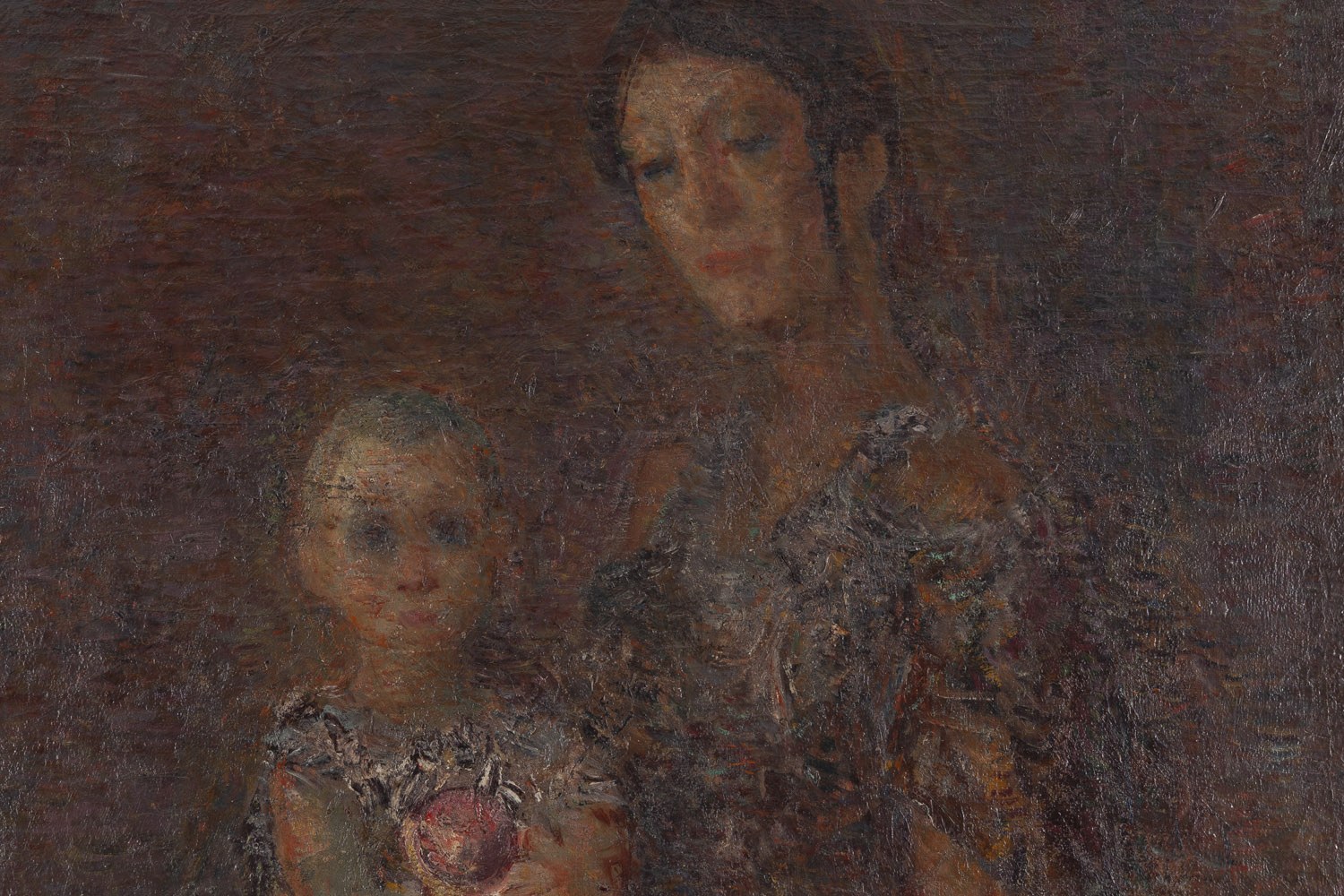
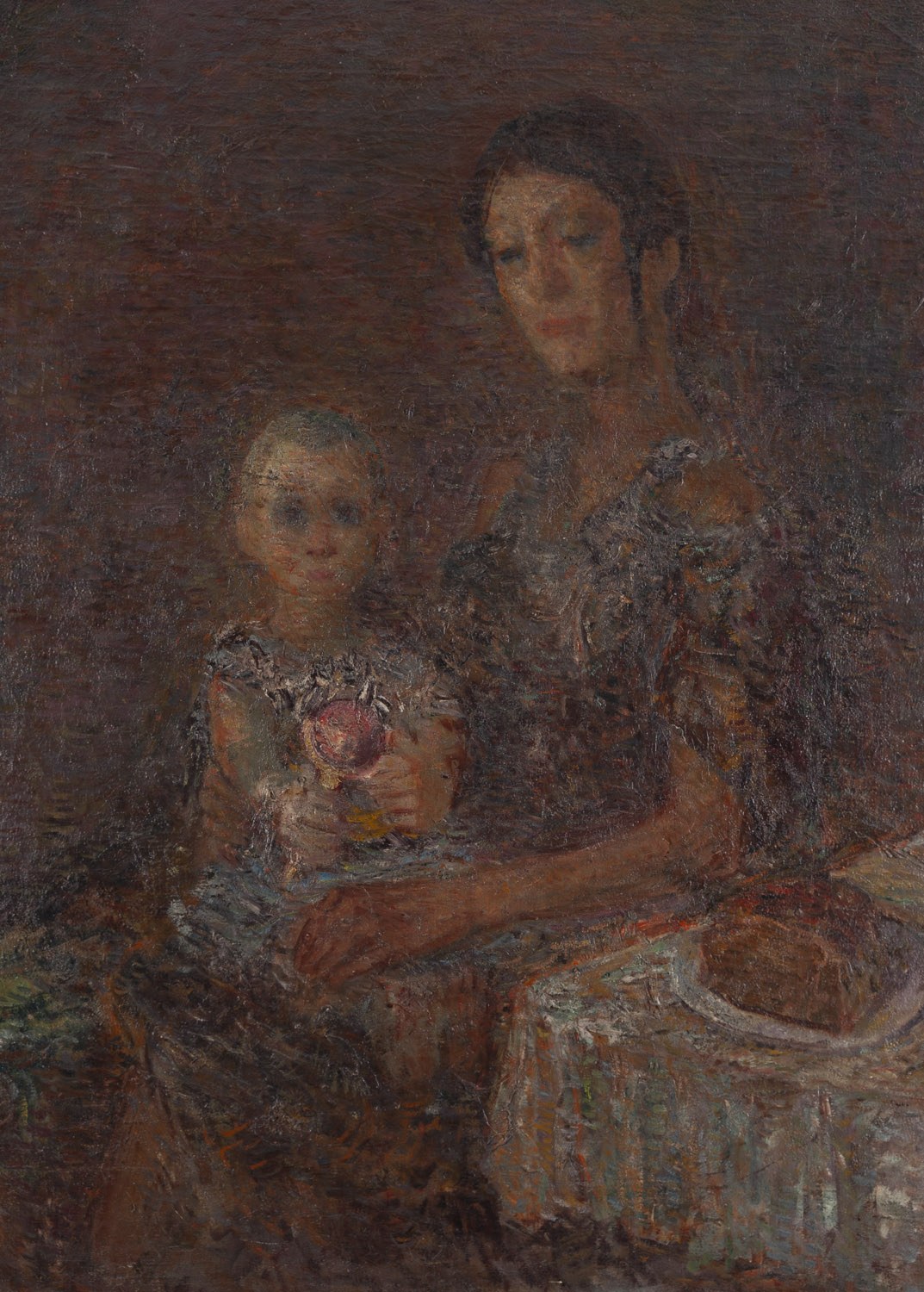
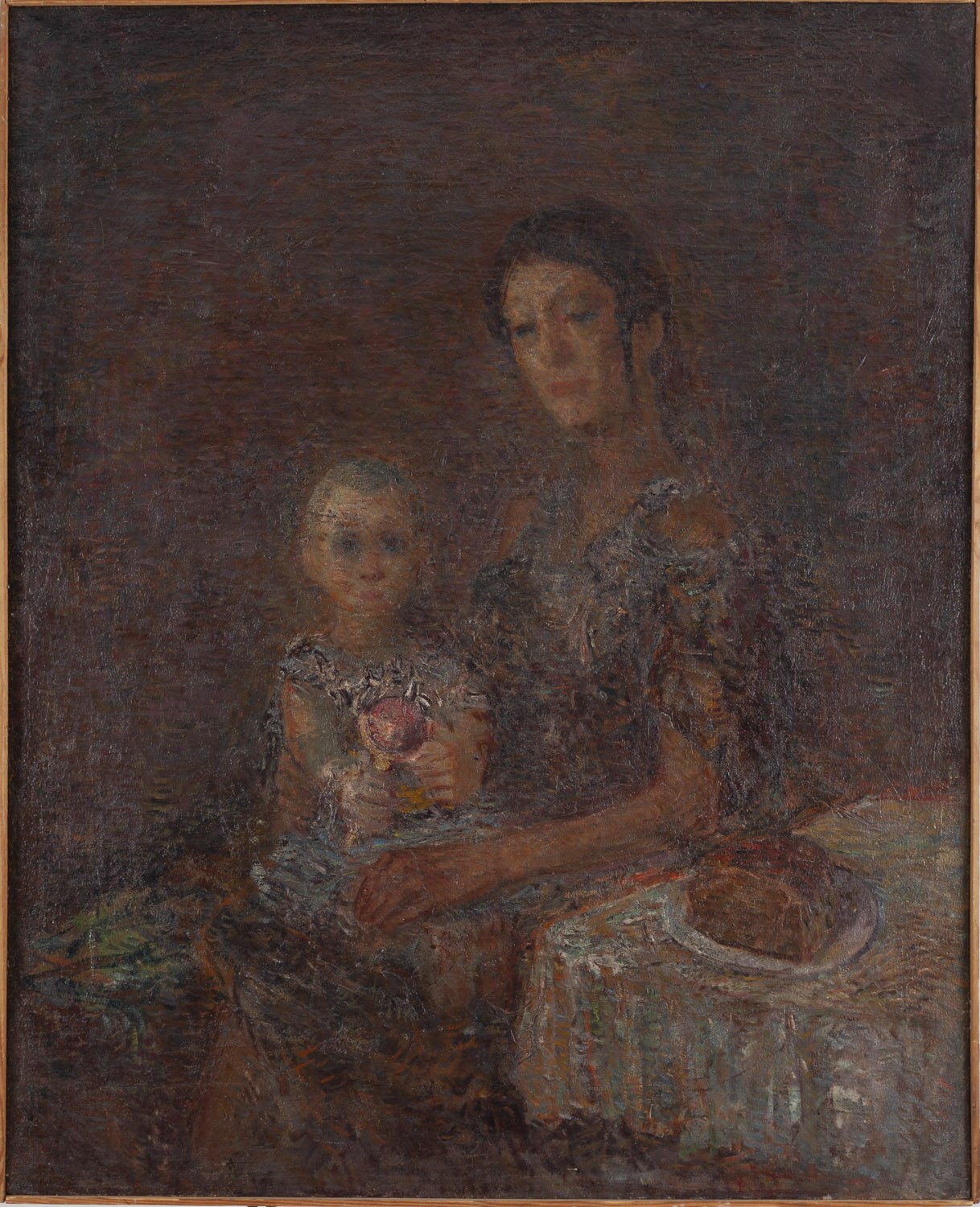
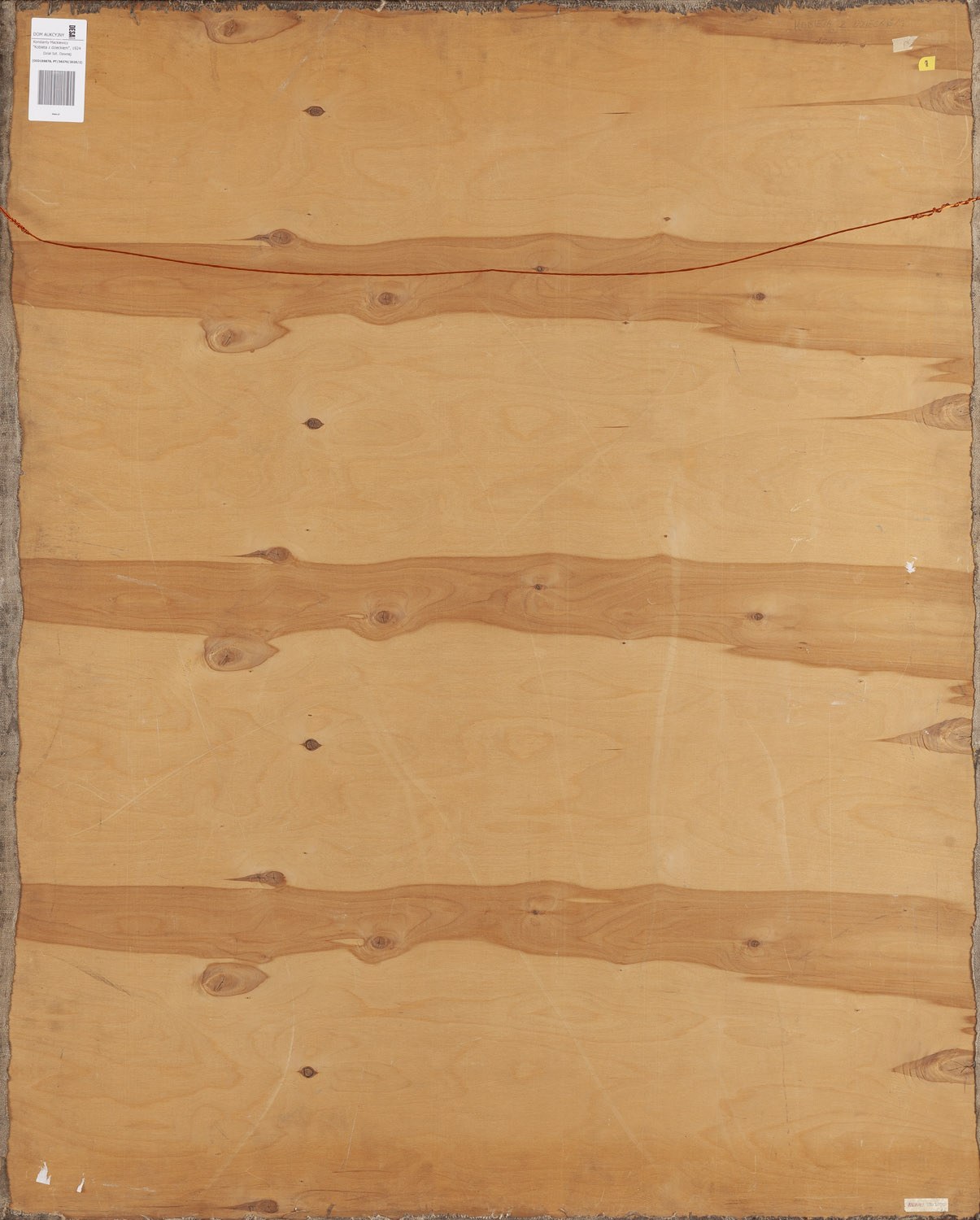
Dimensions: 120 x 97 cm
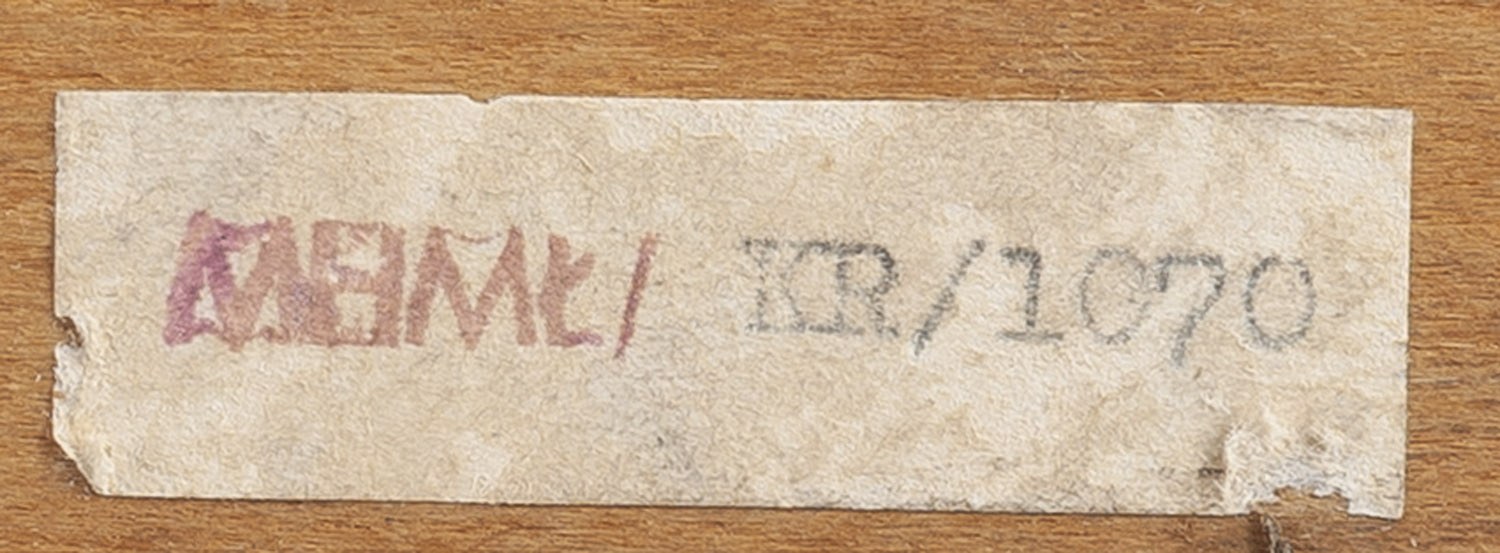
on the reverse a museum sticker of the Museum of the History of the City of Lodz with the inventory number
Provenance
collection of the artist's family
Exhibited
Konstanty Mackiewicz. Painting., Union of Polish Artists, Art Exhibition Office in Lodz, Museum of the History of the City of Lodz, April 1977.
Konstanty Mackiewicz. Paintings from the family collection, Municipal Art Gallery in Lodz, 24.06 - 6.07.2003
Literature
Konstanty Mackiewicz. Paintings., exhibition catalog, ed. TamaraTarnawska-Micewicz, Union of Polish Artists, Art Exhibition Office in Lodz, Museum of History of the City of Lodz, April 1977
Brochure from the exhibition Konstanty Mackiewicz. Paintings from the Family Collection, Municipal Art Gallery in Lodz, cat. no. 4
Biography
In the second decade of the 20th century, he studied in Odesa and Moscow at the School of Painting, Sculpture and Architecture, where he came into contact with Vassily Kandinsky. At the time, he worked under the strong influence of avant-garde trends: cubism, futurism and expressionism. Since 1922 he lived in Poland, precisely in Lviv. He worked as a theater stage designer, and continued this activity still after moving to Lodz. In the interwar period he was associated with such groups as Rhythm and Start. He traveled extensively in Europe and exhibited his works abroad. Especially in the 1930s, he intensively presented his work during exhibitions in Brussels, Paris and New York. After the war, he continued to be associated with Lodz. He also continued the style he had developed earlier, in which he combined a realistic understanding of space with an impressionistic style. In this trend, based on color experiments, he created idyllic landscapes dominated by untamed nature, moody urban nocturnes, refined interiors of palace salons or still lifes. He created a series of vedutas showing the wartime destruction of Warsaw, entitled "Here Were the People," as well as many other landscapes documenting both the ruined and rebuilt capital.