



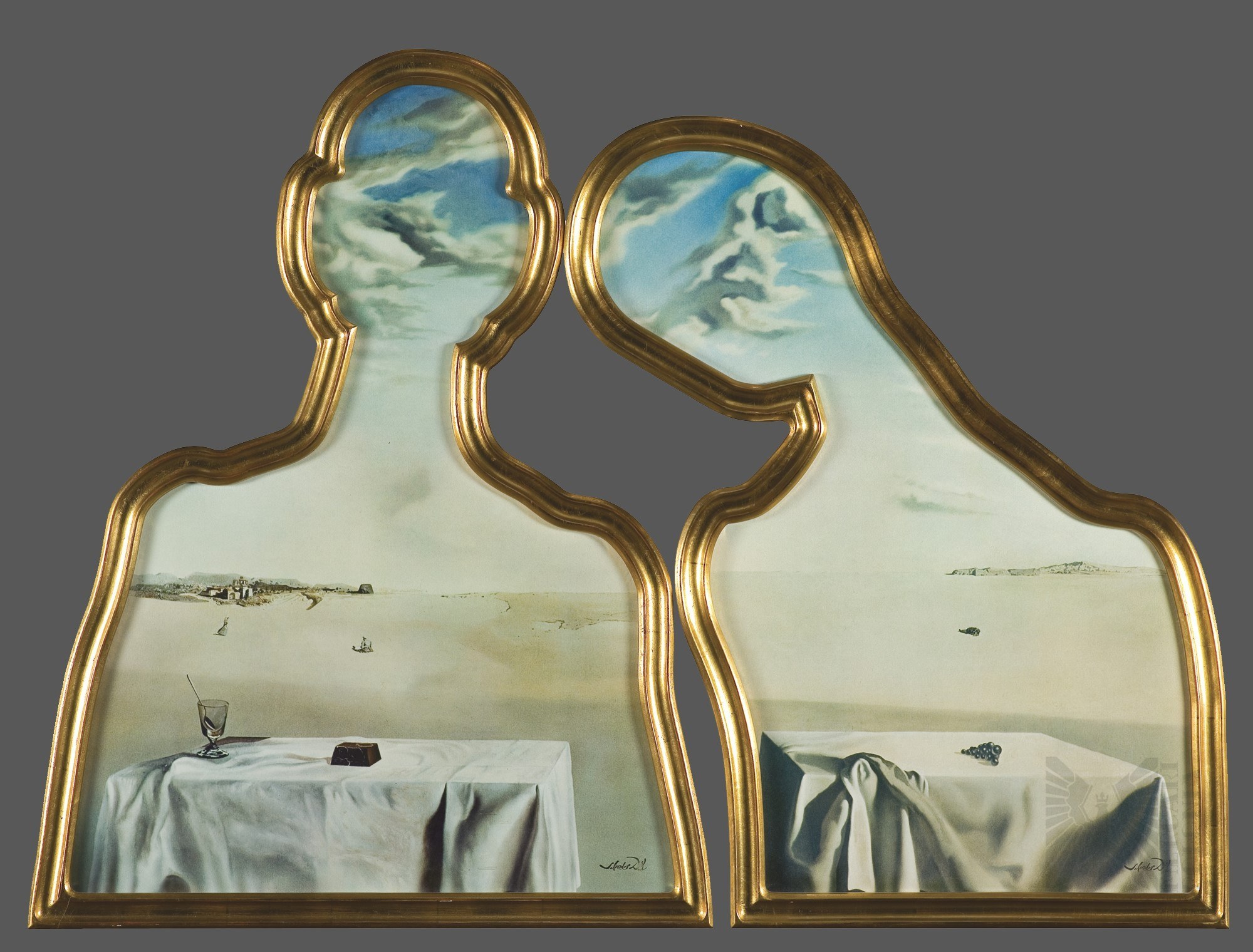
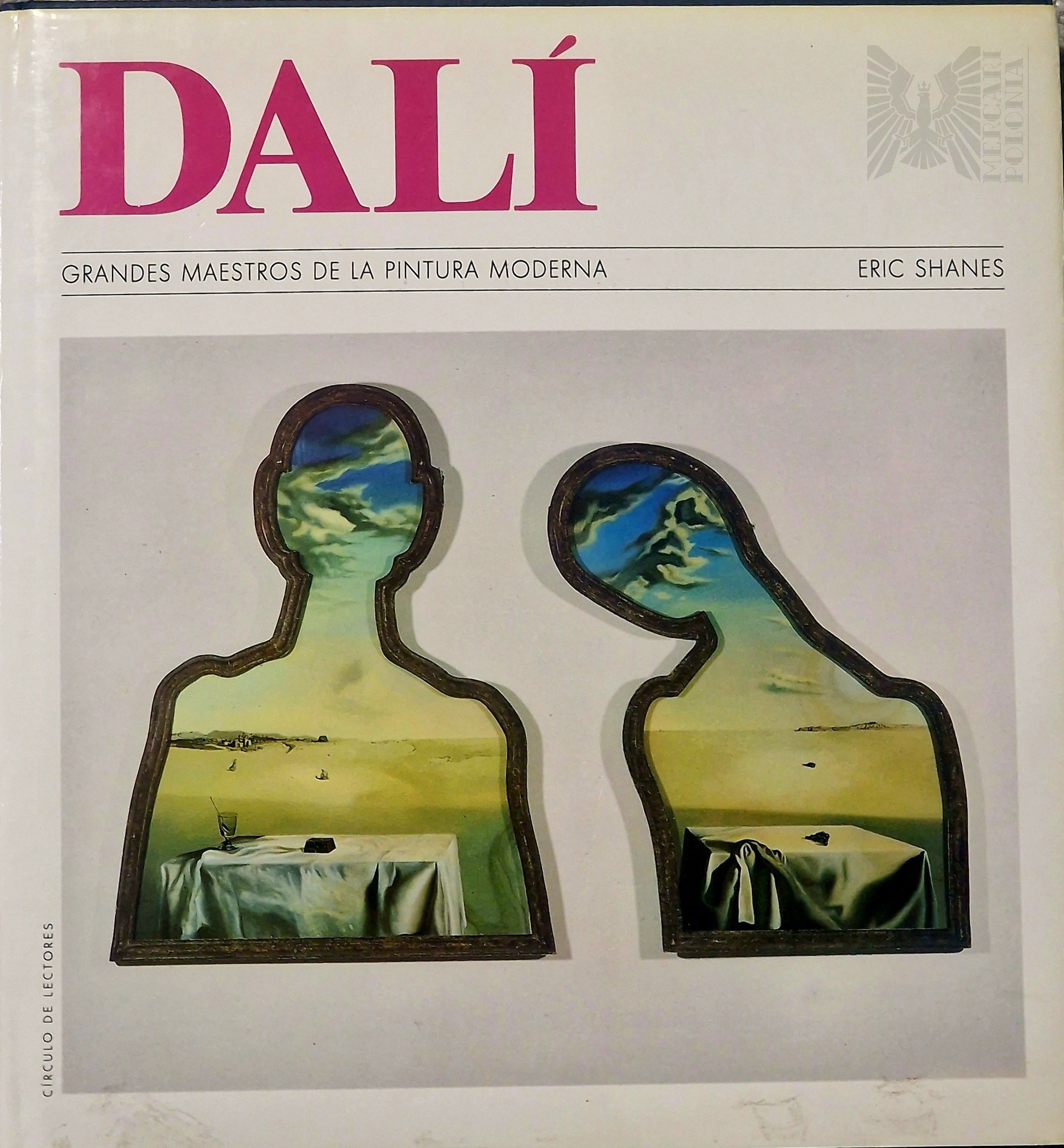
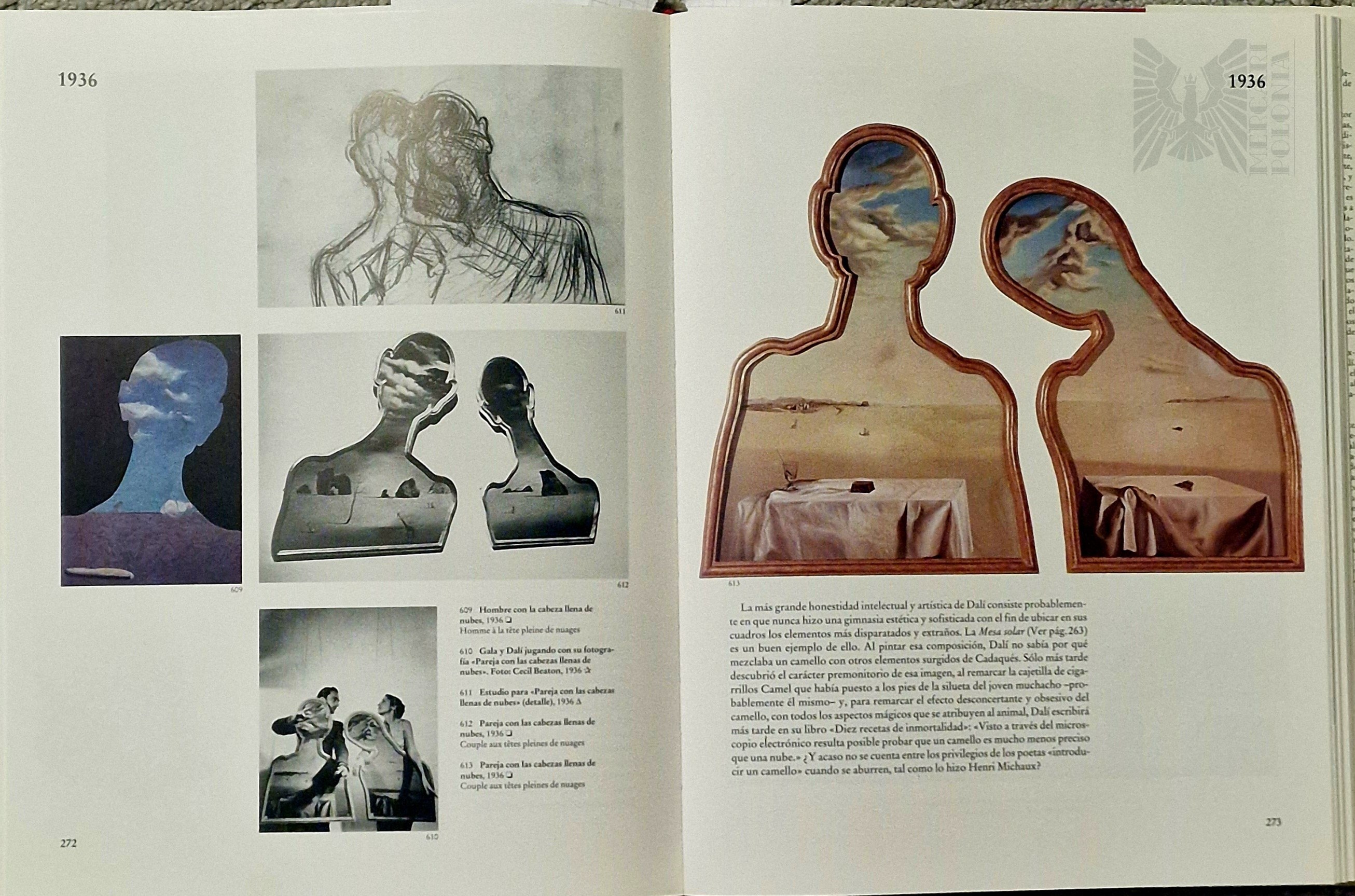
Diptych, 14-color lithographs, based on the 1936 original, which is currently on permanent display at the Boijmans van Beuningen Museum in Rotterdam.
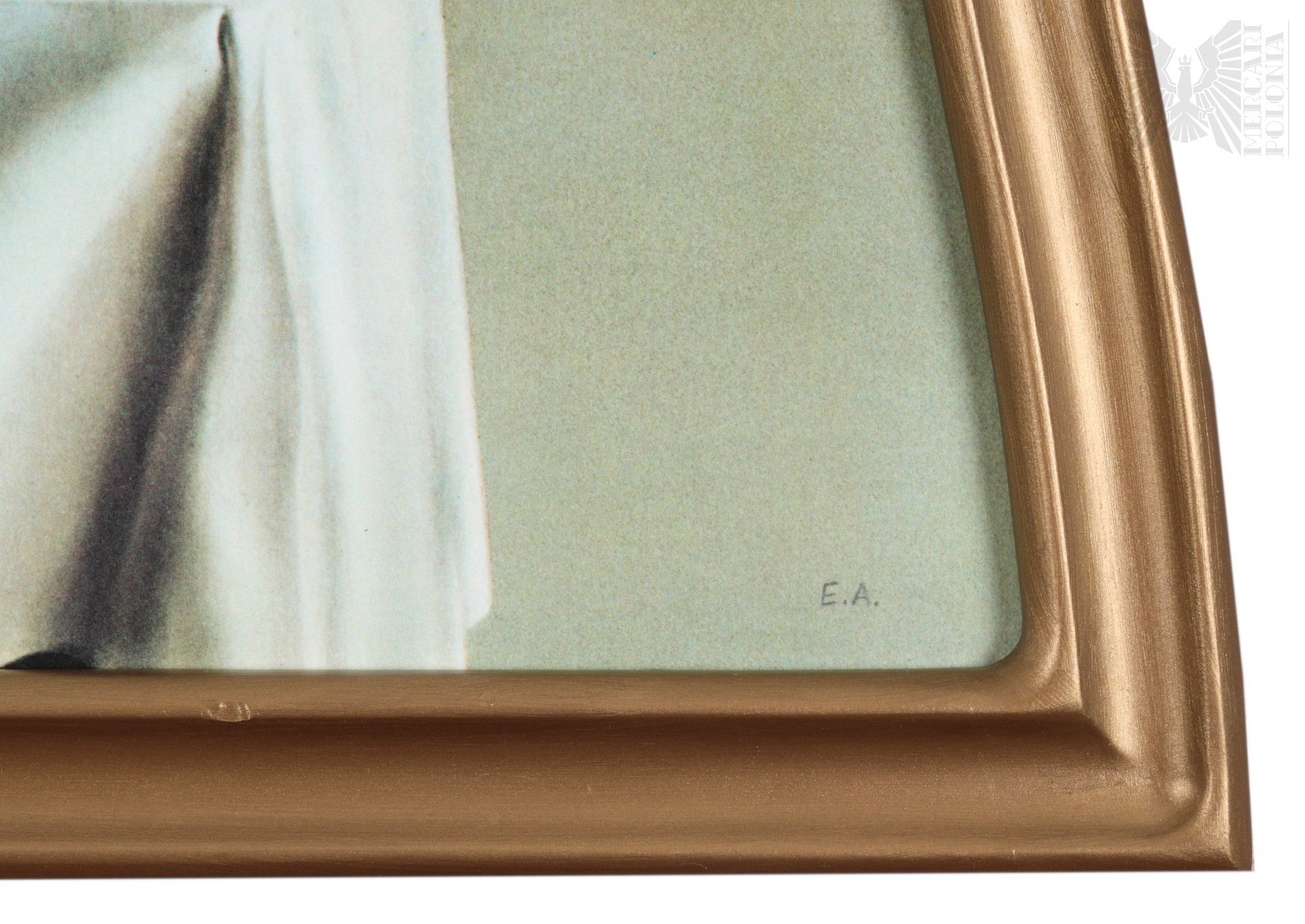
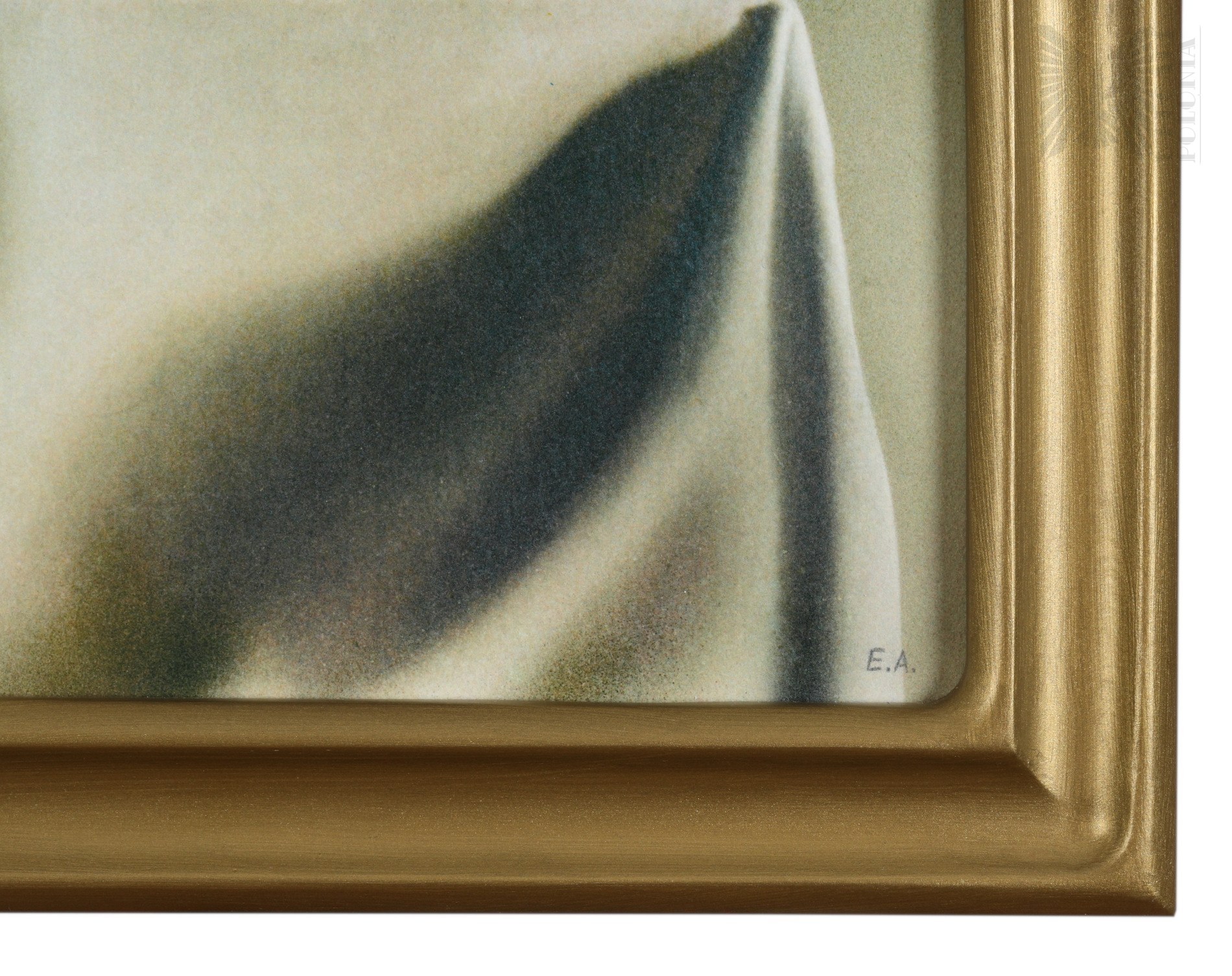
Publisher: Atelier Latour, Martigny, Switzerland, 1990, hand-endorsed in pencil “E.A.” at the bottom right.
Original, hand-signed certificate from the heirs of the publisher Les Ateliers Latour.
EA—“épreuve d’artiste” (artist’s proof)—indicates that this print is part of a limited edition that is not included in the standard, numbered print run. Such prints are considered rare; their number is limited and, as a result, they are more expensive than the standard run. Prints bearing the EA signature are intended for the artist.
Granolithography (often also called granulolithography) is a highly advanced, refined artistic printing technique that combines traditional lithography with a photomechanical process. For each of the 14 colors, Atelier Latour created a separate lithographic plate and used special, highly pigmented lithographic inks, which, when applied layer by layer, create a depth of color unattainable by other printmaking techniques. Granolithography, often referred to as “the aristocracy of printing techniques,” is a method that preserves the magic of the original while allowing for the production of a larger edition of pieces that possess the qualities of an authentic work of art.
Total size of the diptych: 118 x 86 cm.
Dimensions of the male figure: 85.5 x 66.5 cm
Dimensions of the female figure: 78.5 x 65.5 cm
Frame designer: Oscar Tusquets Blanca, a close friend of Dalí and a Spanish architect.
Hand-carved wooden frames made of solid wood.
A planned edition of 1,200 pieces and 20 E.A. was commissioned from Atelier Latour by Salvador Dalí following the death of his beloved wife, Gala. Atelier Latour continued the work after Dalí’s death in 1989. • This workshop was renowned for its extraordinary precision and color fidelity, which were crucial for rendering the subtle tonal transitions of the “sky” above the heads of Dalí and Gala.
Technique: These are not ordinary prints, but lithographs produced on special presses using thick, 100% cotton, acid-free BFK Rives handmade paper, which gives them a texture nearly identical to that of the original.
In this particular edition, the paper was hand-cut precisely to the shape of the carved frame (a so-called “die-cut”), which was technically extremely challenging with paper as thick and high-quality as BFK Rives.
The combination of Swiss printing precision and the artisanal craftsmanship of the frames means that these objects are regarded as full-fledged wall sculptures, rather than merely lithographic prints. In the catalogs of European auction houses, this edition is listed as “Objets-Lithographies” (object-lithographs), which emphasizes that the frames and lithographs form an inseparable whole crafted in Switzerland.
Only 200–300 pieces were produced out of the planned 1,200, as Master Latour also passed away after Dalí’s death, and the heirs closed the Atelier.
*Couple aux têtes pleines de nuages*—this work transports us right into the heart of Dalí’s surrealist vision. The two panels, though separate, form a cohesive whole, depicting a desert landscape where time and space are distorted. Classic Surrealist motifs—clouds cutting across the figures’ heads—symbolize the fleeting nature of thoughts and emotions, while scattered rocks and distorted trees reflect the anxiety and chaos plaguing the world at that time. All these images refer to certain Freudian themes, often evident in Dalí’s key works.
This is one of Dalí’s surrealist masterpieces, revealing his two great passions—Freudian psychology and his great muse, his beloved Gala. Their turbulent relationship, full of controversy and obsession, but also full of love and mutual fascination, is reflected in this work.
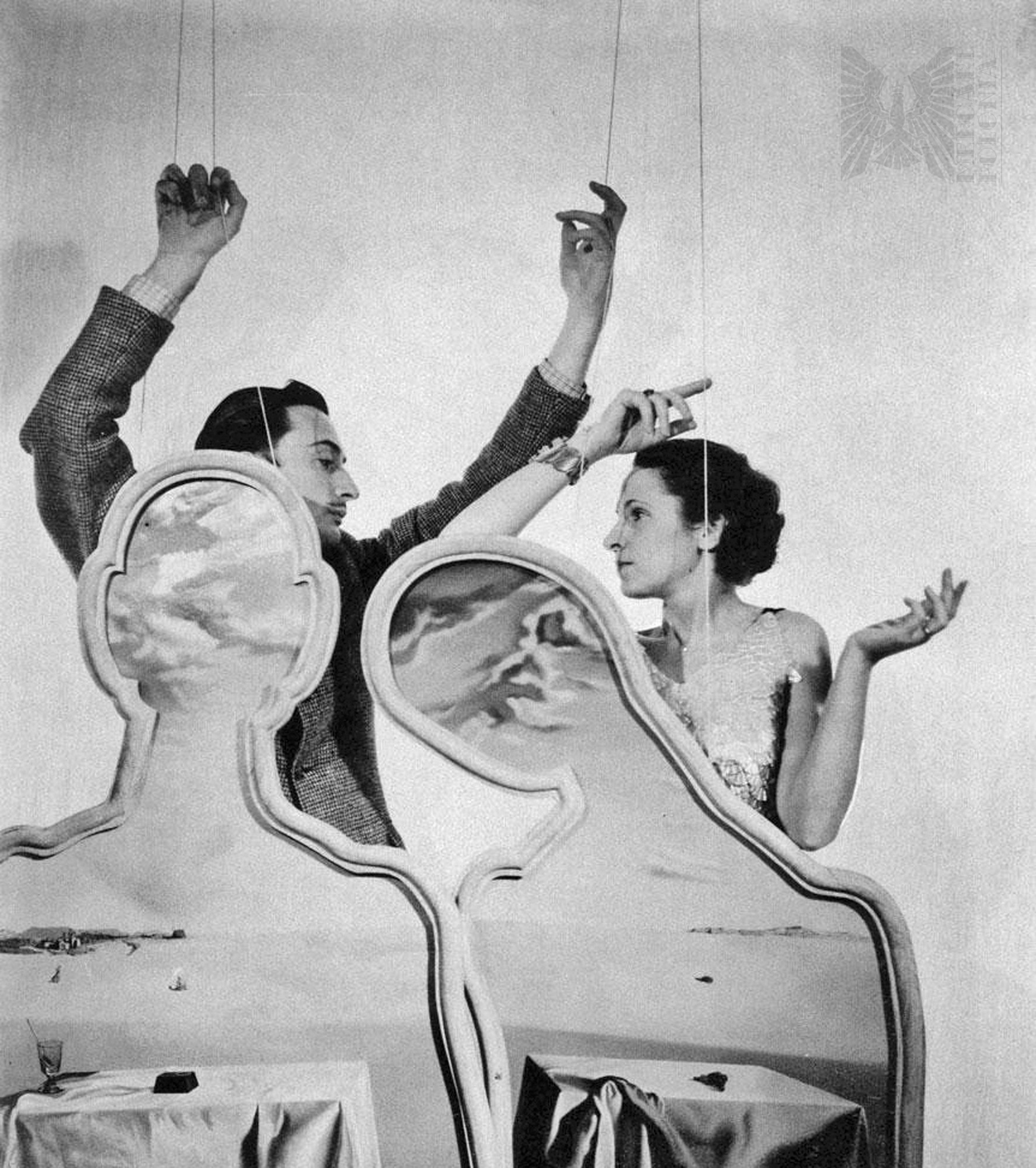
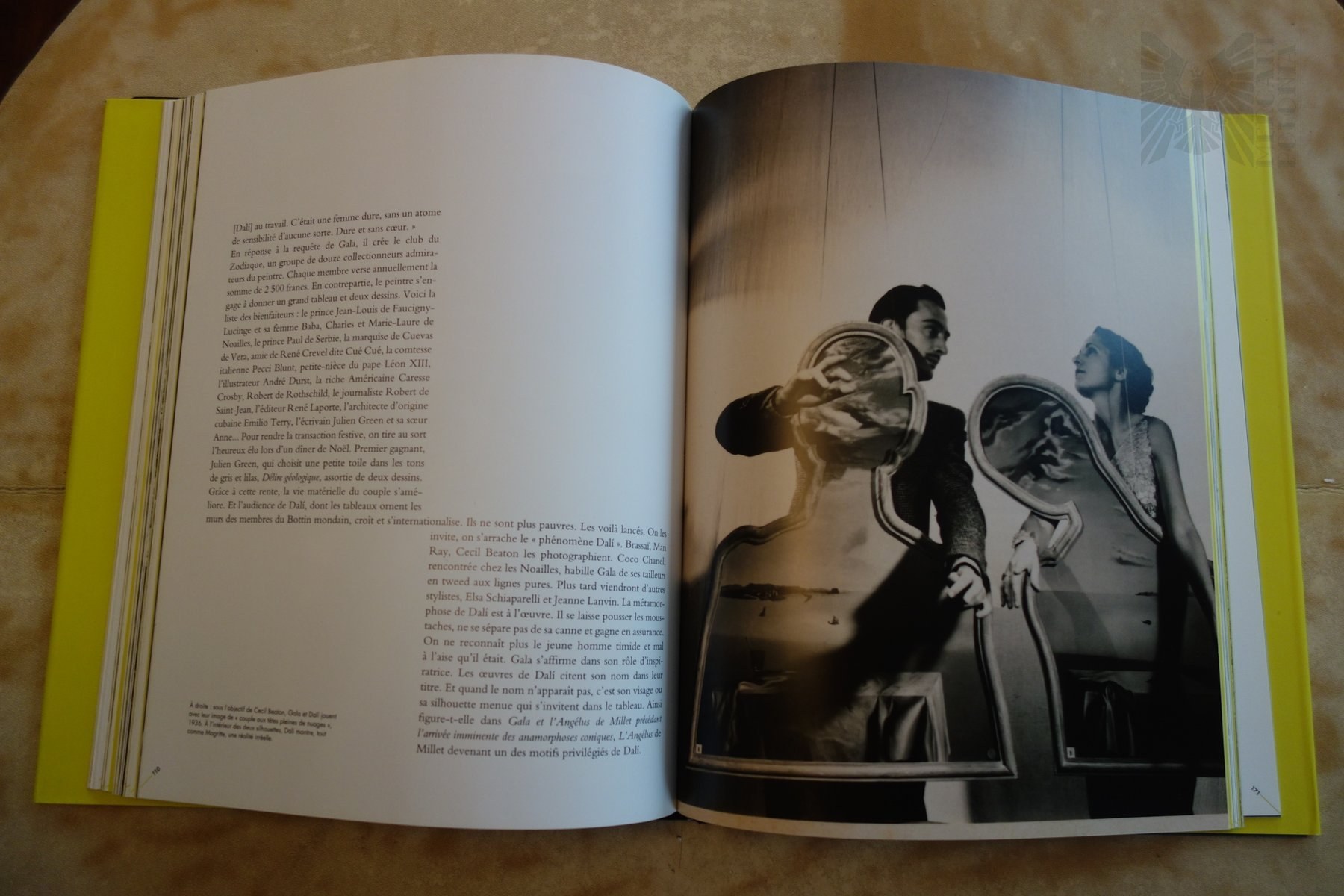
The work depicts Dalí and his wife Gala, outlined only by the contours of the frame, which Dalí personally designed. The composition of the work and the positioning of the heads were borrowed from the famous painting *The Angelus* by one of Dalí’s favorite artists, the French painter Jean François Millet. The painting depicts a peasant couple saying their evening prayers in a field. Dalí and Gala adopted the same poses seen in Millet’s painting.
The background of Dalí’s painting is a landscape of Cap Creus, which appears in many of the artist’s works (e.g., *The Persistence of Memory*, 1931). The sky within their heads opens out over the beach at Port Lligat.
The unconventional form of the work, with its cut-out silhouettes of the figures, also contributed to the great fame of *Couple with Heads Full of Clouds*. This fame has led to Dalí’s only diptych being reproduced and described in a great many publications, from the 1930s to the present day. (See Bibliography). Dalí’s adoration for his partner and muse was so great that he signed many of his most important works, including *Couple aux têtes pleines de nuages*, “Gala – Dalí.” After the death of his beloved wife, Dalí commissioned and personally funded the production of these lithographs so that more people, including his friends and acquaintances, could have this extraordinary and inseparable artistic couple, “Gala-Dalí,” in their homes.
Provenance:
This work, along with several others, remained in the Latour family’s collection in Martigny, Switzerland, for approximately 30 years. In 2022, a Dutch collector and enthusiast of Salvador Dalí discovered and purchased them. In 2024, a collector and enthusiast from Poland acquired the diptych from him.











Πρόσφατες επισκοπήσεις
Συνδεθείτε για να δείτε την λίστα θέσεων
Αγαπημένα
Συνδεθείτε για να δείτε την λίστα θέσεων