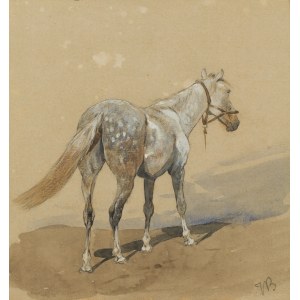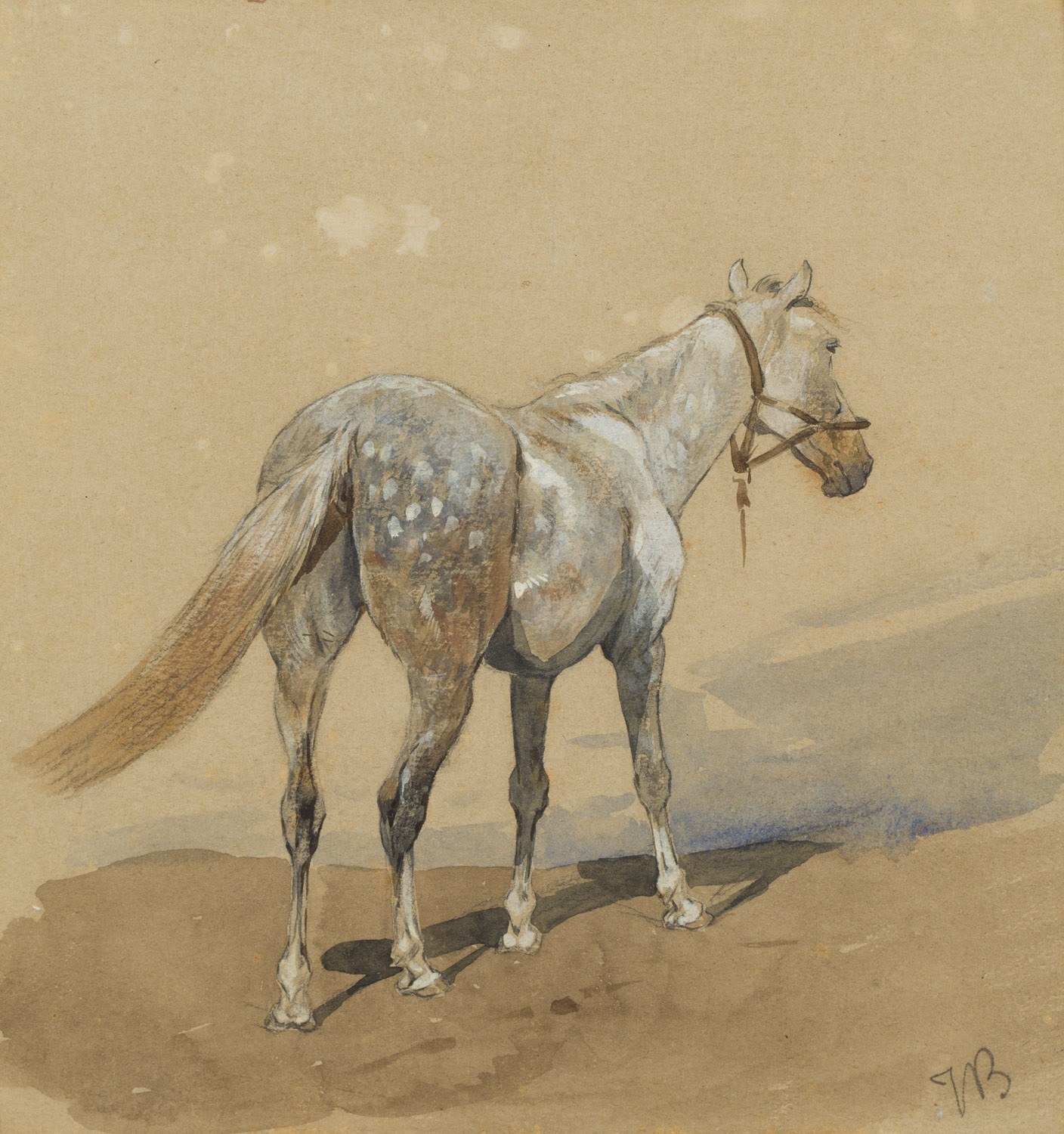
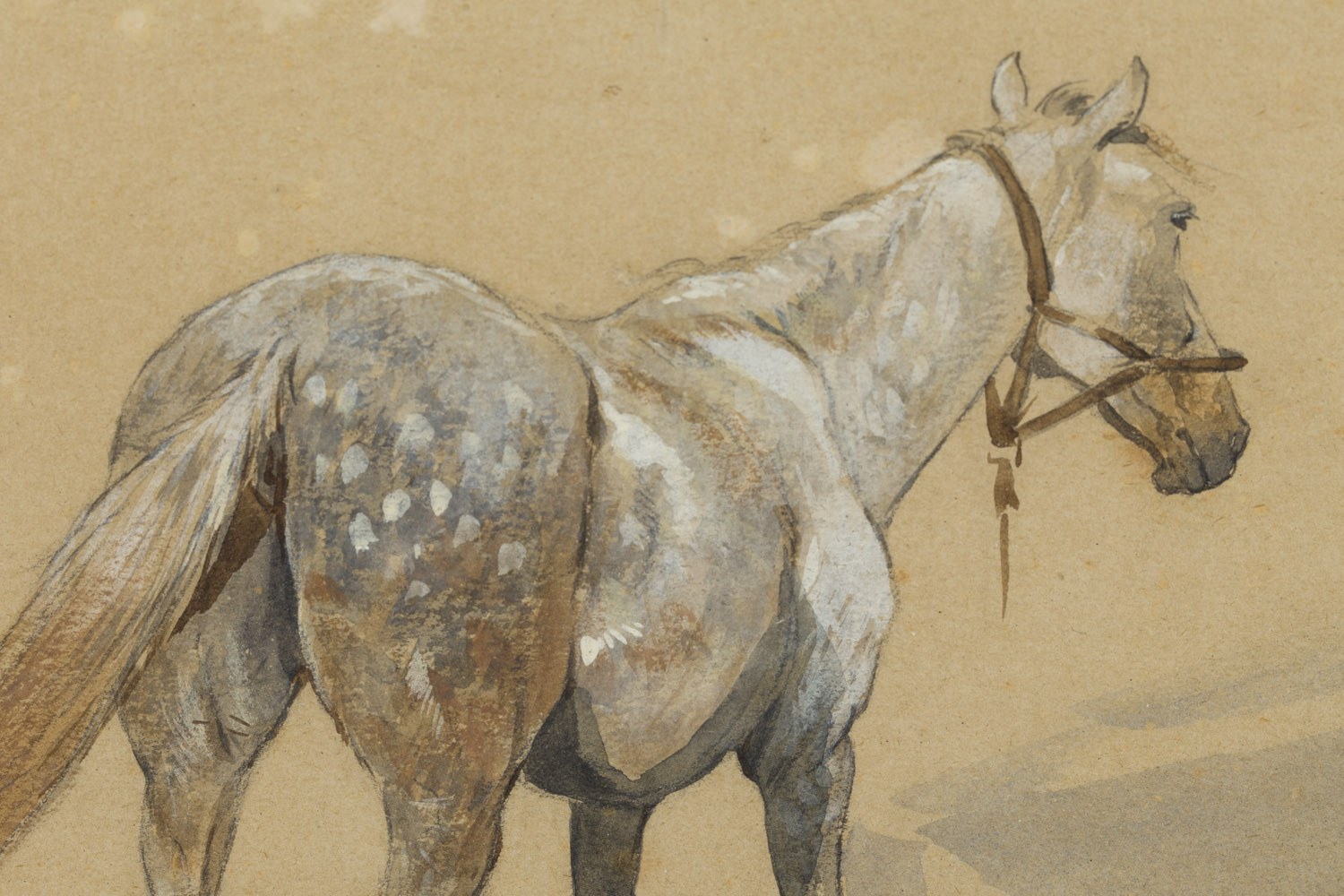
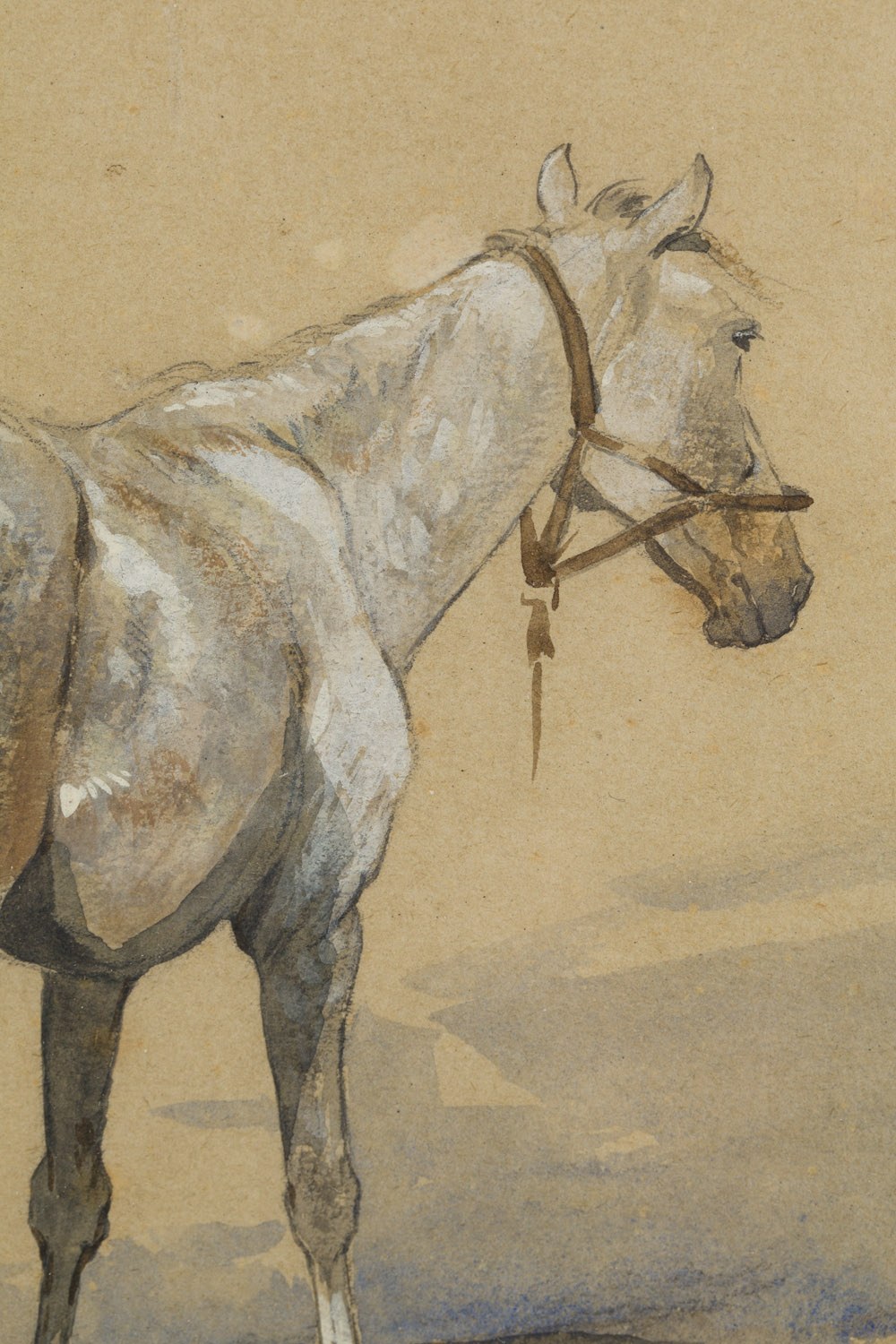
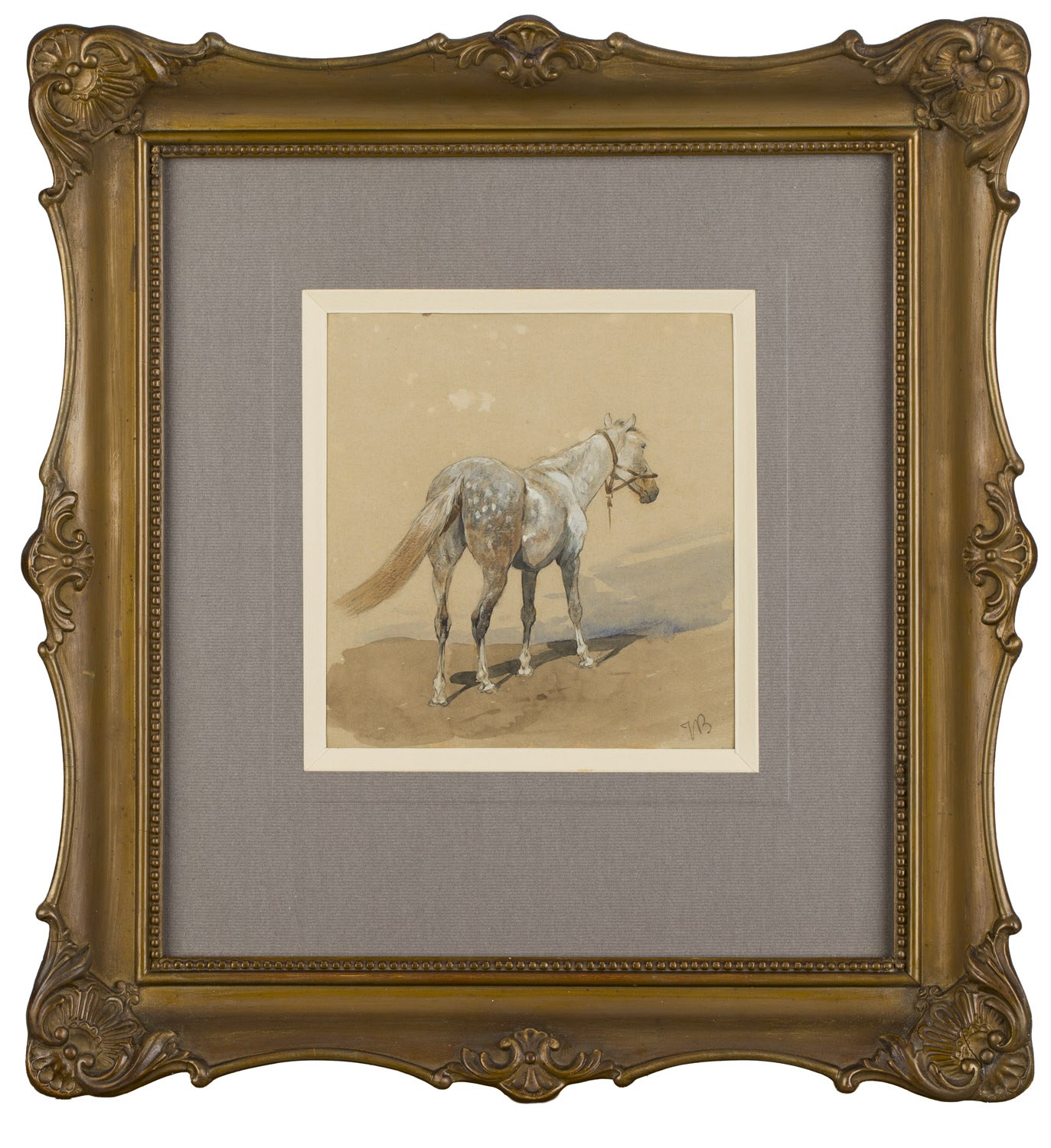
Dimensions: 18 x 17 cm (inside the mat)
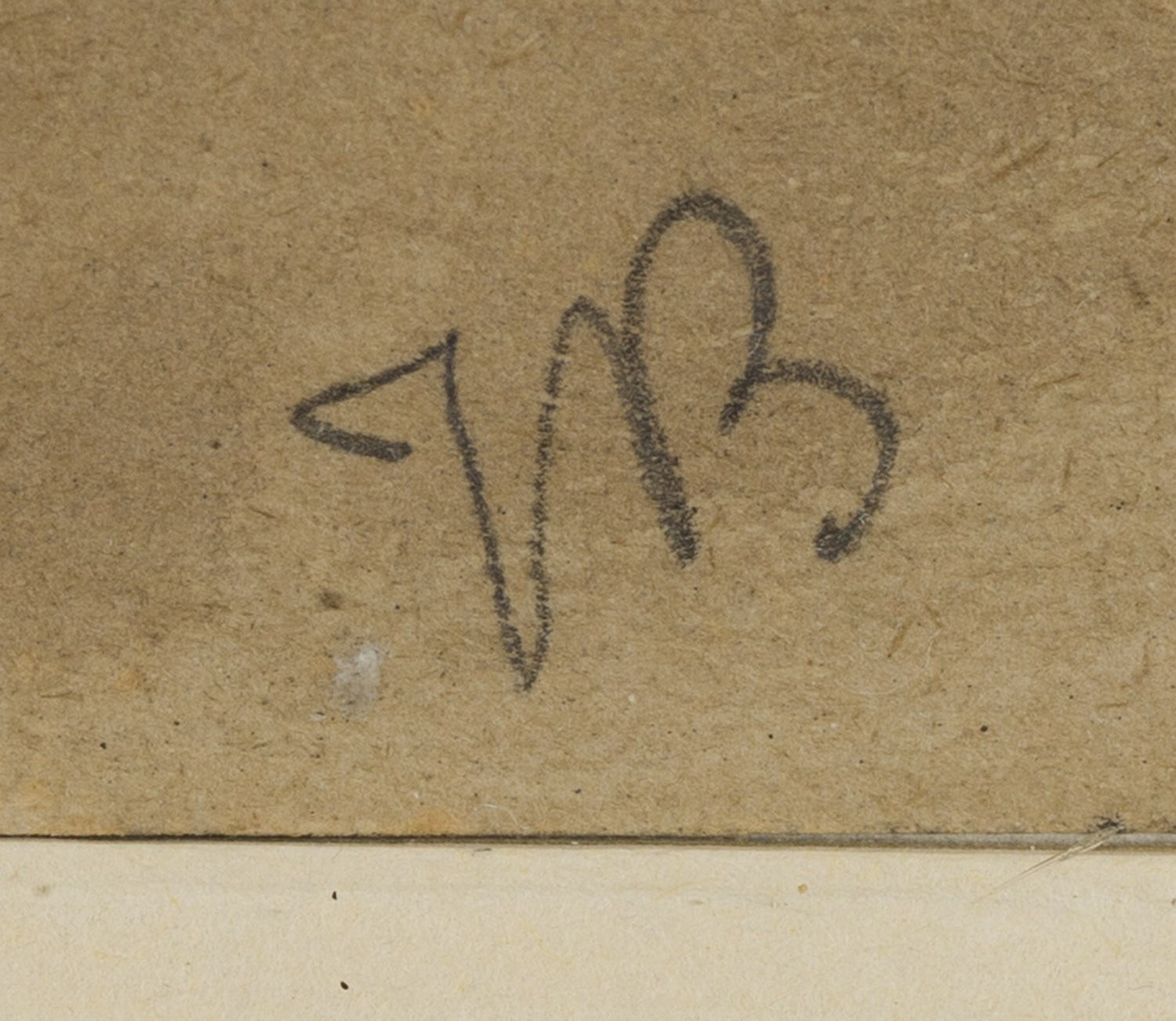
signed with the monogram 'JB' on the lower right
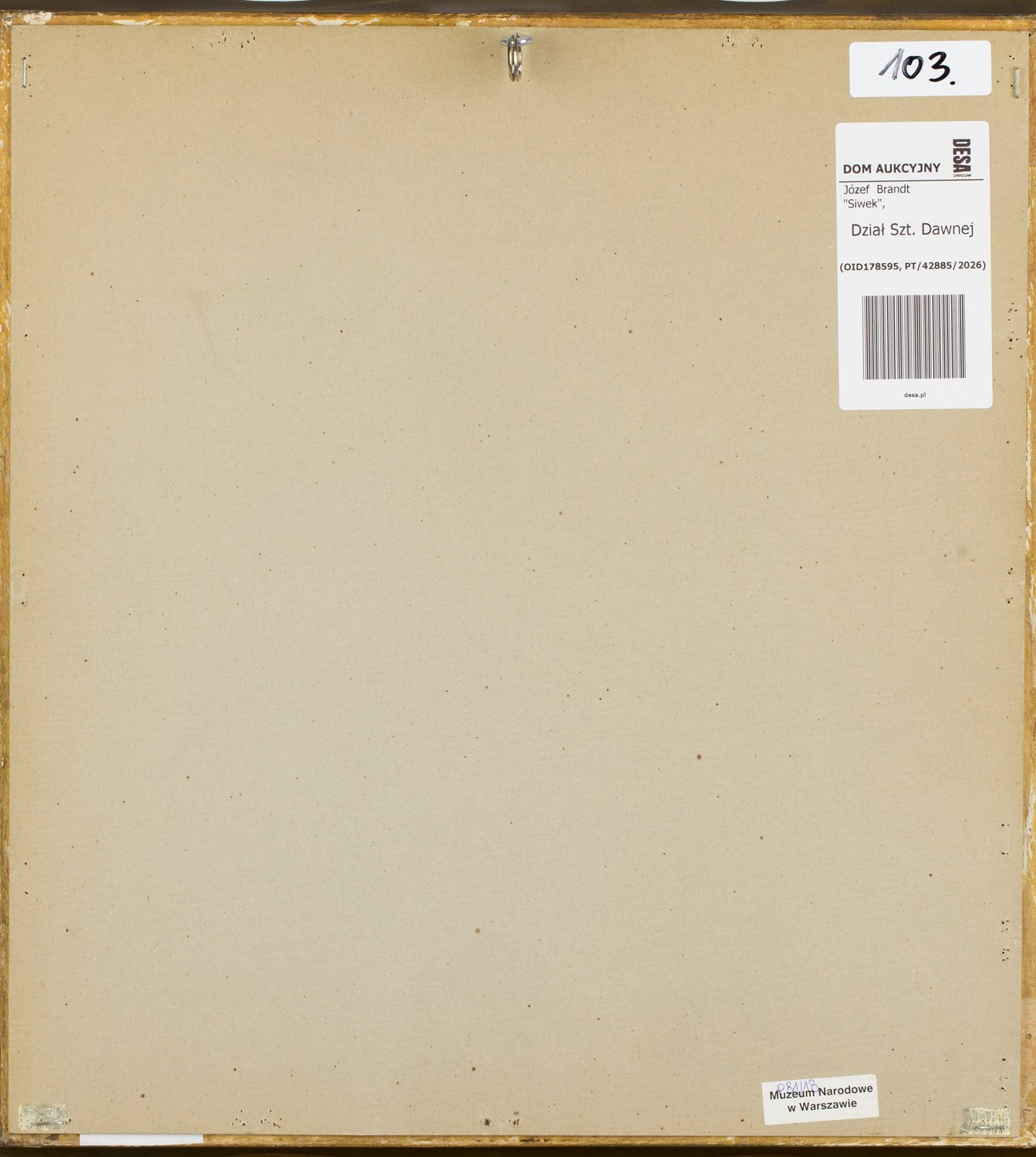
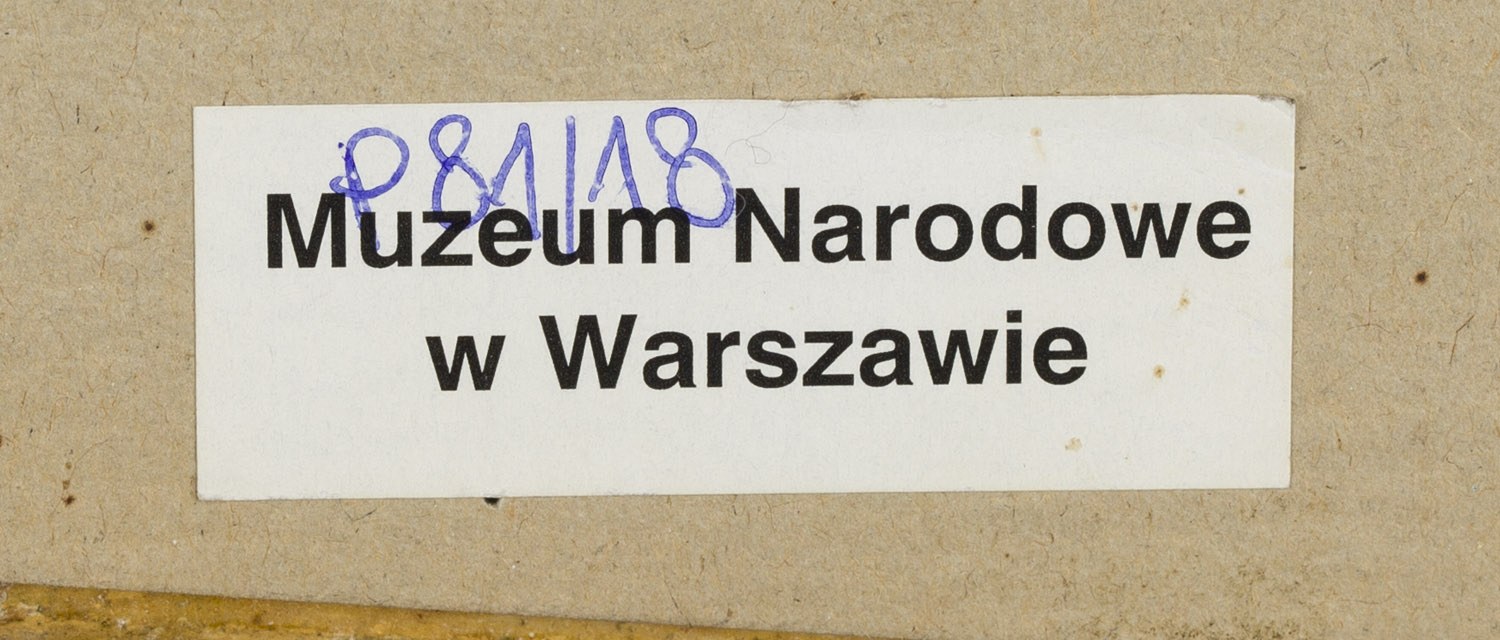
On the reverse: an exhibition label from the National Museum in Warsaw and an inventory label with the number: '103'
Provenance
private collection, Poland
Exhibited
Józef Brandt 1841–1915, National Museum in Warsaw, Warsaw, June 22–September 30, 2018
Bibliography
Józef Brandt 1841–1915, exhibition catalog, ed. Ewa Micke-Broniarek, National Museum in Warsaw, Warsaw, 2018, cat. no. III/295, p. 166 (ill.)
Biography
After graduating from the Institute for the Nobility in 1858, he left to study engineering at the École des Ponts et Chaussées in Paris, but at the urging of Juliusz Kossak, he devoted himself to the study of painting. For a time, he studied in Leon Cogniet’s studio and also received guidance from Juliusz Kossak and Henryk Rodakowski. In 1862, he left for Munich, where he began his studies in the studios of F. Adam and T. Horschelt, and from February 17, 1863, he studied at the Munich Academy, primarily under the guidance of K. von Piloty. In 1869, he received a first-class medal at the international exhibition at the Glaspalast, and from 1878 onward he served as an honorary professor at the Academy. He settled permanently in Munich, where in 1866 he founded a studio that brought together all the Polish artists residing in the city. From around 1875, he ran a sort of unofficial private school for young painters, mainly Poles. He left Munich only during the summer months, which he spent at his estate in Orońsk near Radom and traveling through Podolia, Volhynia, Ukraine, and the European part of Turkey. He was an active member of the Münchener Kunstverein—from 1864 to 1913 he was a regular member of the association, and in 1874 and 1875 he served on the board of directors. He enjoyed enormous success with the public and received many of the highest honors and titles—in 1891 he was awarded the Grand Gold Medal at the International Exhibition in Berlin; from 1875 he was a member of the Berlin Academy of Arts; an honorary professor at the Bavarian Academy since 1878, and an honorary member of the Academy of Fine Arts in Prague since 1900. He was primarily a battle painter. The events depicted by the artist were most often set in the eastern borderlands of the 17th-century Polish-Lithuanian Commonwealth, during the era of the Cossack wars and Tatar raids. The main motifs of the artist’s paintings were the Cossacks, Tatars, the Lisowczycy, and 17th-century Polish knights—where horses in dynamic poses and the colorful figures of riders in the heat of battle played the most important roles—as well as scenes of hunting and bustling bazaars. The artist’s paintings can be found in nearly all Polish museums, as well as in private collections in Europe and America.