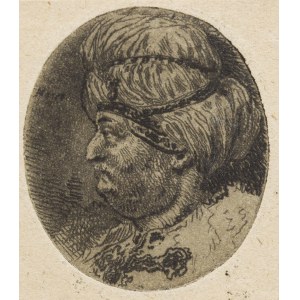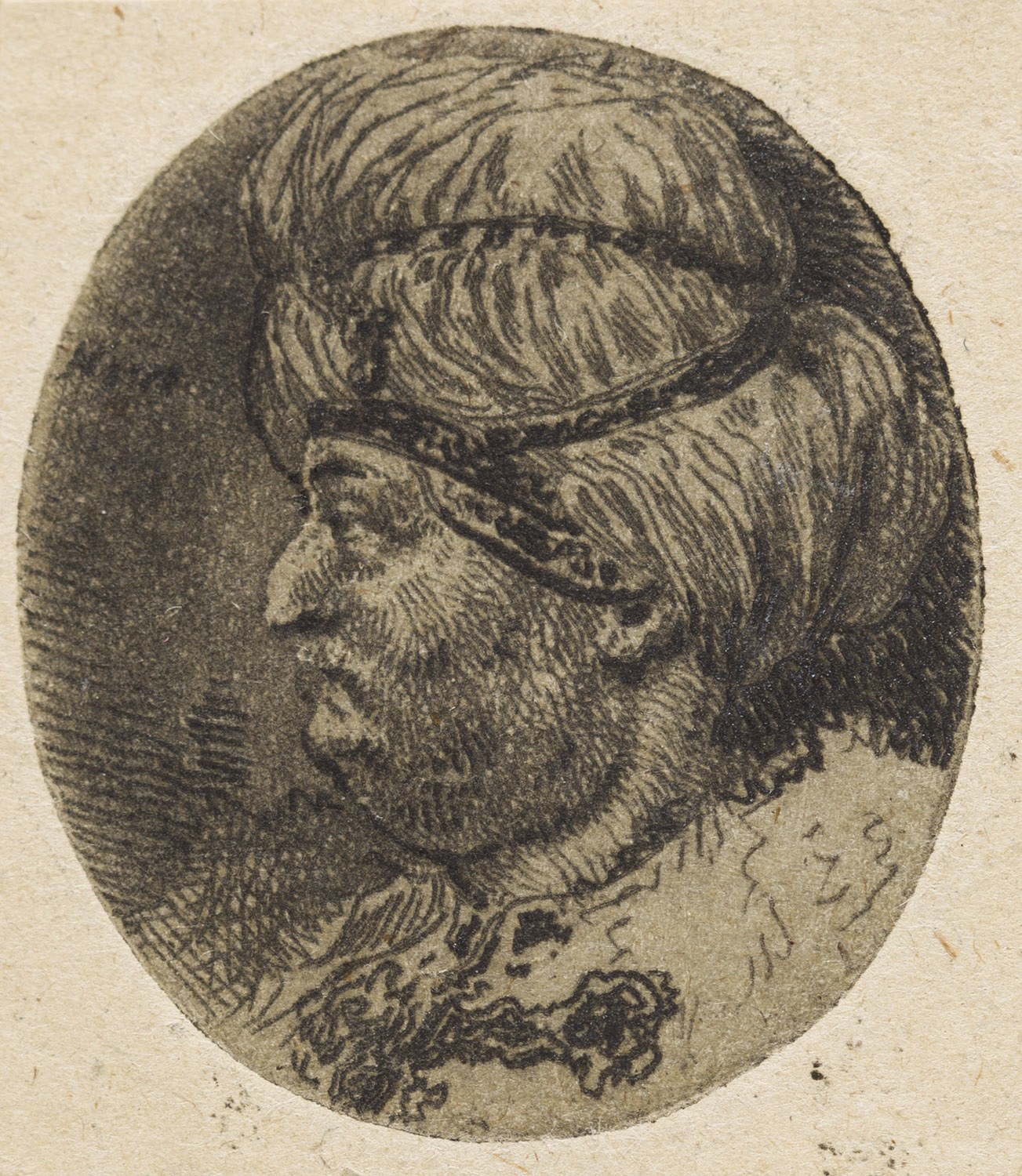
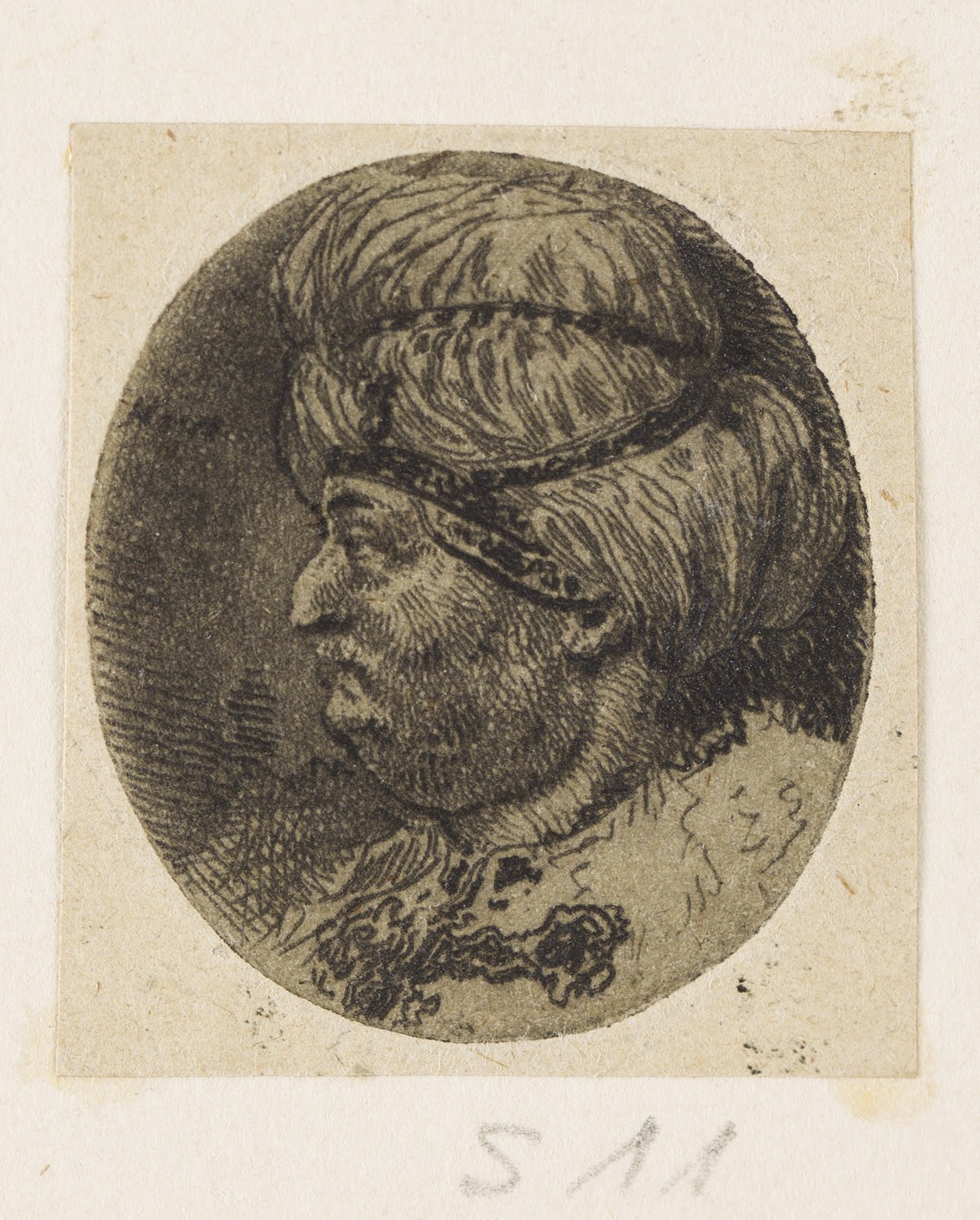
Dimensions: 3.1 x 2.7 cm (plate impression)
signed and dated on the left: 'N. 1777'
Condition
Unframed work
Bibliography
F. Hillemacher, Catalogue of the Prints Comprising the Work of Jean-Pierre Norblin, Kraków 1865, no. 62
W. Franke, Das radirte Werk des Jean-Pierre Norblin de la Gourdaine, Leipzig 1895, no. 64
P. Smolik, The Engravings of Jan Piotr Norblin, Łódź 1934, no. 11
P. Ignaczak, Like Rembrandt... The Prints of Jan Piotr Norblin (1745–1830). Catalog, Puławy–Warsaw 2024, item 85, p. 134
Biography
Jan Piotr Norblin, of French descent, was a painter, draftsman, and printmaker active in Poland from 1774 to 1804. From the moment he arrived in Warsaw, he was associated with the patronage of the Czartoryski family. Brought to Poland by Prince Adam Kazimierz Czartoryski, initially as a drawing teacher for his children, he eventually became the family’s court painter, carrying out various commissions for them (wall decorations, easel paintings). He was associated with the Blue Palace in Warsaw and, later, with the estate in Puławy. His work is dominated by mythological scenes and fêtes galantes, inspired by the paintings of Watteau and Fragonard. Norblin was also an engraver. There are 94 known prints, mostly etchings, in which Rembrandt’s influence is strongly evident. His work consists mainly of historical scenes (The Coronation of Przemysław, The Presentation of the Crown to the Piast), portraits, Polish types, studies of heads and busts, rural landscapes, and compositions (The Invention of Drawing). The artist trained a group of students in Poland, who, like him, were primarily outstanding creators of genre scenes; among them, the most important were Aleksander Orłowski, Michał Płoński, and Jan Rustem.