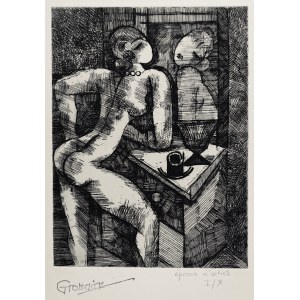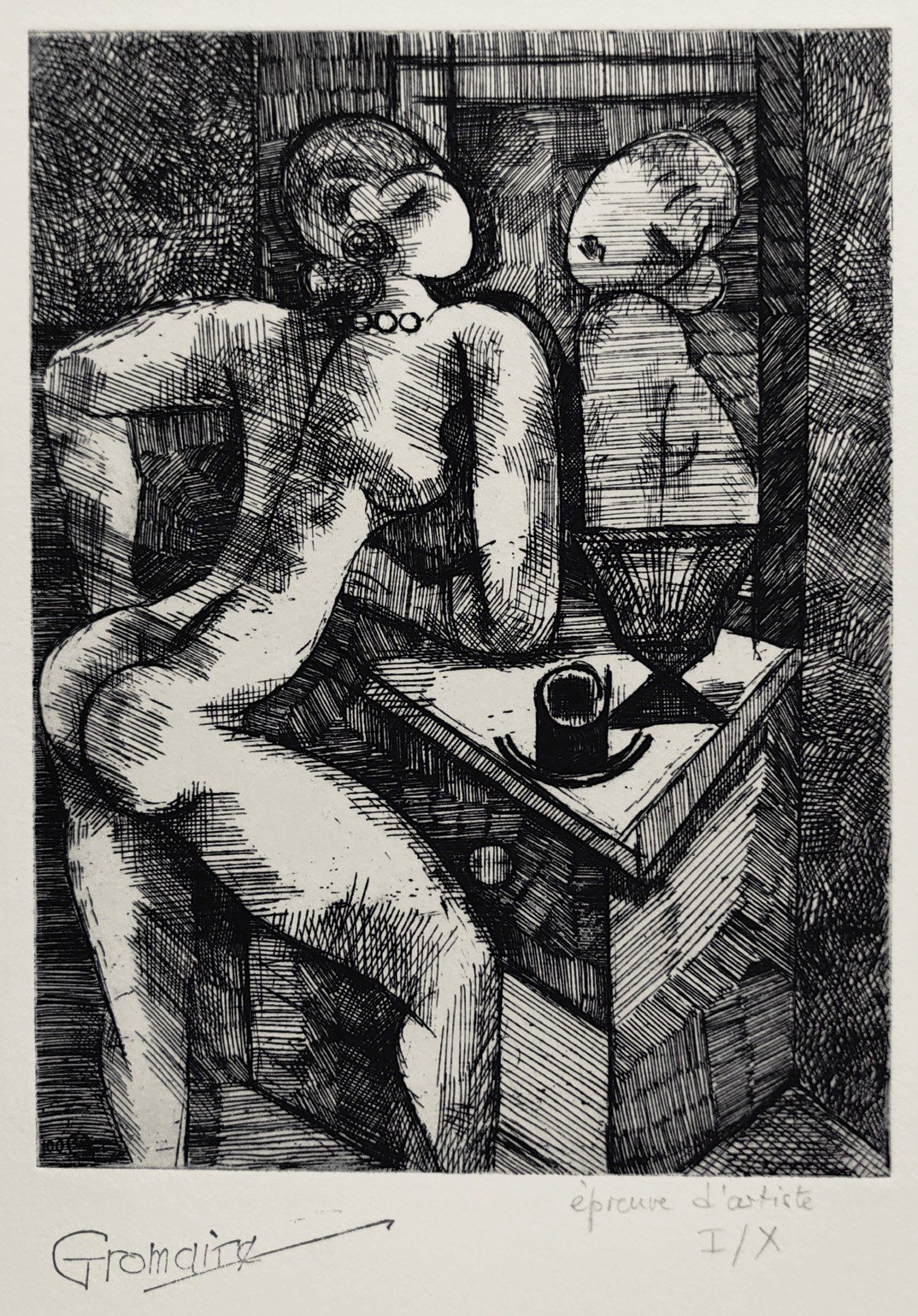
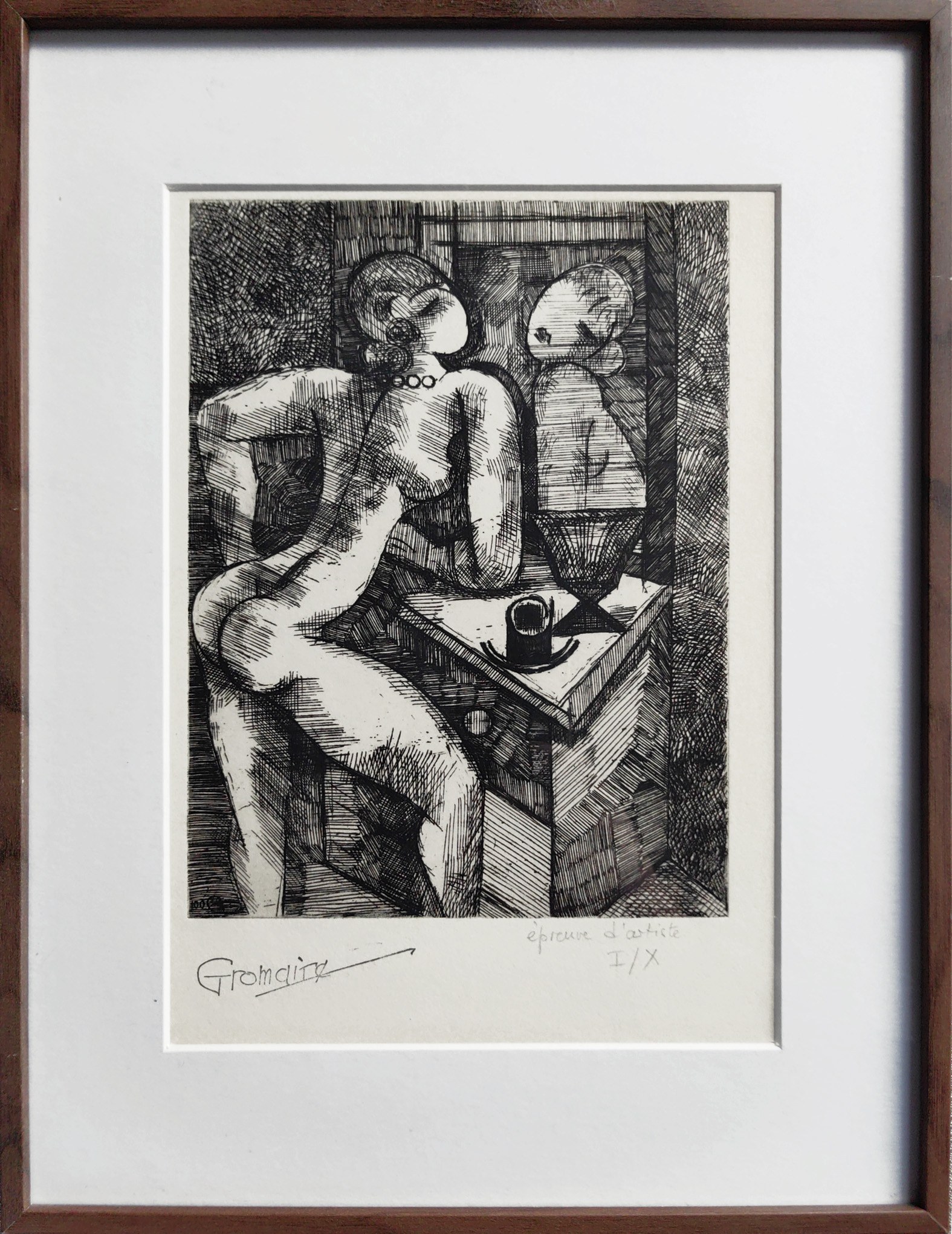
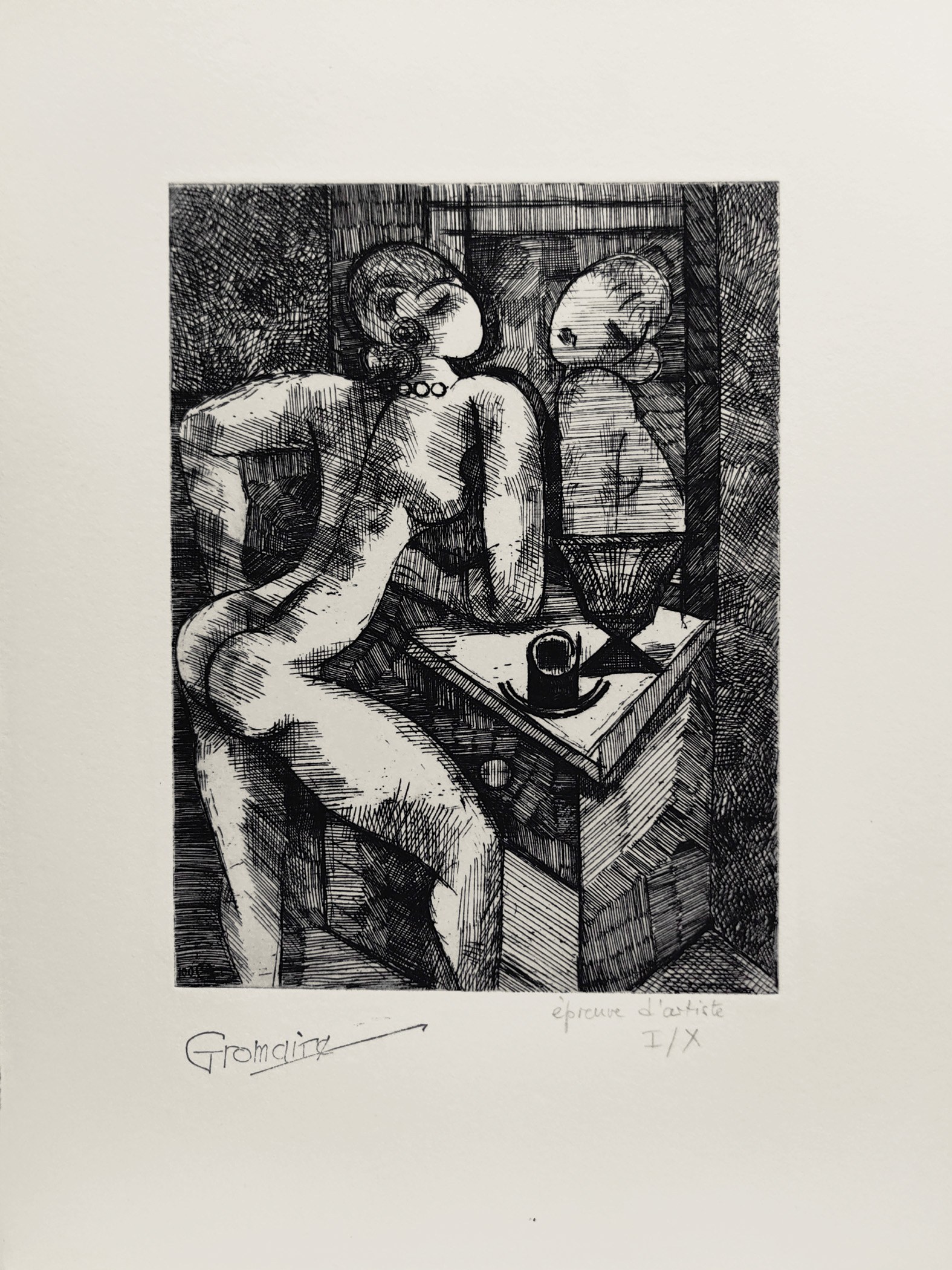
Marcel GROMAIRE (1892-1971), after
"Nu se mirant", 1931 (original)
Print dimensions (motif): 24 × 18 cm
Sheet dimensions: 41 × 31 cm
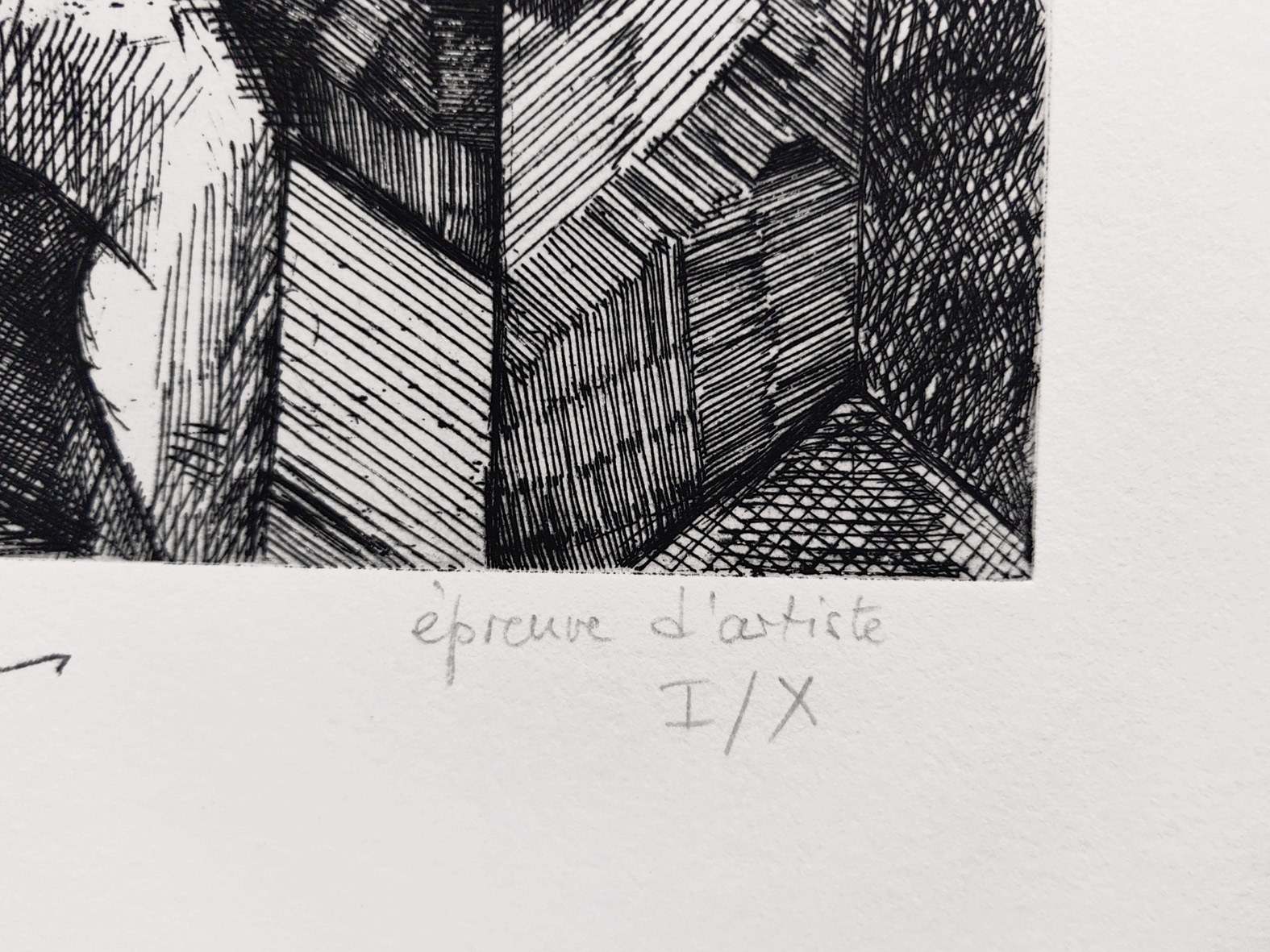
Edition: artist's proof piece, described in pencil: épreuve d'artiste I/X
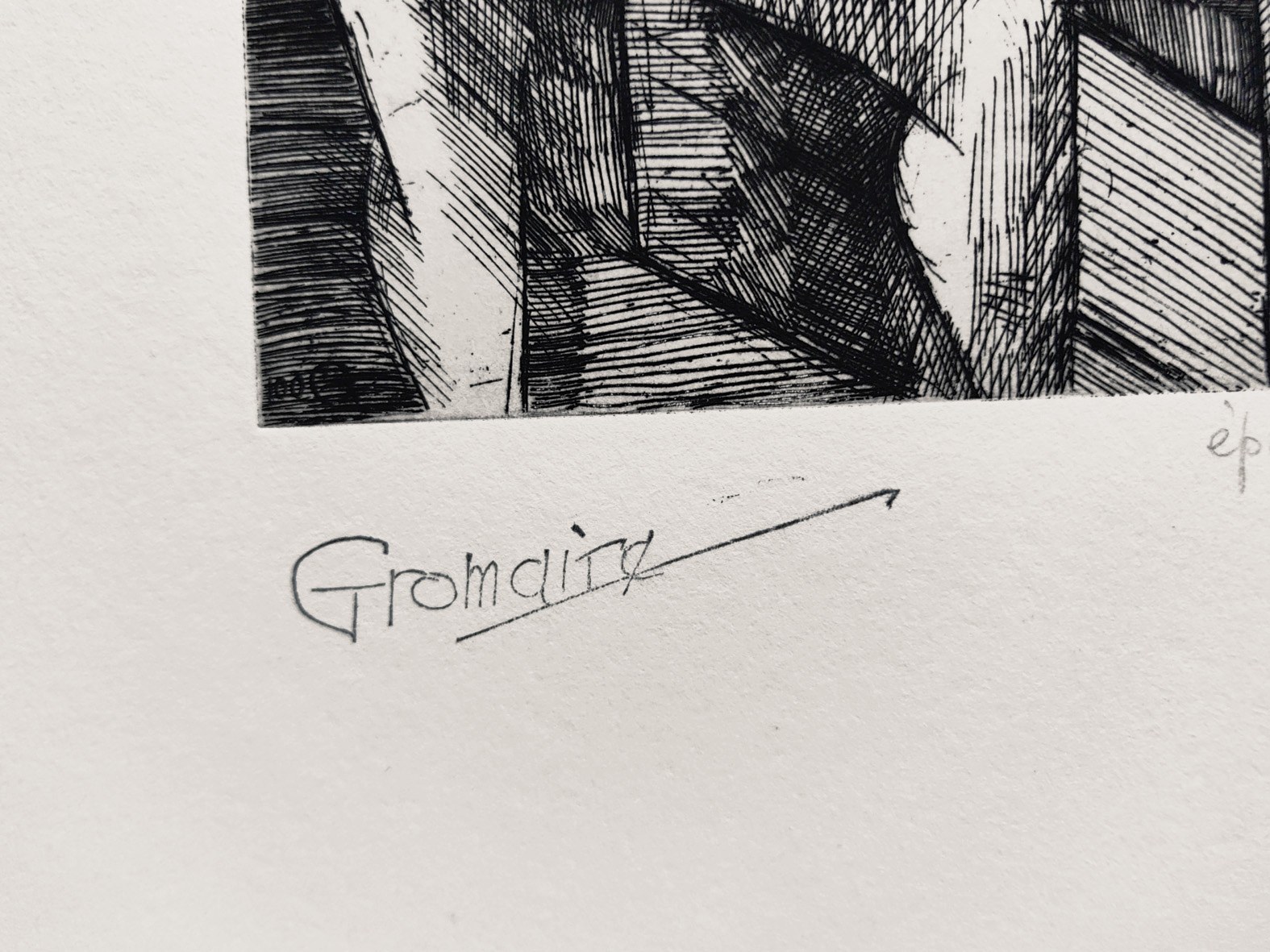
Signature: monogram and number "G 100" in plate; additionally imprinted stamp with facsimile of artist's signature
Condition: very good
Sensual, intimate scene with a female nude looking through a mirror exemplifies the distinctive style of Marcel Gromaire, a French painter and printmaker who combined the structural rigor of Cubism with soft humanism. The work "Nu se mirant" (Naked in front of a mirror) was created in 1931 and reflects his interest in the female form, encapsulated in a compact, monumental composition based on the expressive rhythm of lines.
The print on offer is a contemporary, collector's edition "after Gromaire," made with classical printmaking techniques, on high-quality handmade paper. Signed in plate and stamped by the publisher and marked with the author's piece (épreuve d'artiste).
Marcel Gromaire (1892-1971) was a painter associated with Socialist Realism and Expressionism. Born in Noyelles-sur-Sambre, Gromaire studied law in Paris, where he first encountered artists from Montparnasse. Early on, Gromaire was influenced by painters such as Henri Matisse, Paul Cézanne and later Fernand Léger. Gromaire served during World War I, from1912 to 1916, and his war experiences had a major impact on his artistic development.
After returning to Paris in 1919, he initially worked as a film critic. A year later, Gromaire met collector and patron Dr. Girardin, who supported his artistic career for the next few decades. His style during this period was influenced by German Impressionism, Cubism and Flemish art. These works, largely figurative and realistic, were characterized by somber tones and expressive brushstrokes. Although his main subject was war, he also painted portraits and female nudes.
In 1933, the artist had a retrospective at the Kunsthalle de Baie. In 1937, he was invited to decorate the pavilion of the Sèvres porcelain factory at the World Exhibition in Paris.
In 1950 Gromaire moved to the United States, where he was awarded the Carnegie Prize. In 1954, he became commander of the Legion of Honor. Gromaire also taught at the École Nationale supérieure des Beaux-Arts and received the Grand Prix National des Arts.
Today, his works are in prestigious collections around the world, including the Art Institute of Chicago, The Museum of Modern Art in New York, the Réunion des Musées Nationaux in France and the Harvard University Art Museum.