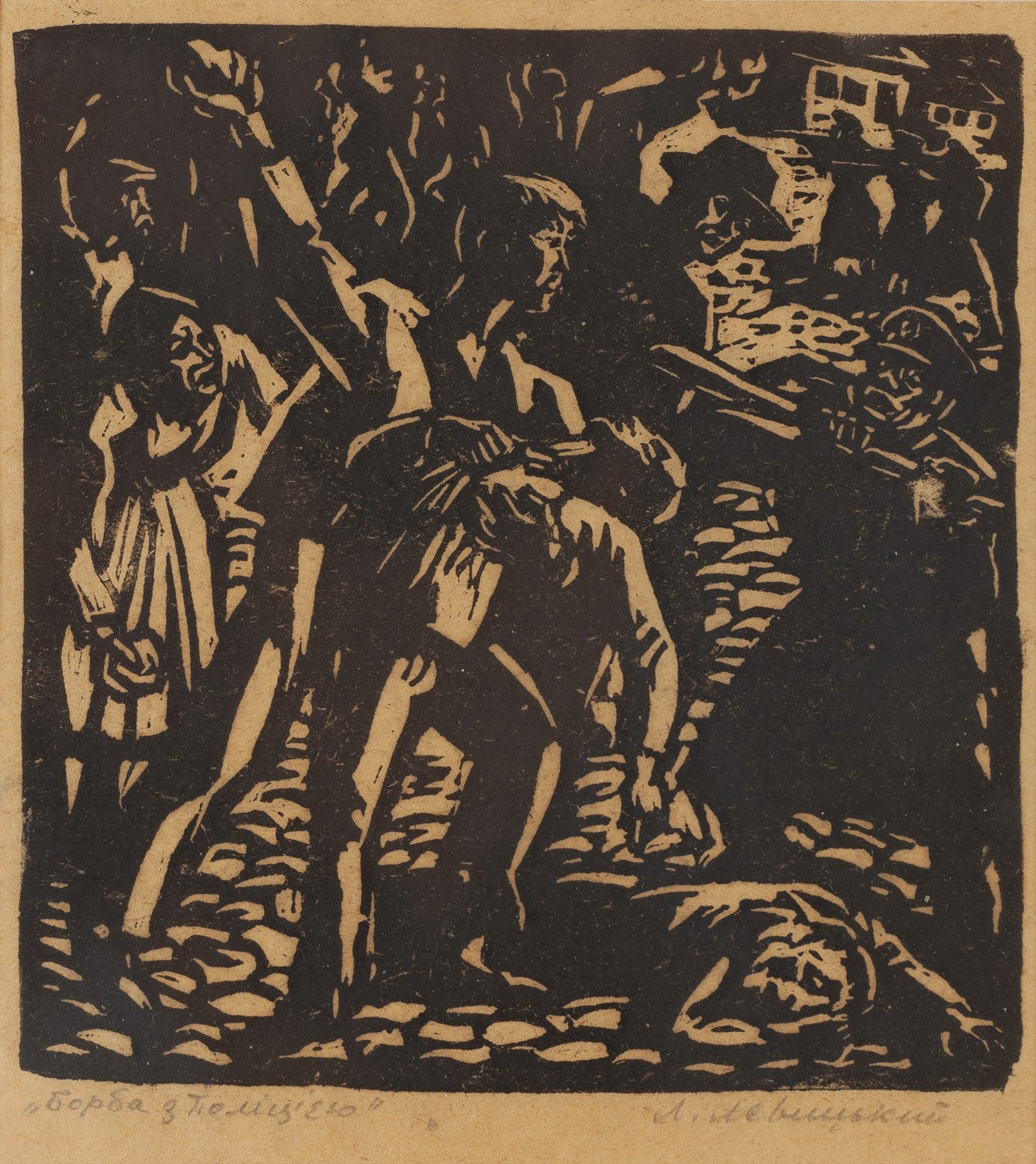
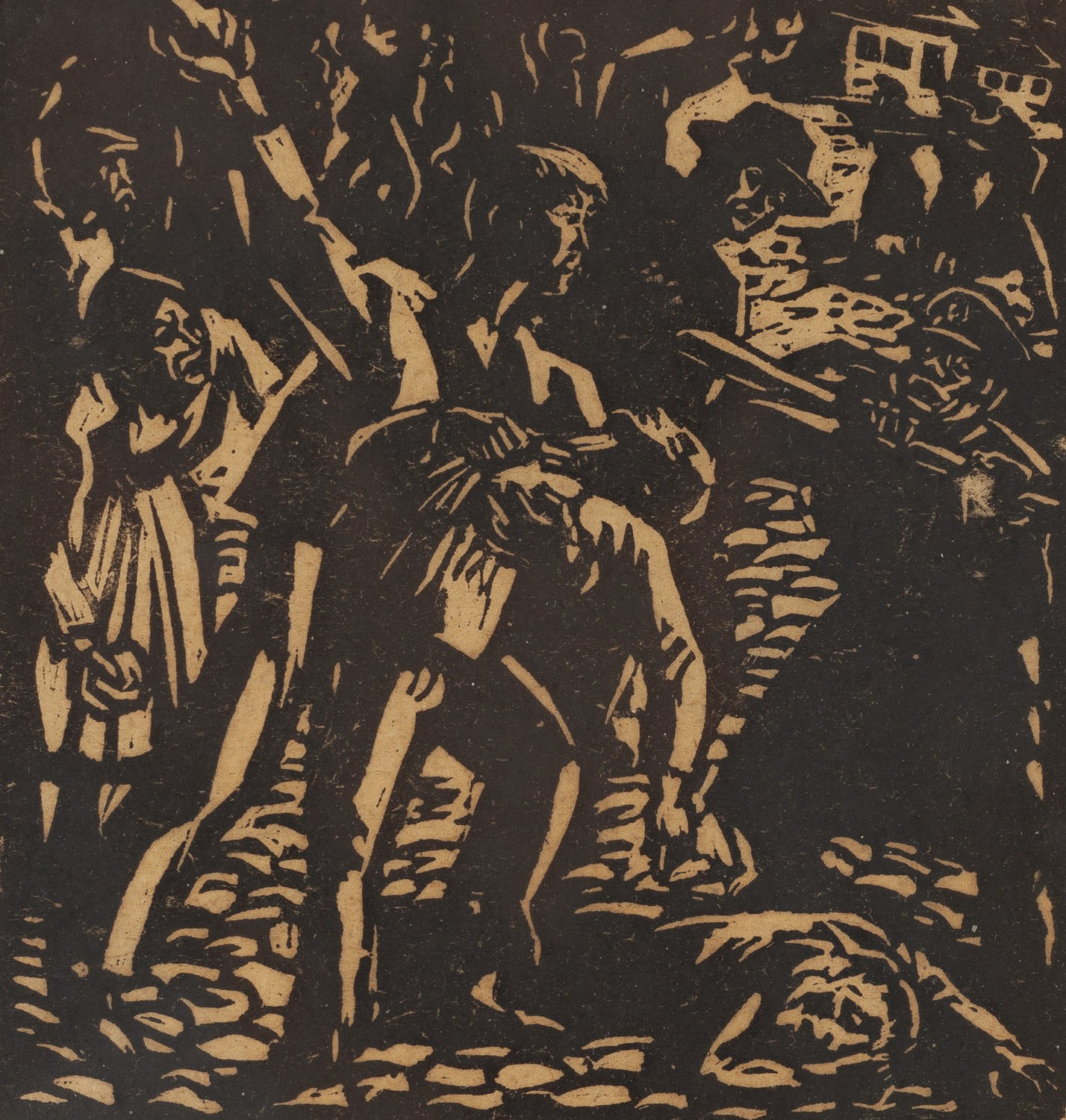
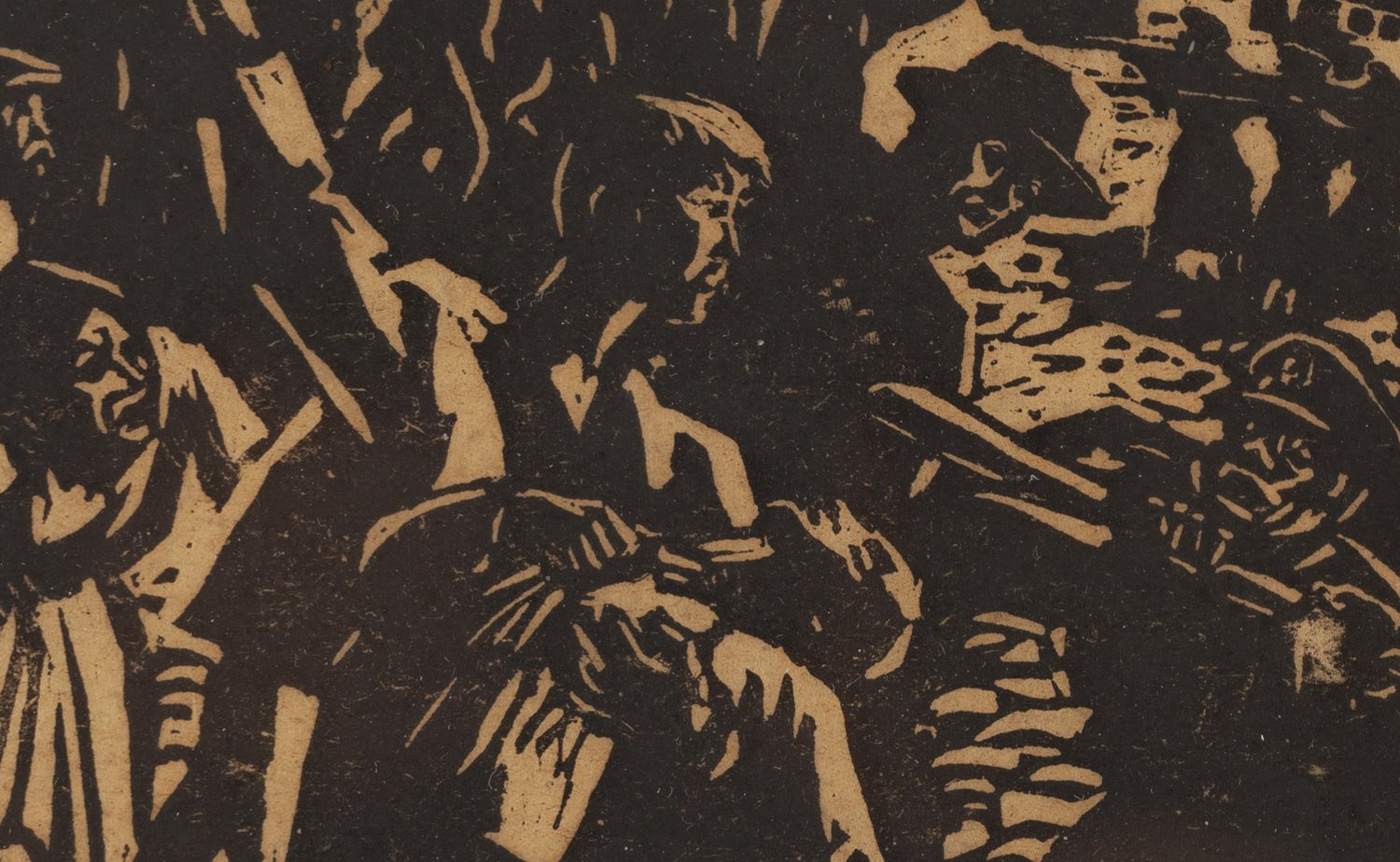

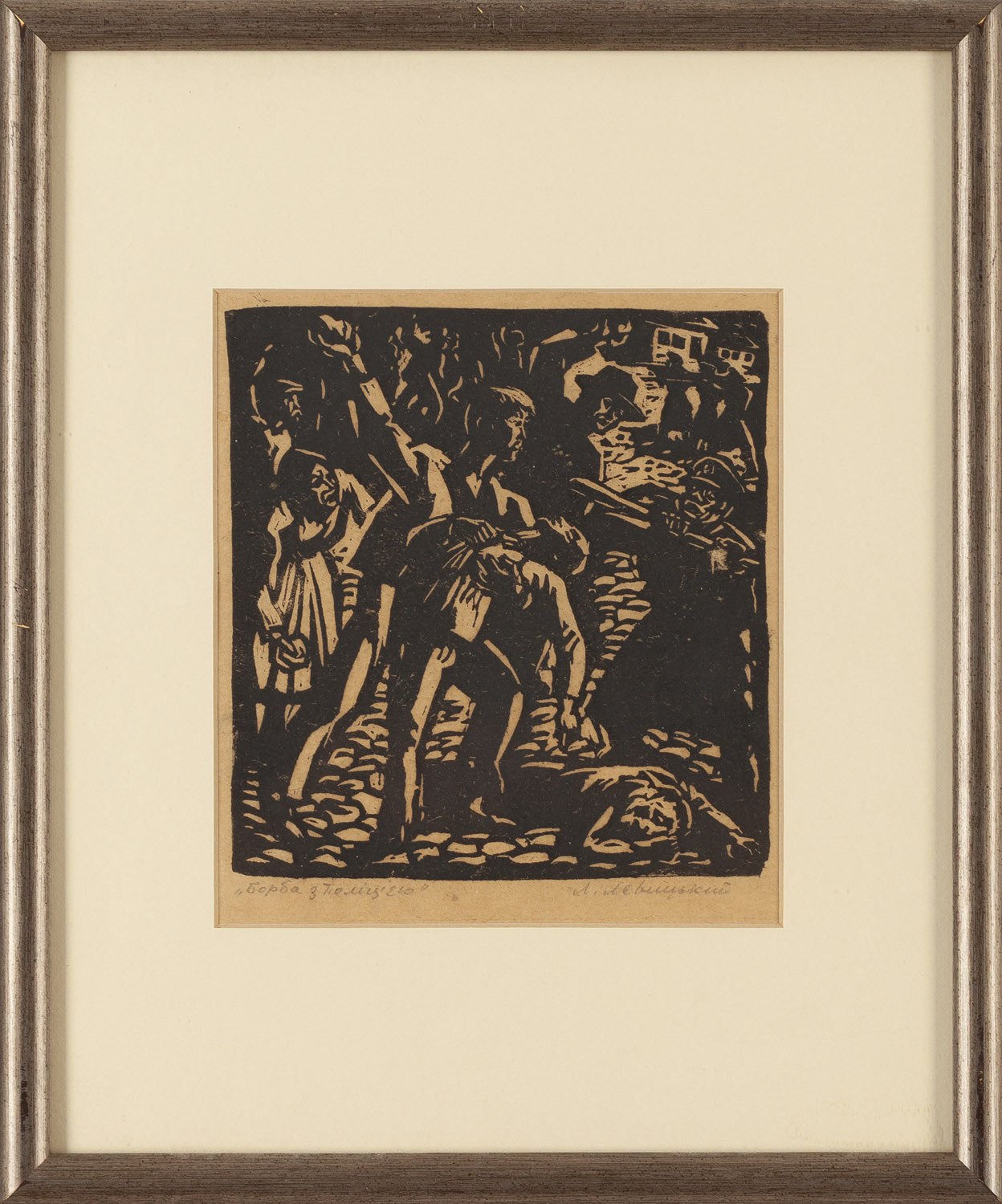
Dimensions: 16 x 14 cm
Signed in Cyrillic with pencil on the lower right: 'L. Lewicki', titled on the lower left
Biography
He studied at the Academy of Fine Arts in Kraków from 1925 to 1932. Most of his body of work in the field of printmaking using metal techniques dates from this period (he later practiced linocut and woodcut). He was a member of the first “Krakow Group” (1933–1937), which sympathized with the communists. He was persecuted by the police for these ties and his participation in demonstrations. Together with other members of the group (including Maria Jarema, Stanisław Osostowicz, and Jonasz Stern), he helped shape the last generation of the Polish avant-garde before World War II. In addition to social issues, the group’s artistic explorations were guided by a uniquely understood, brutal realism, and its members independently arrived at a form of abstraction rooted in Expressionism. Lewicki spent the years of World War II in Czortków (1939–41) and in the Samarkand region, where he worked as a teacher and served in a construction battalion (1941–44). From 1944 onward, he lived permanently in Lviv. He was active in the local Artists’ Union. In 1970, he was awarded the title of Honored Artist of the Ukrainian SSR. After the war, he created art in the style of Socialist Realism, which was the prevailing artistic convention in the USSR. He practiced easel and decorative painting, sculpture, fine art printmaking, and applied art (book illustration).