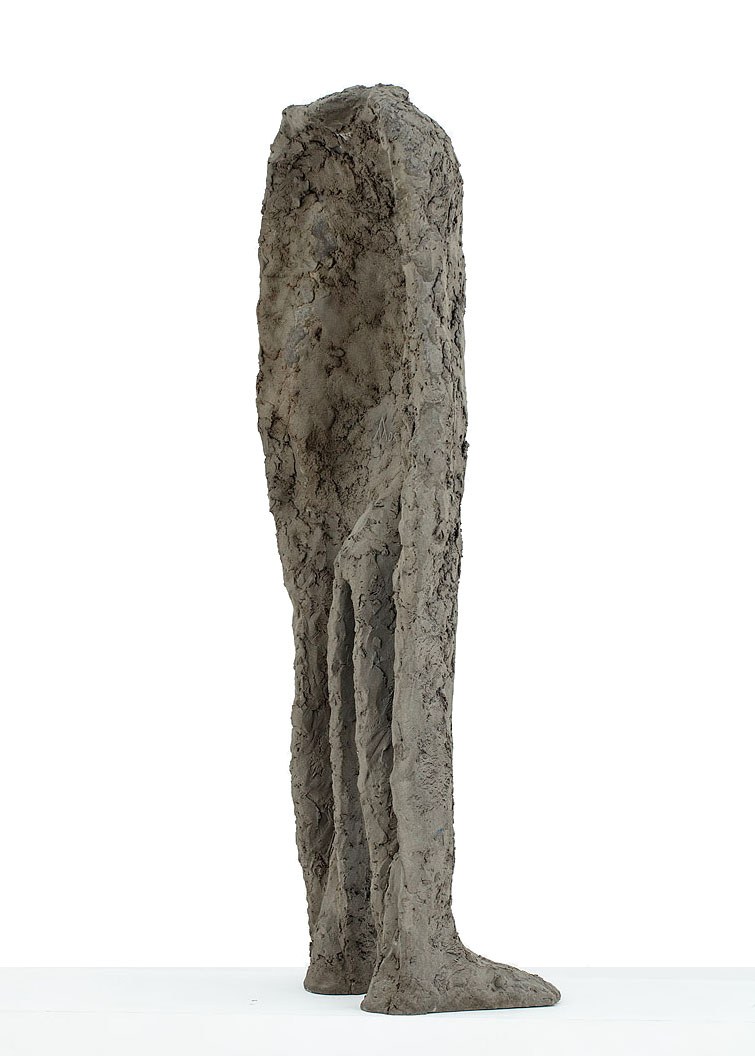
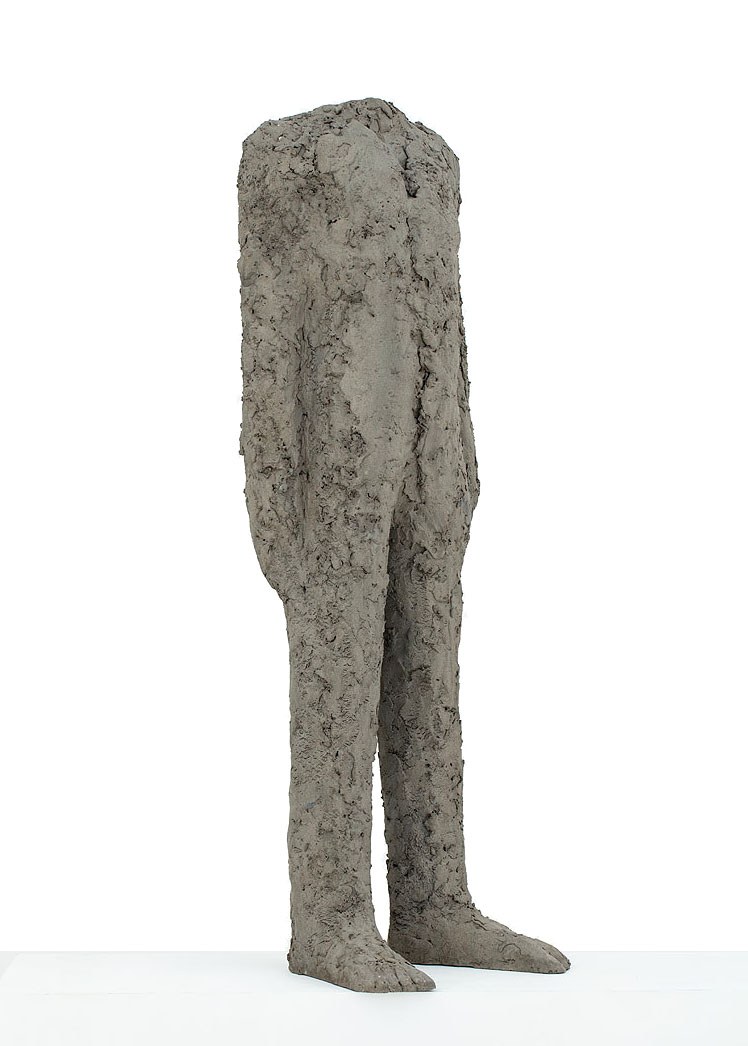

Dimensions: height 113 cm
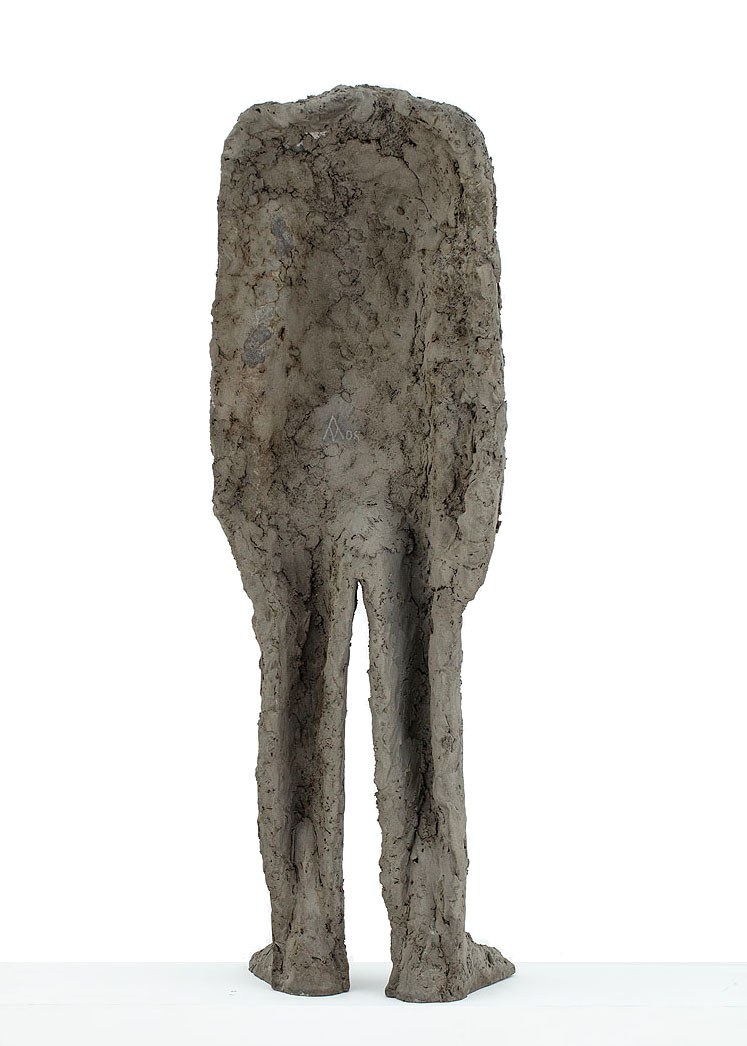
Signature: signed on the back with the artist’s monogram: MA 08
Provenance
Warsaw, private collection.
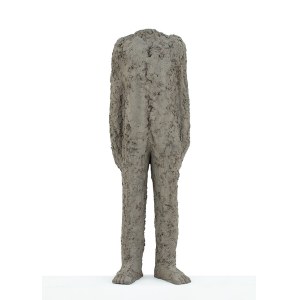
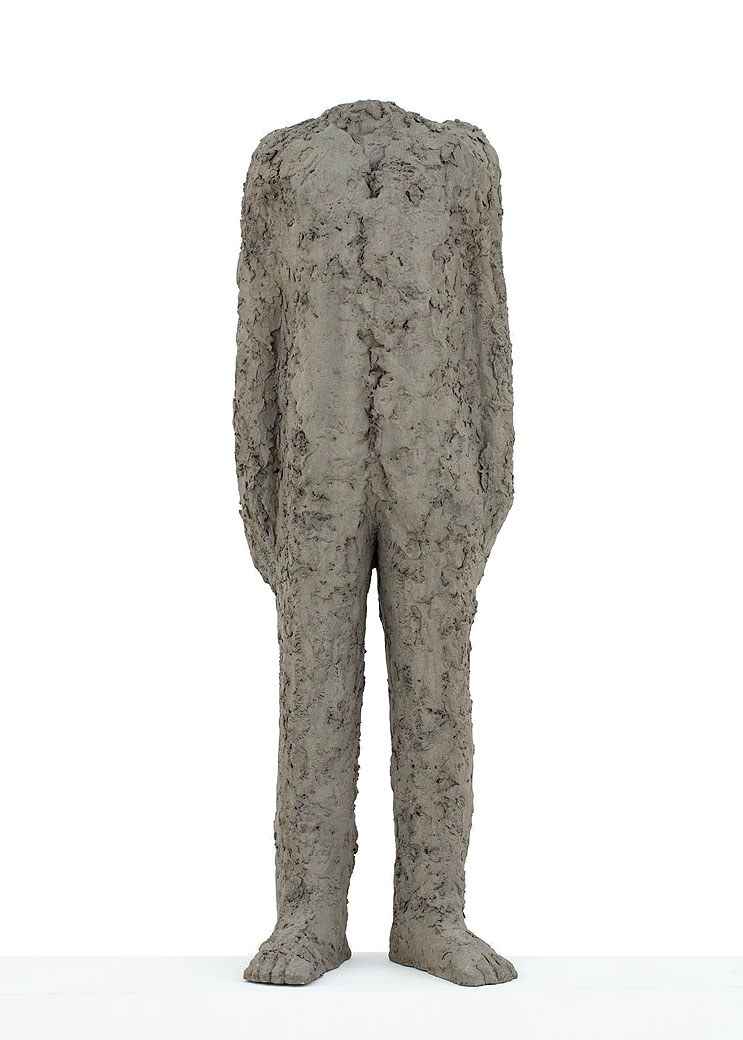
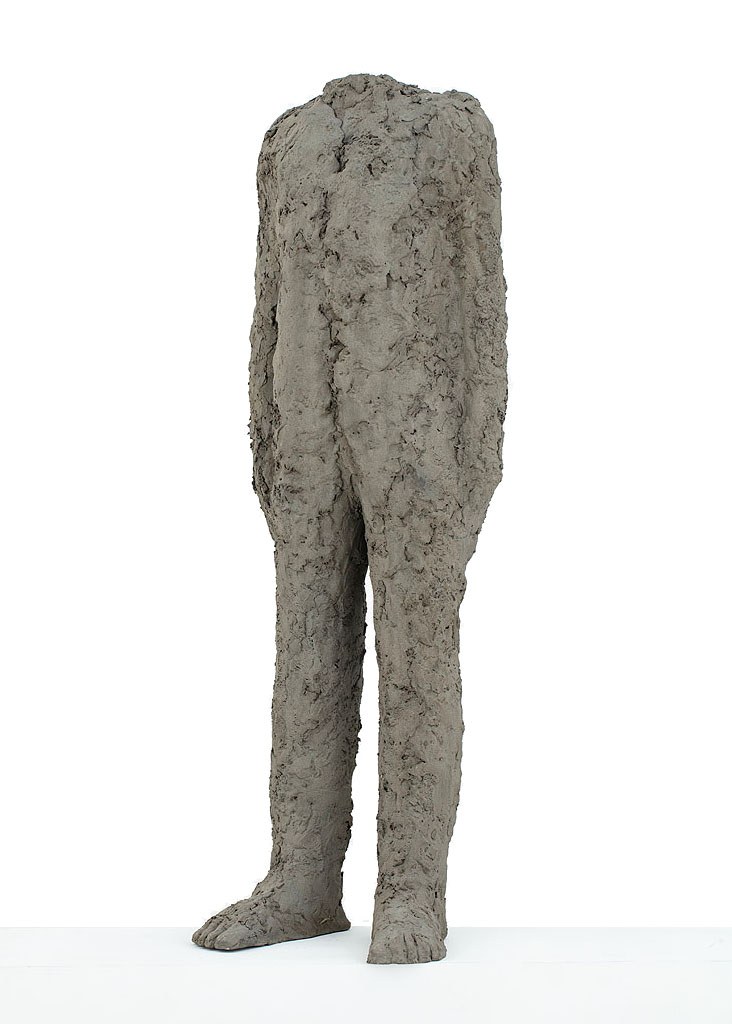
The work presented here, titled “Figure” and dated 2008, is a testament to the definitive synthesis of form that Magdalena Abakanowicz achieved in the late period of her career. This sculpture reflects a mature phase in the artist’s career, during which her focus was on an in-depth analysis of human nature and the paradoxes of human existence.
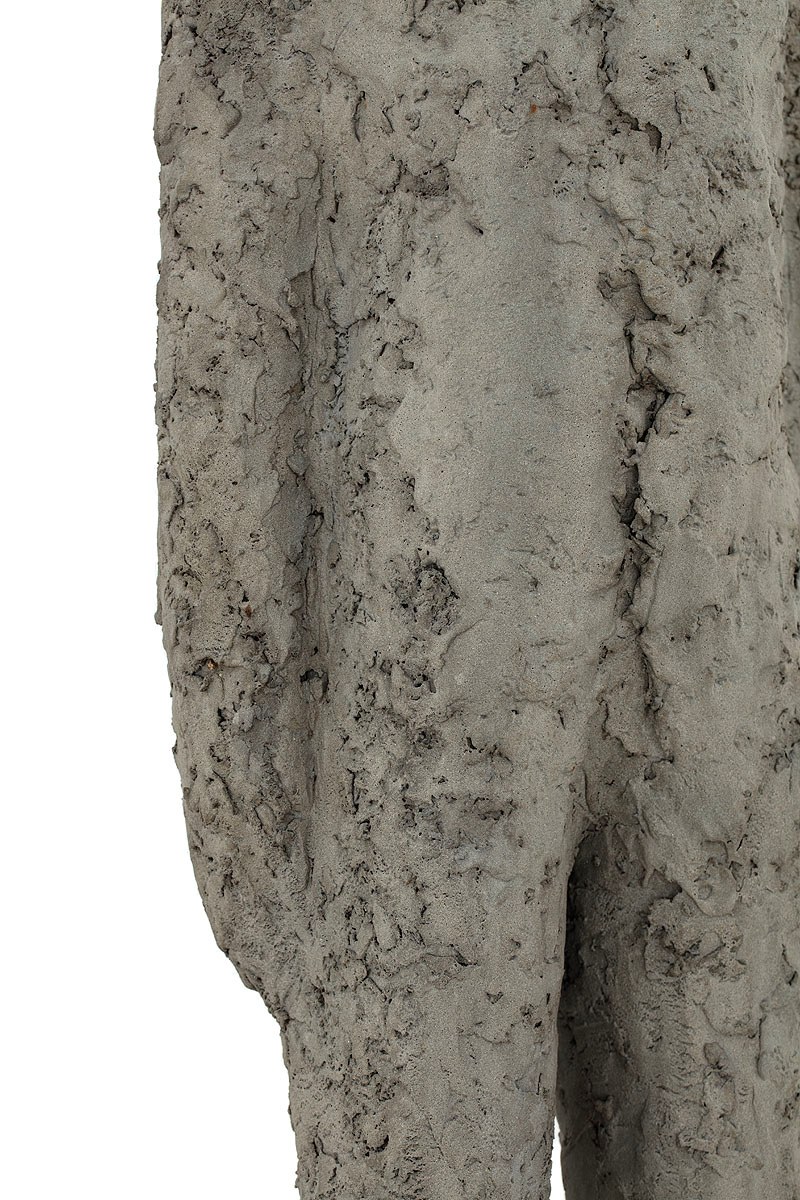
The work is made of raw concrete and resin—materials that create a rough, raw texture, central to the artist’s aesthetic. Throughout her long career, Abakanowicz consistently rejected all anecdotal and decorative elements, striving to lay bare the essence of human existence. “Figure” clearly fits into the concept of the famous “Bambini” series, evoking associations with the universal, simplified silhouette of a child.
“Bambini” is one of the most important links in the chain of the artist’s multi-figure sculptural ensembles. It is precisely in this composition that the artist fully harnessed the raw potential of concrete, imbuing it with a poignantly human dimension. This monumental reflection on the condition of modern humanity evokes childlike figures for good reason. It is a story about the mystery of birth within a community: about how, while being part of a collective, we remain individual from the very beginning. From a distance, a person seems to be merely an insignificant part of the crowd; only by getting closer can one discern their individual traits and what sets them apart. This series can thus be seen as an allegory of the individual’s vulnerability in the face of the world, wars, and corruption, but also as a story of belonging to a community. Frozen in static poses, the figures are devoid of heads and hands—a formal and semantic device characteristic of Abakanowicz. This ensures that every depicted being—though extracted from a multiplied crowd—remains alienated.
The anonymity of the 2008 work “Figures” is closely linked to the artist’s personal experiences and her reflection on human masses devoid of individual traits. Abakanowicz herself aptly described this concept of unification: “I sink into the crowd like a grain of sand in loose sand. I lose myself amid the anonymity of glances, movements, and odors, in the shared inhalation of air, the pulsing of fluids beneath the skin. I become a cell of this boundless organism; I belong to other individuals, cells already fused with one another” (quoted from: Magdalena Abakanowicz, published by the Ujazdowski Castle Center for Contemporary Art, Warsaw 1995, p. 147). The “figure” is thus not merely a static object, but the embodiment of the universal tragedy of existence. The work generates an intentional space around itself that prompts the viewer to confront their own sensibilities directly.