






Czesław JANCZARSKI, ed.
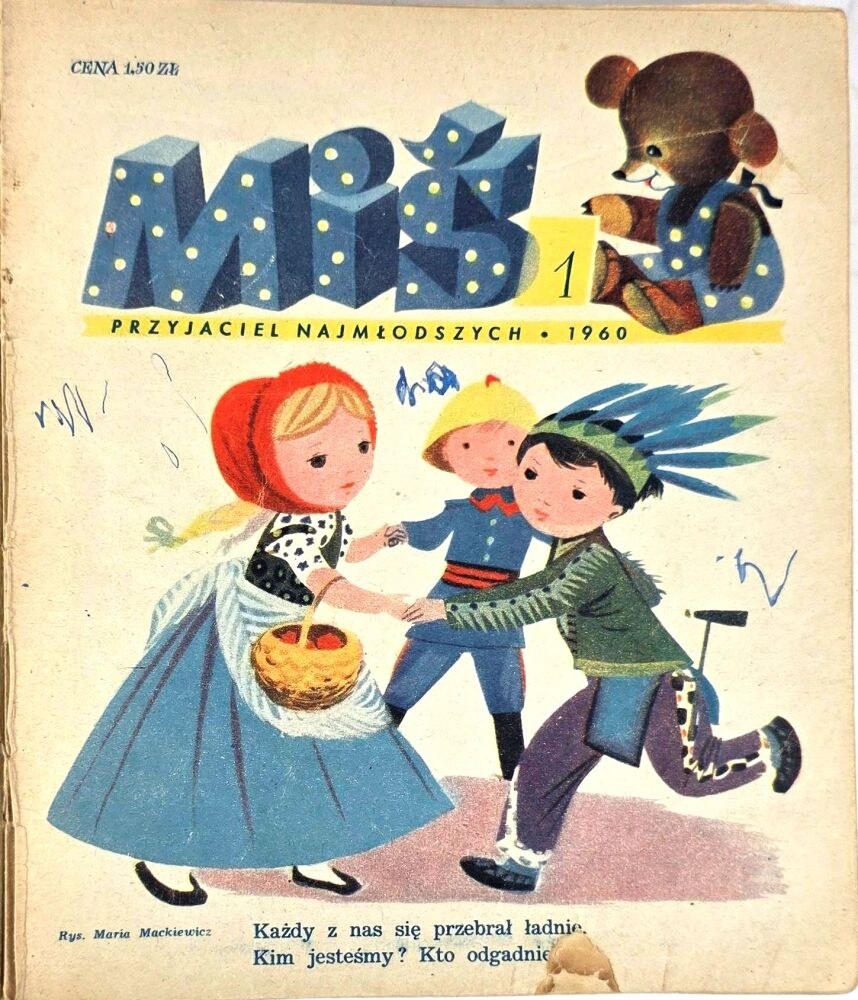
MIŚ. A FRIEND TO THE YOUNGEST. Vol. IV: Nos. 1–24 (1961).
Warsaw, Nasza Księgarnia, 1960.
A complete annual collection of one of the most important Polish children’s magazines of the postwar period, comprising all 24 issues published in 1960, bound together in a single volume. “Miś. Przyjaciel Najmłodszych” was founded on the initiative of Czesław Janczarski (1911–1971) —a poet, author of numerous works for children, and creator of the character Miś Uszatek. Published since 1957, the magazine shaped the imaginations of its youngest readers for decades, offering an exemplary blend of children’s literature, education, and high-quality illustrations. It is listed in bibliographies as one of the most important Polish magazines aimed at preschool-aged children.
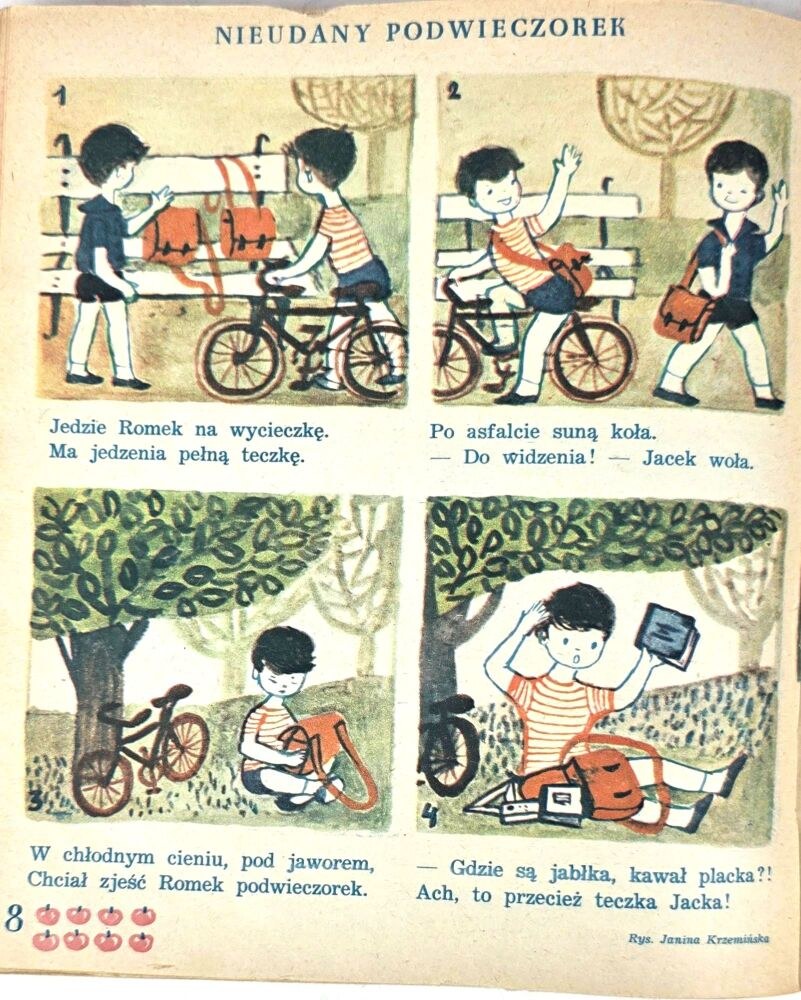
The 1960 volume dates from the magazine’s early years, a period that is now the rarest to find. Its pages featured short stories, poems, picture stories, riddles, educational materials, and works created specifically for the youngest readers. The rich visual design played a special role—the illustrated issues were co-created by artists associated with the Polish school of children’s illustration, whose golden age coincided precisely with the 1950s and 1960s. In subsequent issues of *Misia*, contributors included Bohdan Butenko, Hanna Czajkowska, Zdzisław Witwicki, Janusz Jurjewicz, and Wiesław Majchrzak, which allows the magazine to be regarded as a valuable testament to the development of Polish book and press illustration for children.
The magazine’s particular significance also stems from the fact that it was within its pages that one of the most recognizable characters in Polish children’s literature was born—Miś Uszatek, created by Czesław Janczarski and Zbigniew Rychlicki. The volume presented here dates from a pivotal period in the character’s history, coinciding with the publication of the first book edition of his adventures—*The Adventures and Journeys of Miś Uszatek* (1960). The issues collected in this volume document the earliest phase of the character’s development, before he became one of the most recognizable symbols of 20th-century Polish children’s culture. For collectors, they serve as a valuable testament to the birth of a publishing phenomenon that, in the decades that followed, gave rise to numerous books, radio plays, and a cult-classic animated series.
The significance of “Miś” extended far beyond that of an entertainment magazine. For several generations of children, it was their first encounter with literature, illustration, and the culture of the written word. Early volumes, especially those from 1957–1961, are currently among the most difficult to complete and the rarest on the antiquarian market, particularly as complete sets preserved in uniform bookbinding.
HARDCOVER WITH HALF-CLOTH BINDING AND EPOCH-PERIOD ILLUSTRATIONS MOUNTED ON THE COVER
Condition: Very Good (DB) / occasional tears or stains











